
Article
The Role of Referrals in SMB Hiring: 2026 Guide

The Role of Referrals in SMB Hiring: 2026 Guide
How referrals shape SMB hiring outcomes
Employee referrals are the highest-performing hiring channel available to small and midsize businesses. They produce faster hires, better retention, and measurably stronger job performance than any traditional sourcing method. The data from 2026 makes this case clearly.
- Referral hires average 19 days to hire versus 34 days from traditional sources
- Referral hires have a 44% higher retention rate than non-referral hires
- Referred employees show 33% better job performance and generate 27% more profit than non-referral hires
- SMBs save an average of $2,500 per referral hire through reduced sourcing and recruiting time
Stat to know: Referral candidates are hired at a 1-in-4 rate. Only 7% of traditionally sourced candidates receive an offer.
For lean HR teams managing multiple open roles, those numbers translate directly into operational stability and budget relief.
How SMBs are adopting employee referral programs
63% of SMBs now run a formal employee referral program, recognizing it as a cornerstone of competitive recruiting. That shift from informal “do you know anyone?” conversations to structured programs is where most of the measurable gains come from.

A structured program gives every employee a clear path: they know the bonus amount, how to submit a name, and what happens after they do. Without that structure, referrals happen inconsistently and are nearly impossible to track or improve.
Key elements of a well-run SMB referral program:
- Defined incentive: Referral bonuses typically range from $250 to $5,000 depending on role level and seniority
- Simple submission process: The easier it is to refer (a text, a form, a Slack message), the more referrals you receive
- Clear eligibility rules: Specify which roles qualify, which employees can refer, and how long they must be employed before referring
- Consistent communication: Re-announce the program every time a new role opens, not just at launch
- Transparent follow-up: Update the referring employee on what happened with their candidate
The programs that fail are almost always the ones announced once and never mentioned again.
Referral hiring efficiency: time and quality benefits
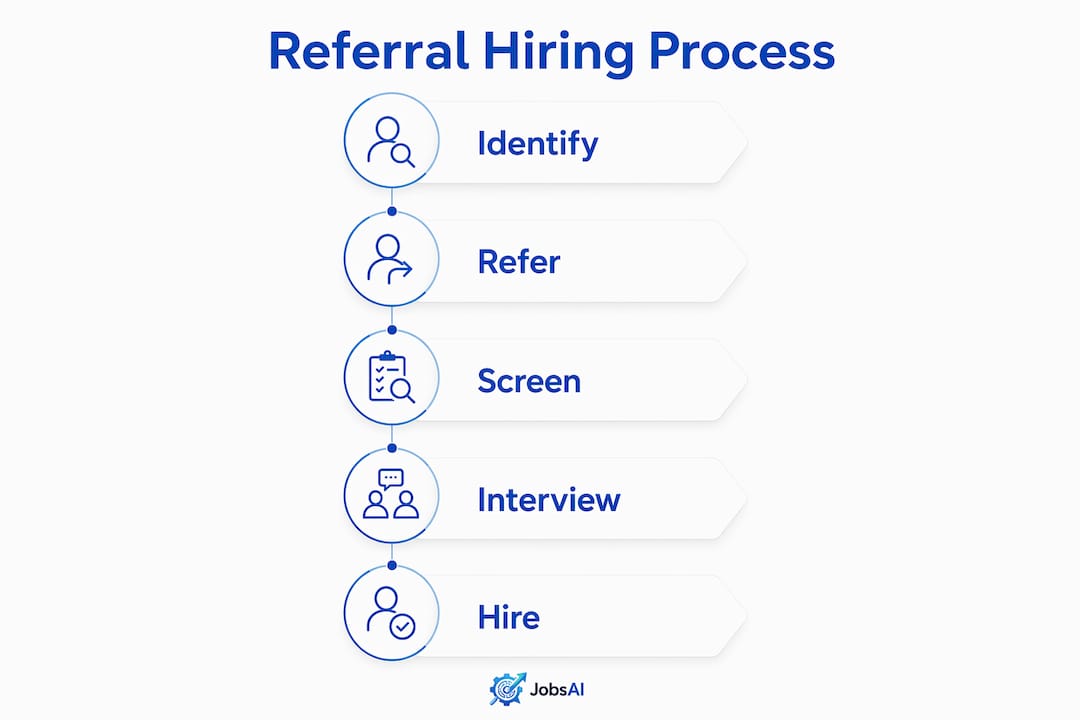
The speed advantage of referrals is not marginal. Referral hires reduce the time-to-hire substantially, filling roles significantly faster than traditional sources, which directly reduces team strain and revenue disruption.
| Metric | Referral hires | Traditional sources |
|---|---|---|
| Average time to hire | 19 days | 34 days |
| Candidate acceptance rate | 1 in 4 | 1 in 14 |
| Interview process | Smoother, faster | More sourcing effort required |
| Job-to-worker fit | Higher | Variable |
Stat to know: Referrals deliver a notable speed advantage in time-to-fill compared to traditional sourcing channels.
Referred candidates also arrive better prepared. They typically know the company culture, understand the role expectations, and have already been briefed by the person who referred them. That pre-screening effect shortens the interview cycle and reduces the chance of a misaligned hire.
Cost savings and ROI of referral hiring for SMBs
Referral hiring saves SMBs a significant amount per hire by cutting job board spend, reducing agency fees, and shortening sourcing time. That figure only captures the direct savings. The indirect ROI runs deeper.

| Cost component | Referral hire | Traditional hire |
|---|---|---|
| Sourcing cost | Low (internal network) | Job board fees or agency markup |
| Time to fill | 19 days | 34 days |
| Referral bonus | $250–$5,000 | N/A |
| Turnover replacement risk | Lower (higher retention) | Higher |
Ways referral programs increase hiring ROI beyond direct cost savings:
- Less downtime per open role means fewer productivity gaps
- Higher retention reduces the frequency of replacement cycles
- Better job-to-worker fit lowers early-stage performance management costs
- Referred hires reach full productivity faster due to cultural familiarity
Paying a referral bonus that prevents costly replacement cycles can yield substantial returns.
Retention and performance advantages of referral employees
Referred employees stay longer and perform better. That combination is what makes referrals worth prioritizing over every other sourcing channel for SMBs.
- Higher retention rate compared to non-referral hires
- 33% better job performance on key metrics
- 27% more profit generated per referred employee
Stat to know: Columbia Business School research confirms that referred workers are roughly 25% more profitable than non-referred workers, driven primarily by better job-to-worker fit.
The retention lift is not accidental. Referred hires join with a realistic picture of the role, a relationship already in place on the team, and a social incentive to succeed. They integrate faster and leave less often.
How AI can boost referral engagement in your SMB
AI-powered nudges and automated reminders increase referral activity by 65% by keeping the program visible and reducing the manual effort required to sustain it. For SMBs with small HR teams, that automation is the difference between a referral program that runs and one that quietly stalls.
Key AI-driven features that support referral programs:
- Automated reminders: Prompt employees when a new role opens, not just at program launch
- Candidate matching: AI identifies which open roles best fit a referred candidate’s background
- Referrer identification: Flags which employees are most likely to have relevant networks for specific roles
- Status updates: Keeps referring employees informed without requiring manual follow-up from HR
Jobsai Enterprise’s AI screening tools integrate directly with referral workflows, so referred candidates move through evaluation quickly without bypassing the standard process.
Pro Tip: Pair AI reminders with a personal message from the hiring manager when a role opens. Automated outreach keeps the program alive; a direct ask from a manager drives the actual referral.
Research insights on maximizing referral program success
The best referral programs are not just well-promoted. They are designed around how referrals actually work, based on what the research shows.
Key research-backed recommendations:
- Prioritize strong relationships: SMBs gain the most by focusing referral incentives on employees with stronger, longer relationships with candidates. A close friend referred by a trusted colleague outperforms a loose acquaintance every time.
- Target high performers: Top-performing employees tend to refer others with similar traits. Focusing referral requests on your best workers raises the overall quality of incoming candidates.
- Pay bonuses at 90 days: Paying the referral bonus after a 90-day retention milestone encourages the referring employee to mentor and support the new hire through onboarding.
- Use referrers as onboarding buddies: The referring employee already has a relationship with the new hire. Assigning them as an informal buddy for the first 30 days accelerates integration.
- Avoid lowering the evaluation bar: Referrals skip the sourcing step, not the screening step. Every referred candidate goes through the same structured interview and scorecard process.
Pro Tip: Track which employees generate the most successful referrals over time. Those individuals are your most valuable recruiting assets. Recognize them publicly and give them early access to new job openings before the broader team.
Challenges and limitations of relying on referrals
Referrals are the strongest hiring channel for SMBs, but over-relying on them creates real risks that hiring managers need to manage deliberately.
Homogeneity risk. People refer people like themselves. That tendency, documented in Columbia Business School research, is what makes referrals effective for job-fit. It also means a referral-only strategy can gradually narrow the diversity of your workforce if left unchecked.
Network size limits. A 20-person SMB has a smaller collective network than a 500-person company. Referral volume naturally caps out, especially for specialized or senior roles where the required background is uncommon in your team’s existing connections.
Inconsistent participation. Without ongoing promotion, most employees forget the program exists. Referral rates drop sharply when the program is not actively reinforced, regardless of the bonus amount.
Social complexity in performance management. When a referred hire underperforms, the referring employee often feels personally implicated. That dynamic can complicate feedback conversations and, in some cases, delay necessary action.
The fix is not to abandon referrals. It is to run them alongside other sourcing channels and maintain consistent evaluation standards for every candidate, regardless of how they entered the pipeline.
Legal and ethical considerations in employee referral programs
A referral program needs guardrails to stay fair and legally defensible. The most common issues are avoidable with clear policies upfront.
Equal opportunity compliance. Referral programs must not systematically exclude protected groups. If your workforce is not diverse, a referral-only approach can perpetuate that imbalance and create exposure under Title VII of the Civil Rights Act. Document that all candidates, referred or not, go through the same evaluation process.
Nepotism and conflict of interest. Set clear rules about referring immediate family members or close personal relationships where a conflict of interest could affect performance management. Many SMBs exclude direct family members from referral eligibility.
Bonus tax treatment. Referral bonuses paid to employees are taxable compensation and must be reported on the employee’s W-2. Work with your payroll provider to handle withholding correctly from the start.
Transparency in the process. Referred candidates should know they were referred and understand that the referral does not guarantee a hire. Keeping the process transparent protects both the candidate experience and the referring employee’s relationship with the company.
Strategies to encourage employee participation in referral programs
Low participation is the most common reason referral programs underperform. The fix is rarely a bigger bonus. It is usually better communication and a simpler process.
Make referring frictionless. If submitting a referral requires filling out a multi-field form, most employees will not do it. A text message, a Slack DM, or a single-field email submission gets far more responses. Insights from workforce scheduling and hiring research consistently show that reducing friction in employee-facing processes drives higher completion rates.
Announce every open role directly. Do not assume employees remember the program. Send a short message every time a role opens: the job title, a one-line description, and the bonus amount. That cadence alone can double referral volume.
Close the loop. The number one reason employees stop referring is that they submitted a name, heard nothing back, and felt their effort was wasted. Update referring employees at every stage: received, interviewed, hired or not selected.
Recognize successful referrers publicly. A brief shoutout in a team meeting or a company-wide message costs nothing and signals that referring is valued behavior.
Integrating referrals with your overall talent acquisition strategy
Referrals work best as one channel in a coordinated hiring strategy, not as a standalone solution. The goal is a sourcing mix where referrals handle a significant share of hires while other channels fill the gaps.
A practical channel mix for most SMBs looks like: referrals covering 30–45% of hires, one general job board for volume, and a niche board for specialized roles. Tracking recruiting KPIs by source, including 90-day retention and time-to-productivity, reveals which channels are actually producing your best hires versus just the most applications.
Referral hires also generate their own referrals at higher rates, creating a multiplier effect that sustains the pipeline over time. A referred employee who later refers two more strong candidates effectively multiplies the original program’s value without additional cost. Pair that dynamic with automated onboarding processes that reinforce early retention, and the compounding effect becomes a real competitive advantage.
Examples of SMB referral programs that work
The most effective SMB referral programs share a few structural traits, regardless of industry or company size.
The 90-day bonus model. A manufacturing SMB with 45 employees moved its referral bonus payment from the hire date to the 90-day mark. Referral volume stayed the same, but 90-day retention among referred hires improved because referring employees actively checked in on new hires during the probationary period.
The role-specific ask. A 30-person tech services company stopped sending generic “refer anyone you know” messages and started sending targeted asks tied to specific open roles. Referral quality improved because employees could immediately picture someone in their network who fit the described role.
The public recognition loop. A regional retail SMB added a brief monthly recognition for successful referrers in its all-hands meeting. Within two months, referral submissions increased without any change to the bonus structure. Employees referred more once they saw that referring was recognized, not just rewarded.
These are not elaborate programs. They are consistent ones.
How Jobsai Enterprise supports your referral hiring process
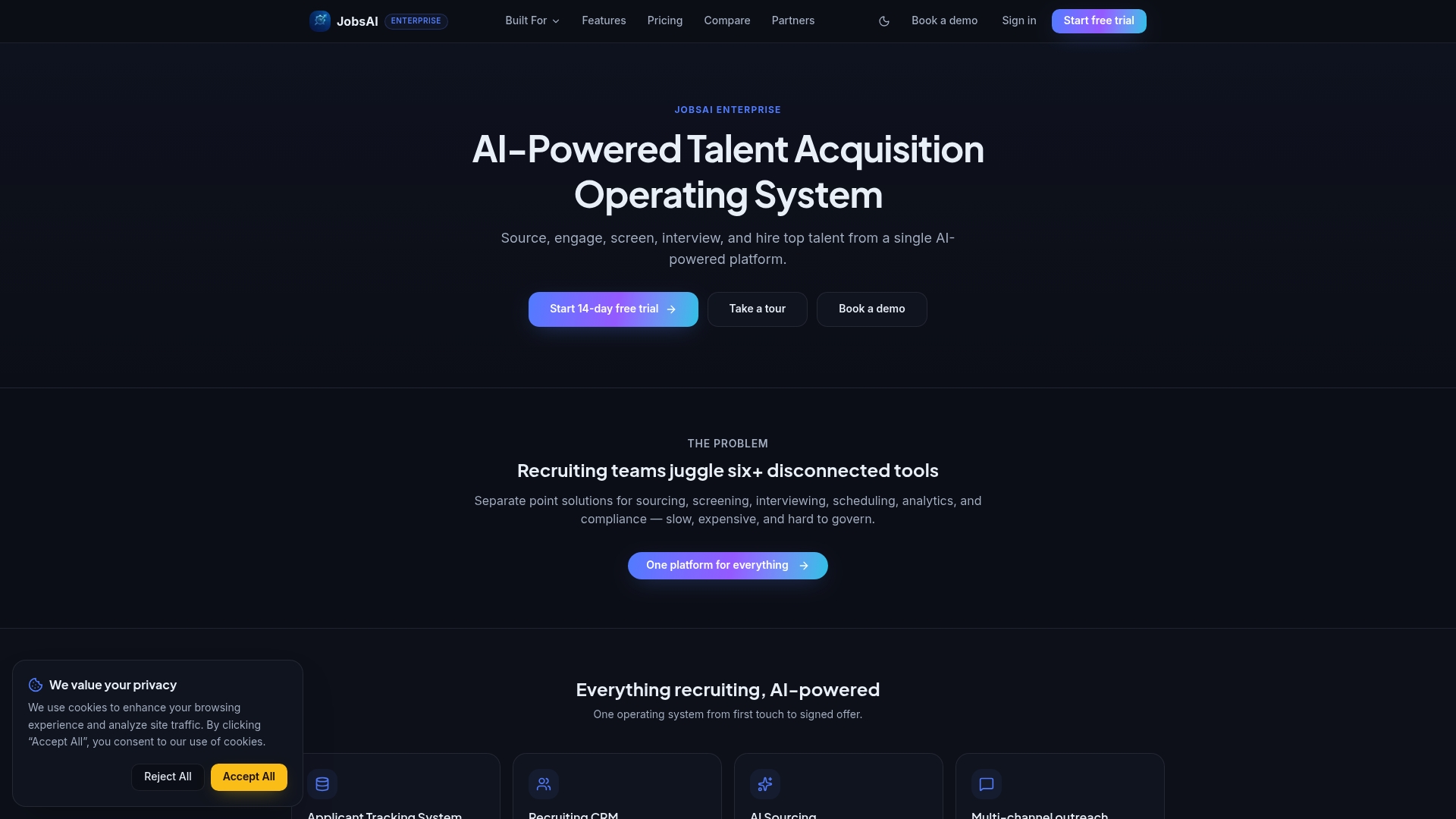
Managing referral candidates alongside applications from job boards and agencies creates coordination overhead that most lean HR teams cannot absorb without the right tools. Jobsai Enterprise is built to handle exactly that.
With Jobsai Enterprise, your team can screen and rank referred candidates automatically, track every referral through the pipeline in one place, and maintain consistent evaluation standards regardless of how a candidate entered the process. The platform’s AI-powered hiring workspace keeps referral momentum high without adding manual work to your team’s plate.
If you want to see how it fits your current hiring workflow, take a tour of the platform.
Key Takeaways
Referrals consistently outperform every other SMB hiring channel on speed, cost, retention, and performance, making a structured referral program one of the highest-return investments in your talent acquisition strategy.
| Point | Details |
|---|---|
| Speed advantage | Referral hires average 19 days to hire versus 34 days from traditional sources. |
| Retention lift | Referral hires have a 44% higher retention rate than non-referral hires. |
| Cost savings | SMBs save an average of $2,500 per referral hire through reduced sourcing costs. |
| Performance gains | Referred employees show 33% better job performance and generate 27% more profit. |
| AI amplification | AI-powered nudges increase referral program activity by 65% for lean HR teams. |
FAQ
Why are referrals important in recruiting?
Referrals produce faster hires, better retention, and stronger job performance than other sourcing channels. Referred candidates arrive pre-screened for cultural fit and role expectations, which reduces both time-to-hire and early turnover.
What are the odds of getting hired after a referral?
Referred candidates are hired at a 1-in-4 rate, compared to roughly 1 in 14 for traditionally sourced candidates. The referral does not guarantee a hire, but it dramatically improves the odds of advancing through the process.
What is the role of a referral in the hiring process?
A referral moves a candidate from the sourcing stage directly to evaluation, skipping the application screening step. The referring employee provides context on the candidate’s fit, which gives the hiring team a more informed starting point than a cold resume.
How do referral programs affect workforce diversity?
Because people tend to refer others like themselves, a referral-only strategy can narrow workforce diversity over time. Running referrals alongside other sourcing channels and maintaining consistent evaluation standards for all candidates helps manage this risk.
Recommended
- US Staffing Industry Benchmarks 2026: Hiring Manager’s Guide | JobsAI Enterprise
- Mid-Market Hiring Challenges: What HR Teams Face in 2026 | JobsAI Enterprise
- How Staffing Firms Scale Hiring: a 2026 Growth Guide | JobsAI Enterprise
- The Role of AI in Recruiting: A Hiring Manager’s Guide | JobsAI Enterprise
See it in your workflow
JobsAI Enterprise runs sourcing, AI screening, and the whole interview pipeline in one place. Book a walkthrough tailored to your team.
Book a demo