
Article
Corporate Recruiter: What Talent-Acquisition Professionals Need to Know

Corporate Recruiter: What Talent-Acquisition Professionals Need to Know
A corporate recruiter is an in-house HR professional who manages the end-to-end recruitment lifecycle for a single organization, acting as a strategic partner to hiring managers while protecting and advancing the employer brand. Unlike agency recruiters who juggle multiple client accounts, this role lives inside the business, which means every hire directly shapes team performance, culture, and long-term workforce planning. Organizations that treat talent acquisition as a core function, not a transactional service, typically staff dedicated corporate recruiters who own the process from requisition to offer. Tools like applicant tracking systems (ATS) and platforms such as Jobsai Enterprise give those recruiters the infrastructure to work at scale without losing quality.
Key Takeaways
A corporate recruiter is an in-house professional who owns the full hiring lifecycle for a single employer, connecting talent acquisition directly to business outcomes through structured process, sourced skills, and increasingly AI-assisted workflows.
| Point | Details |
|---|---|
| Role definition | An in-house recruiter owns end-to-end hiring for one organization, not multiple clients. |
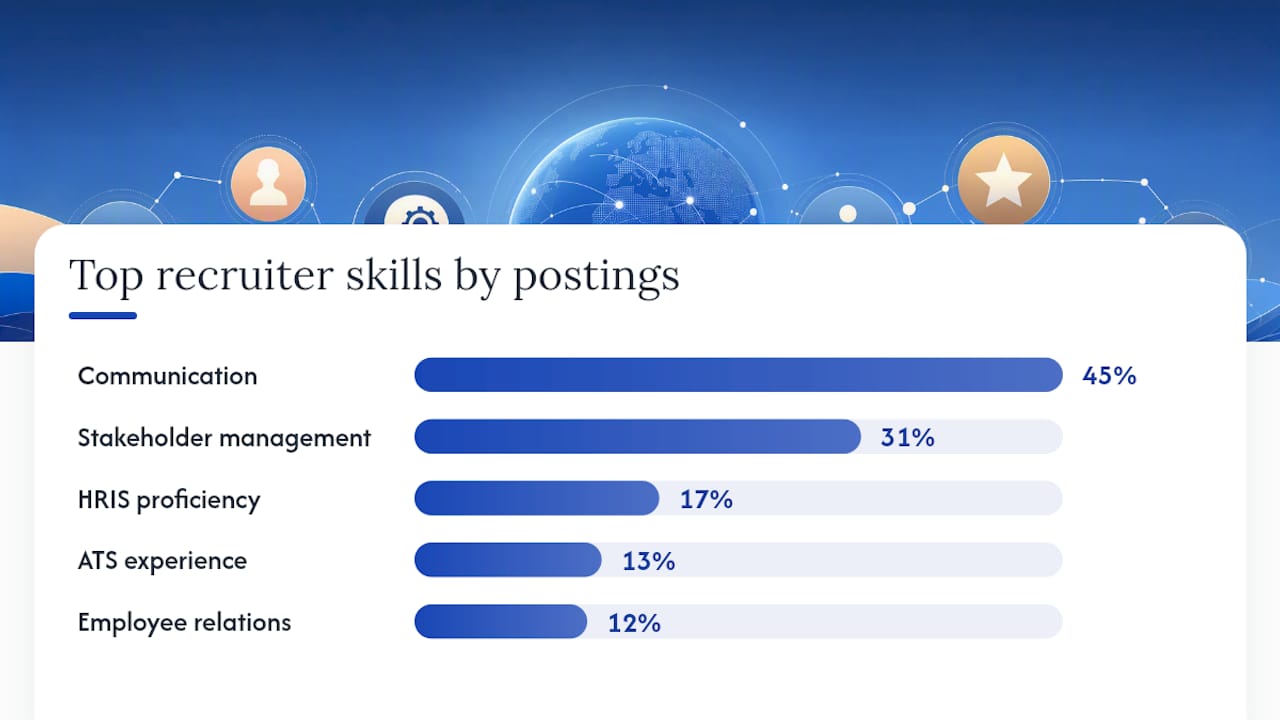
| Top skills by frequency | HRIS (17%) and ATS (13%) lead specialized skills; communication tops common skills at 45%. |
| Salary range | Mid-level corporate recruiters typically earn $60,000 to $80,000; senior roles reach $85,000 and above. |
| AI as a multiplier | AI handles resume ranking and scheduling; human judgment drives stakeholder management and final decisions. |
| Career entry path | Start in HR coordination or sourcing, reach full-cycle mid-level within 2–3 years, senior by year 4–6. |
Table of Contents
- What does a corporate recruiter do day to day?
- How in-house recruiters differ from agency and staffing models
- What do corporate recruiters look for when screening candidates?
- What skills, certifications, and salary ranges should you expect?
- Which tools do corporate recruiters rely on most?
- How is AI changing the day-to-day work of corporate recruiters?
- Which recruiting metrics actually matter?
- How do you break into corporate recruiting?
- What it actually feels like to work as a corporate recruiter
- See how Jobsai Enterprise supports corporate recruiting teams
- Sources
- FAQ
What does a corporate recruiter do day to day?
The scope is wider than most people expect. A corporate recruiter touches nearly every stage of the hiring lifecycle, and the work rarely looks the same two days in a row.
Core full-cycle responsibilities include:
- Conducting requisition intake meetings with hiring managers to define role requirements, must-have skills, and success criteria
- Writing and posting job descriptions across job boards, the company careers page, and niche platforms
- Sourcing passive candidates through LinkedIn, talent pools, employee referrals, and Boolean search
- Screening resumes and applications, often with ATS filters as a first pass
- Conducting phone and video screens to assess fit, compensation expectations, and availability
- Coordinating and scheduling interview panels with hiring managers and cross-functional stakeholders
- Collecting feedback, managing debrief sessions, and keeping the process moving
- Extending verbal offers, negotiating compensation, and managing the written offer workflow
- Handing off accepted candidates to HR operations or onboarding coordinators
Beyond those core tasks, corporate recruiters also run employer-branding initiatives, attend career fairs, manage relationships with universities for campus recruiting, and build talent pipelines for roles that open frequently. Onboarding modules in HR systems extend the recruiter’s workflow past the offer letter, connecting new-hire experience to the recruiting function’s reputation.
Time-to-fill, the number of calendar days from requisition approval to accepted offer, is one of the clearest signals of how well a recruiter manages that workflow. According to 4 Corner Resources, corporate recruiter job descriptions consistently frame the role around full-cycle ownership and pipeline development, which means the recruiter, not the hiring manager, is accountable for keeping that clock moving.
Pro Tip: Set a weekly “pipeline audit” block on your calendar. Reviewing every open req’s stage, last contact date, and next action in one sitting prevents candidates from going cold and gives you a clear picture of where time-to-fill is actually being lost.
How in-house recruiters differ from agency and staffing models
Knowing which model fits a situation is a practical skill, not just background knowledge. Each arrangement carries different incentives, cost structures, and levels of control.
| Model | How they’re paid | Who they serve | Best for |
|---|---|---|---|
| In-house corporate recruiter | Salary + benefits | The employer exclusively | Ongoing, high-volume, or culture-sensitive hiring |
| Contingency agency recruiter | Fee on placement (typically 15–25% of first-year salary) | Multiple client companies | Filling roles quickly when internal capacity is low |
| Retained search firm | Upfront retainer + success fee | One client per search | Senior or executive roles requiring confidentiality |
| Staffing firm | Markup on hourly rate | Multiple clients | Short-term, contract, or project-based workforce needs |
The in-house model gives the organization the most control over candidate experience, employer brand messaging, and long-term pipeline stewardship. Recruiters in salaried in-house roles own the candidate relationship differently than agency recruiters working on commission, because their incentive is a quality long-term hire, not a fast placement fee.
Agency and retained search models make sense when internal capacity is genuinely stretched, when a role requires a specialized network the internal team doesn’t have, or when confidentiality around a leadership transition demands an outside party. Staffing firms serve a different need entirely: workforce flexibility rather than permanent headcount growth.
A few practical signals that favor keeping recruiting in-house:
- The company hires a moderate to large number of people per year in similar roles
- Employer brand and candidate experience are strategic priorities
- The organization wants to build a proprietary talent pipeline over time
- Hiring managers need a consistent internal partner who understands the business deeply
A well-documented recruitment strategy should specify which roles go to internal recruiters, which go to agencies, and which warrant retained search, so the decision is made by policy rather than urgency.
What do corporate recruiters look for when screening candidates?
Early-stage screening is part pattern recognition, part judgment. Most corporate recruiters work through a high volume of applications quickly, so the signals that get a candidate to the next stage are specific and consistent.
Resume and ATS signals:
- Keyword alignment with the job description (ATS filters often score resumes before a human sees them)
- Clear role titles and dates that make career progression easy to read
- Quantified achievements rather than duty lists (“reduced time-to-hire by 20%” beats “responsible for recruiting”)
- No unexplained gaps or formatting that breaks ATS parsing (avoid tables, headers in text boxes, or graphics)
LinkedIn and portfolio checks:
- Profile completeness and consistency with the resume
- Recommendations and endorsements that corroborate claimed skills
- Activity that signals genuine interest in the field (posts, articles, group participation)
- Contact information that’s easy to find
Hard vs. soft skills: Job-posting analysis across more than 263,000 corporate recruiter postings shows communication (45%), management (31%), and customer service (25%) as the most frequently requested common skills, while HRIS (17%), ATS proficiency (13%), and full-cycle recruitment experience (9%) top the specialized list.
Pro Tip: Before applying, paste the job description and your resume into a plain text editor and compare the language side by side. If the posting says “applicant tracking system” and your resume says “recruiting software,” the ATS may not connect them. Match the exact phrasing where it’s accurate.
What skills, certifications, and salary ranges should you expect?
Corporate talent acquisition sits at the intersection of people skills and process management. The skills that show up most in job postings reflect that balance.
Top skills by posting frequency:
- HRIS proficiency (17% of postings): Workday, SAP SuccessFactors, and similar platforms for managing employee data
- ATS experience (13%): Greenhouse, Lever, iCIMS, or similar tools for tracking applicants
- Employee relations (12%): Navigating sensitive conversations, performance concerns, and internal transfers
- Full-cycle recruitment (9%): End-to-end ownership from requisition through offer
- Communication (45%): Written and verbal clarity across hiring manager, candidate, and leadership audiences
- Stakeholder management (part of the management 31%): Influencing without authority, managing competing priorities
Certifications add credibility, particularly for recruiters moving into senior or people-management roles. The SHRM-CP (Society for Human Resource Management Certified Professional) and the PHR (Professional in Human Resources, offered by HRCI) are the two most recognized credentials in the U.S. market. Neither is required to get hired, but both signal commitment to the profession and tend to matter more at the manager level and above.
Illustrative salary ranges by experience level:
| Level | Typical range | Notes |
|---|---|---|
| Entry-level recruiter | $45,000 to $60,000 | Sourcing, coordination, and screening support roles |
| Mid-level recruiter | $60,000 to $80,000 | Full-cycle ownership, 2–5 years of experience |
| Senior recruiter | $85,000 and above | Complex roles, leadership involvement, specialty areas |
These figures reflect illustrative ranges from corporate recruiter job descriptions and market references, and actual compensation varies by industry, company size, and geography.
Typical career progression: Most recruiters start in a sourcing or coordinator role, move to full-cycle recruiter within 1–2 years, reach senior recruiter by year 4–6, and can transition into talent acquisition manager or head of recruiting roles from there. The jump to people management usually requires demonstrated success in a high-volume or complex hiring environment, not just tenure.
Which tools do corporate recruiters rely on most?
The recruiting tech stack has grown considerably, but the core categories remain consistent. Understanding what each tool does, and why it matters, helps recruiters evaluate new platforms without getting distracted by feature lists.
Core tool categories:
- ATS (Applicant Tracking System): The backbone of any recruiting workflow. Tracks candidates through stages, stores communication history, and generates basic reporting. ATS integrations with calendar, email, and background-check platforms are now standard expectations, not premium features.
- HRIS (Human Resources Information System): Manages employee records and connects recruiting data to workforce planning. Workday and SAP SuccessFactors are common in enterprise environments.
- Sourcing platforms: LinkedIn Recruiter, Indeed, and niche job boards for active candidates; Boolean search and talent-pool databases for passive outreach.
- Recruiting CRM: A recruiting CRM organizes long-term pipeline relationships, tracks outreach history, and supports bulk communication campaigns, which is especially useful for roles that open repeatedly.
- Assessment tools: Skills tests, cognitive assessments, and structured interview scorecards that reduce subjectivity in evaluation.
- Interview scheduling and communication automation: Tools that eliminate the back-and-forth of calendar coordination and automate follow-up messages at key pipeline stages.
AI features are now embedded in most modern platforms. Resume parsing, candidate scoring, and automated screening messages are the most common applications. The key question isn’t whether a tool uses AI, but whether its AI outputs are auditable and whether the recruiter retains control over final decisions.
Pro Tip: When piloting a new recruiting tool, define two or three specific metrics you’ll track before you start, such as time-to-screen, candidate response rate, or interview-to-offer ratio. Without a baseline, you can’t tell whether the tool is actually helping or just adding steps.
How is AI changing the day-to-day work of corporate recruiters?
AI’s practical role in recruiting is narrower and more useful than the hype suggests. It handles data-heavy, repetitive tasks well: ranking resumes against a job description, flagging candidates who match specific criteria, sending follow-up messages at defined pipeline stages, and scheduling interviews without human coordination. What it doesn’t do is replace the judgment calls that define good recruiting, reading a candidate’s motivation, managing a difficult hiring manager, or deciding whether a non-traditional background is actually a strength.

Platforms like Jobsai Enterprise illustrate what this looks like in practice. The platform’s AI screening layer automatically ranks applicants against job requirements, surfaces top candidates, and reduces the manual review burden on recruiters. The recruiter still makes the call on who advances; the AI compresses the time it takes to get to that decision. For corporate HR teams managing high-volume hiring, that compression is where the real productivity gain lives.
Bias and fairness deserve explicit attention. Any AI screening tool should be tested for disparate impact across demographic groups before full deployment, and the model’s decision logic should be auditable. For a deeper look at how bias enters AI hiring tools and how to mitigate it, the Jobsai Enterprise guide on AI hiring bias covers the mechanics clearly.
Pro Tip: When a vendor claims their AI improves quality-of-hire, ask for the validation methodology: what outcome variable did they measure, over what time period, and against what baseline? A vendor who can’t answer that question specifically hasn’t actually validated the claim.
Which recruiting metrics actually matter?
Metrics give recruiters a shared language with business leaders and a diagnostic tool for their own process. The four that matter most at nearly every scale are time-to-fill, quality-of-hire, source-of-hire, and offer-acceptance rate.
- Time-to-fill: Calendar days from approved requisition to accepted offer. High time-to-fill usually points to one of three problems: slow sourcing, bottlenecks in the interview process, or delayed hiring-manager feedback. Each has a different fix.
- Quality-of-hire: The hardest to measure but the most important. Typically tracked through 90-day performance ratings, new-hire retention at 6 and 12 months, and hiring-manager satisfaction scores. A recruiter who fills roles fast but loses 30% of new hires in the first year isn’t performing well.
- Source-of-hire: Which channel produced the candidate who got hired. Employee referrals consistently produce higher retention and faster ramp times than most other sources, which is why most corporate recruiting strategies invest in referral programs.
- Offer-acceptance rate: The percentage of offers extended that candidates accept. A rate below 80–85% usually signals a compensation gap, a poor candidate experience during the process, or a competing offer the recruiter didn’t know about.
At the startup level, time-to-fill and offer-acceptance rate are the most actionable because they’re easy to track and directly tied to business velocity. Enterprise teams add quality-of-hire and source-of-hire to build a more complete picture of process health. The trap to avoid is tracking activity metrics, applications reviewed, calls made, and similar inputs, as proxies for outcomes. Volume is not the same as results.
How do you break into corporate recruiting?
The path is more accessible than most people assume, and it doesn’t require a specific degree. What it does require is a structured approach to building relevant experience early.
- Start with a relevant degree or adjacent experience. Human resources, psychology, communications, and business are common educational backgrounds. A degree isn’t mandatory, but coursework in organizational behavior or HR fundamentals helps.
- Get into an HR-adjacent role first. HR coordinator, recruiting coordinator, or HR generalist positions give you exposure to ATS tools, hiring workflows, and hiring-manager relationships without requiring full-cycle ownership from day one.
- Move into a sourcing-focused role. Many corporate recruiting teams hire sourcing specialists or research associates who focus exclusively on finding and engaging candidates. This is one of the fastest ways to build the pipeline-development skills that senior recruiters rely on.
- Pursue SHRM-CP or PHR certification. Neither is required at the entry level, but both signal seriousness and tend to accelerate promotion timelines. The SHRM-CP is particularly well-recognized across industries.
- Build a visible evidence portfolio. Maintain sourcing lists, outreach templates, and notes on what worked and what didn’t. Hiring managers for recruiting roles want to see that you think systematically about the process, not just that you’ve done it.
- Network inside the profession. SHRM local chapters, LinkedIn communities for talent acquisition professionals, and recruiting-focused Slack groups are practical places to find mentors, job leads, and honest advice about specific companies.
A realistic timeline: most people reach a full-cycle mid-level recruiter role within 2–3 years of starting in an HR coordinator or sourcing position. Senior recruiter roles typically require 4–6 years of demonstrated full-cycle experience. The jump to talent acquisition manager or head of recruiting usually happens at year 7–10, though high-growth companies sometimes compress that timeline significantly.
Early-career tactics that actually move the needle: volunteer to help with campus recruiting events, offer to run a sourcing project for a team that’s behind on a req, and ask for informational interviews with senior recruiters at companies you admire. The profession rewards people who show initiative before they have the title.
What it actually feels like to work as a corporate recruiter
The honest version of this role is that it’s rewarding and genuinely demanding in equal measure. On a good day, you’re the person who connects a talented candidate with a role that changes their career and helps a team solve a real business problem. On a harder day, you’re managing a hiring manager who keeps moving the goalposts, a candidate who went silent after the final round, and three new reqs that just dropped, all at once.
The recruiters who thrive long-term tend to share a few traits: they’re organized enough to manage 15–25 open reqs without losing track of anyone, they’re direct enough to push back on unrealistic hiring timelines, and they’re curious enough to keep learning as the tools and market conditions change.
One practical tip worth carrying: treat every hiring manager relationship as a long-term partnership, not a transaction. The recruiter who invests time in understanding a manager’s team dynamics, communication style, and definition of “great hire” will consistently outperform the one who just works the process. That relationship is where most of the real influence in this job actually lives.
See how Jobsai Enterprise supports corporate recruiting teams
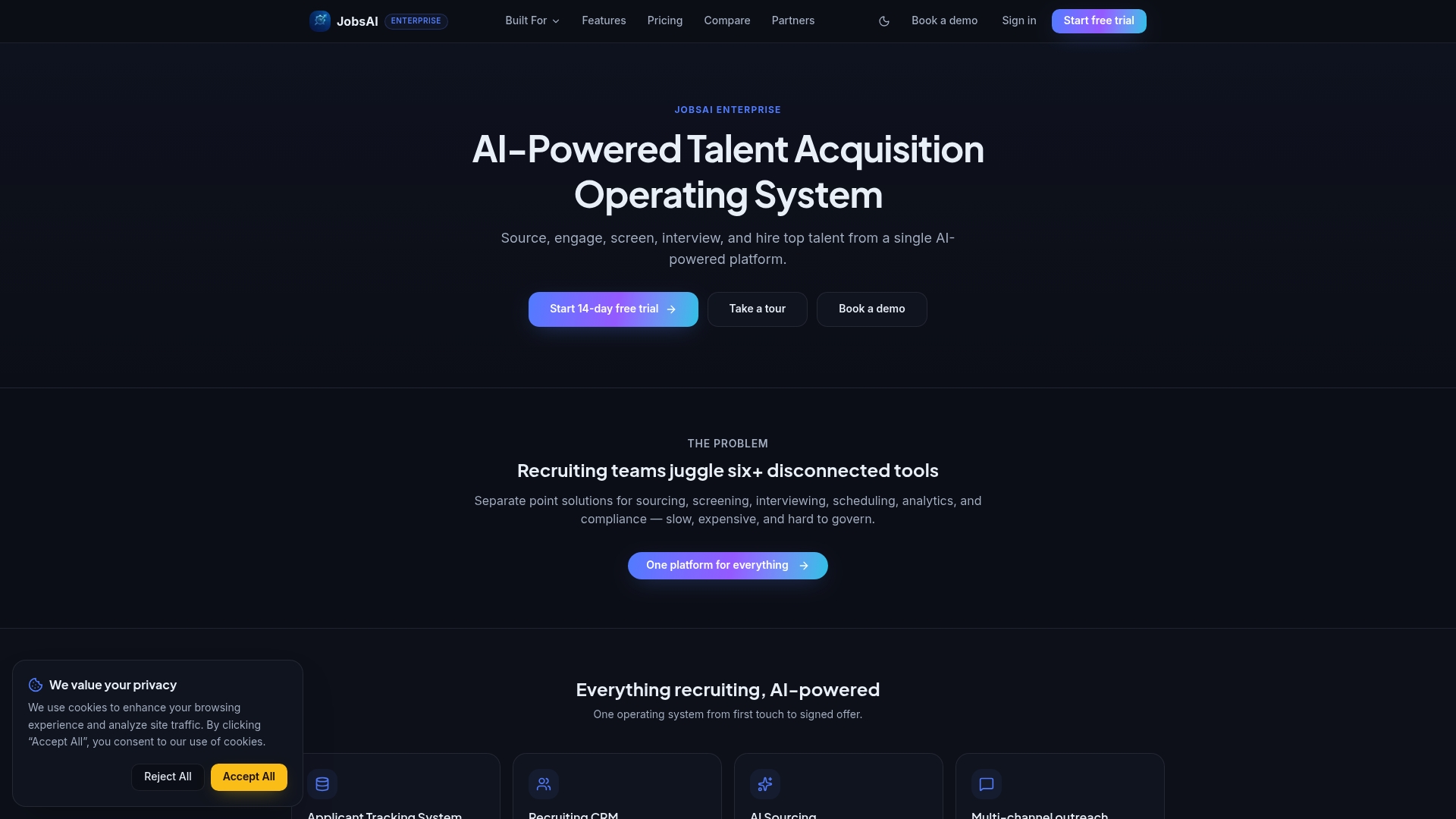
Corporate recruiting teams managing high-volume hiring need more than a basic ATS. Jobsai Enterprise combines AI candidate screening, a recruiting CRM, workflow automation, and a hiring manager workspace in one platform, so your team spends less time on manual review and more time on the decisions that actually require judgment.
Explore plans and pricing or see what Jobsai Enterprise is built for to find the right fit for your team size and hiring volume.
Sources
- What Is a Corporate Recruiter? Definition and Job Information
- What Do Corporate Recruiters Do? (Career overview and skills data)
- How to build a recruitment strategy: 10 key steps | TechTarget
- Corporate Recruiter Job Description | Requirements & Salary | 4 Corner Resources
FAQ
What is a corporate recruiter?
A corporate recruiter is an in-house HR professional who manages the full hiring lifecycle for a single employer, from sourcing and screening through offer and onboarding coordination. Unlike agency recruiters, they work exclusively for one organization and are accountable for both hiring outcomes and candidate experience.
Is it worth using a recruiter to find a job?
Working with an in-house corporate recruiter is worth your time because they have direct access to the hiring manager and can advocate for your candidacy internally. Agency recruiters can also open doors to roles not publicly posted, though their incentive is placement speed, so the fit may be less carefully evaluated.
How do I become a corporate recruiter?
Most people enter through HR coordinator, recruiting coordinator, or sourcing specialist roles, then move to full-cycle recruiting within 2–3 years. A SHRM-CP or PHR certification strengthens your profile, and hands-on ATS and HRIS experience is frequently required in job postings.
What skills do corporate recruiters need most?
How do corporate recruiters differ from headhunters?
Corporate recruiters are salaried employees who hire exclusively for their own organization. Headhunters, typically retained or contingency search consultants, work for multiple client companies and are paid a fee per placement, which creates different incentives around speed, fit, and long-term candidate relationships.
Recommended
See it in your workflow
JobsAI Enterprise runs sourcing, AI screening, and the whole interview pipeline in one place. Book a walkthrough tailored to your team.
Book a demo