
Article
Candidate Shortlisting Best Practices for Hiring Teams

Candidate Shortlisting Best Practices for Hiring Teams
TL;DR:
- Effective candidate shortlisting relies on clear criteria, AI screening, and ongoing calibration to quickly identify top candidates. Automating screening and implementing blind review processes help reduce bias and improve efficiency in hiring. Monitoring key metrics enables continuous improvement of the shortlisting process.
Candidate shortlisting is defined as the process of identifying the most qualified applicants from a pool using predefined, role-specific criteria. When done well, it is the single biggest lever recruiters have to reduce time-to-hire and improve offer acceptance rates. Industry benchmarks set the target at under 2 hours for high-volume roles and under 24 hours for specialized positions. Miss those windows, and 72% of top candidates abandon the process before you ever reach out. The candidate shortlisting best practices covered here combine structured criteria, AI-powered screening, and continuous calibration to help you move faster without sacrificing quality.
1. Candidate shortlisting best practices start with clear criteria
The most common shortlisting failure is vague criteria. If your team cannot agree on what “qualified” means before reviewing a single resume, every decision becomes subjective and inconsistent.

Start by separating must-have qualifications from nice-to-have ones. Structured criteria that distinguish required skills from preferred ones reduce bias and keep your shortlist aligned with what the role actually demands. A must-have for a senior data engineer might be five years of Python experience. Familiarity with a specific cloud platform is a nice-to-have.
Build a scorecard before the role opens. Assign numerical points to each criterion so reviewers evaluate every candidate against the same standard. This removes the “gut feeling” problem that creeps in when hiring managers review resumes without a framework.
Pro Tip: Pull data from your last three successful hires in a similar role. The skills and experience patterns they share are your most reliable criteria baseline.
2. Write job descriptions that attract the right candidates
Your shortlist quality is determined before the first application arrives. A vague or inflated job description pulls in unqualified applicants and buries strong ones in noise.
Write job descriptions around outcomes, not credentials. Instead of “5+ years of experience required,” specify what the person will accomplish in their first 90 days. Outcome-focused language attracts candidates who understand the actual work, not just those who match a keyword list.
Avoid credential inflation. Requiring a four-year degree for a role that genuinely needs demonstrated skill pushes away capable candidates and narrows your pool unnecessarily. Align every listed requirement with a real job function.
Review your job descriptions against your staffing benchmarks at least once per quarter. Role demands shift, and outdated descriptions generate shortlists that do not reflect current needs.
3. Use AI to speed up candidate shortlisting at scale
Manual resume screening consumes about 23 hours per hire. That is time your team spends reading documents instead of talking to candidates. Automating pre-screening cuts recruitment time by up to 60%.
AI-powered tools work by applying semantic parsing to resumes. Semantic parsers organize candidate data and score applicants against your predefined criteria based on skill relevance and contextual fit, not just keyword matches. A candidate who lists “built predictive models in Python” scores higher than one who simply lists “Python” when the role requires applied modeling experience.
Automated scoring creates tiered shortlists. Your strongest candidates surface first, and your team spends its time on the top tier rather than sorting through the entire pool. That shift alone changes how recruiters spend their day.
Pro Tip: Configure AI scoring thresholds per role, not globally. A threshold that works for a customer support role will over-filter or under-filter for a technical engineering position. Calibrate thresholds based on prior successful hires in each category.
4. Apply blind screening to reduce unconscious bias
Blind screening removes personally identifiable information from resumes during the first review stage. Anonymizing candidate data such as name, gender, and educational institution forces evaluators to focus on skills and experience. That shift reduces the influence of unconscious bias early in the hiring funnel.
This matters because bias does not require intent. Reviewers who genuinely want to hire fairly still make faster, more favorable judgments about candidates whose names or schools feel familiar. Blind screening removes that variable structurally.
Pair blind screening with structured evaluation rubrics. When every reviewer uses the same scorecard and sees the same anonymized data, the shortlist reflects actual qualifications rather than pattern-matching to previous hires.
Collaborative review adds another layer of fairness. When a recruiter and a hiring manager both score candidates independently before comparing notes, outlier judgments get flagged and discussed rather than defaulting to one person’s preference.
5. Replace keyword filtering with skill-based assessments
Resume keyword filtering is a blunt instrument. A candidate who lists the right tools may lack the ability to use them well. A candidate who describes their work in plain language may be exactly who you need but score low on a keyword scan.
Skill-based assessments reveal actual job readiness better than resume review alone. A short technical test, a work sample, or a structured scenario question gives you direct evidence of capability. That evidence is more predictive than a list of tools on a resume.
Use assessments at the shortlisting stage, not just after the interview. Placing a brief skills screen early in the process filters out unqualified candidates before your team invests time in phone screens. It also gives strong candidates a chance to demonstrate ability that their resume may not fully capture.
Track assessment completion and drop-off rates. If strong candidates are abandoning the process at the assessment stage, the test may be too long or poorly timed. That data helps you refine the process, not just the shortlist.
6. Set time-to-shortlist targets and hold to them
Speed is a competitive advantage in hiring. Delays over five days cause 72% of top talent to disengage. That number is not a warning. It is a deadline.
Set explicit time-to-shortlist targets for every role category. High-volume roles should reach a shortlist within two hours of application close. Specialized or senior roles should reach a shortlist within 24 hours. Build those targets into your hiring workflow so they function as deadlines, not aspirations.
Assign ownership. Someone on your team needs to be accountable for hitting the shortlist window. When no one owns the timeline, it slips. When one person is responsible, it gets done.
Review your candidate follow-up practices alongside your shortlisting timeline. Fast shortlisting only helps if candidates hear from you quickly after they are selected.
7. Build a structured interview selection process
A shortlist is only as good as the interview process that follows it. If your interview criteria differ from your shortlisting criteria, you will hire people who looked good on paper but were evaluated on different standards in person.
Align your interview selection criteria with your shortlisting scorecard. The same must-have skills that drove the shortlist decision should appear as structured interview questions. That alignment creates a consistent evaluation thread from application to offer.
Use structured interviews rather than conversational ones. Structured interviews ask every candidate the same questions in the same order and score answers against a rubric. Research consistently shows structured interviews predict job performance better than unstructured conversations.
Brief your interviewers before each session. Share the scorecard, the role criteria, and the specific competencies each interviewer is responsible for assessing. Divided coverage prevents overlap and ensures every criterion gets evaluated.
8. Track KPIs to improve your shortlisting process over time
Shortlisting should improve with every hiring cycle. Tracking candidate quality, time-to-shortlist, and interview-to-offer ratios gives you the data to refine criteria, adjust AI thresholds, and identify where your process loses strong candidates.
The metrics that matter most are:
- Time-to-shortlist — how long from application close to shortlist delivery
- Interview-to-offer ratio — how many shortlisted candidates receive offers (a high ratio signals good criteria; a low ratio signals criteria drift)
- Candidate quality score — hiring manager rating of shortlisted candidates after first interviews
- Drop-off rate — percentage of shortlisted candidates who disengage before the offer stage
- Diversity metrics — representation across gender, background, and experience type in your shortlists
Review these metrics after every completed hire, not just quarterly. Patterns emerge faster when you analyze them close to the hiring event.
Incorporate hiring manager feedback into criteria calibration. If a manager consistently rates shortlisted candidates as underqualified, your must-have criteria need adjustment. If they rate them as overqualified, your thresholds are too high. That feedback loop is the fastest way to improve shortlist quality.
Candidate engagement tracking tools give you visibility into where candidates disengage. Use that data to identify process weaknesses before they cost you strong hires.
Pro Tip: Document every human override of an AI shortlisting decision. Over time, those overrides reveal patterns that help you recalibrate your AI thresholds more accurately than any single data point.
Key Takeaways
Effective candidate shortlisting requires structured criteria, AI-assisted screening, and continuous calibration to consistently identify and secure top talent.
| Point | Details |
|---|---|
| Define criteria before reviewing | Separate must-have from nice-to-have skills using a scored rubric before the role opens. |
| Automate to cut screening time | AI screening reduces manual review time by up to 60%, freeing recruiters for interviews. |
| Apply blind screening early | Anonymizing candidate data at first review reduces unconscious bias structurally. |
| Set and own time targets | Shortlist high-volume roles within 2 hours and specialized roles within 24 hours. |
| Track metrics every hire cycle | Monitor time-to-shortlist, interview-to-offer ratio, and drop-off rates to refine your process. |
Why I think most shortlisting problems are criteria problems in disguise
After working with recruiting teams across dozens of hiring cycles, the pattern is clear. Teams that struggle with shortlisting quality almost always trace the problem back to criteria, not tools. They adopted an AI screening platform, configured it once, and never revisited the thresholds. The tool kept doing exactly what it was told. The problem was what it was told.
Automation is genuinely useful. Human-in-the-loop oversight with documented overrides is what keeps it honest. When a recruiter overrides an AI flag and notes why, that note is data. Collected over time, those notes tell you more about your actual hiring standards than any configuration setting.
The teams that get shortlisting right treat it as a living process. They calibrate criteria after every hire. They ask hiring managers what they actually valued in the person they chose. They adjust. The teams that struggle treat shortlisting as a one-time setup problem they solved two years ago.
The other thing worth saying plainly: speed matters more than most recruiters admit. Losing a strong candidate because your shortlist took a week is not a sourcing problem. It is a process problem. The fix is not finding more candidates. The fix is moving faster on the ones you already have.
— Hippolyte A.
How Jobsai Enterprise handles shortlisting from application to offer
Jobsai Enterprise is built for recruiting teams that need to move fast without losing accuracy. The platform screens and ranks applicants automatically, matches resumes against your defined role criteria, and delivers tiered shortlists so your team focuses on the strongest candidates first.
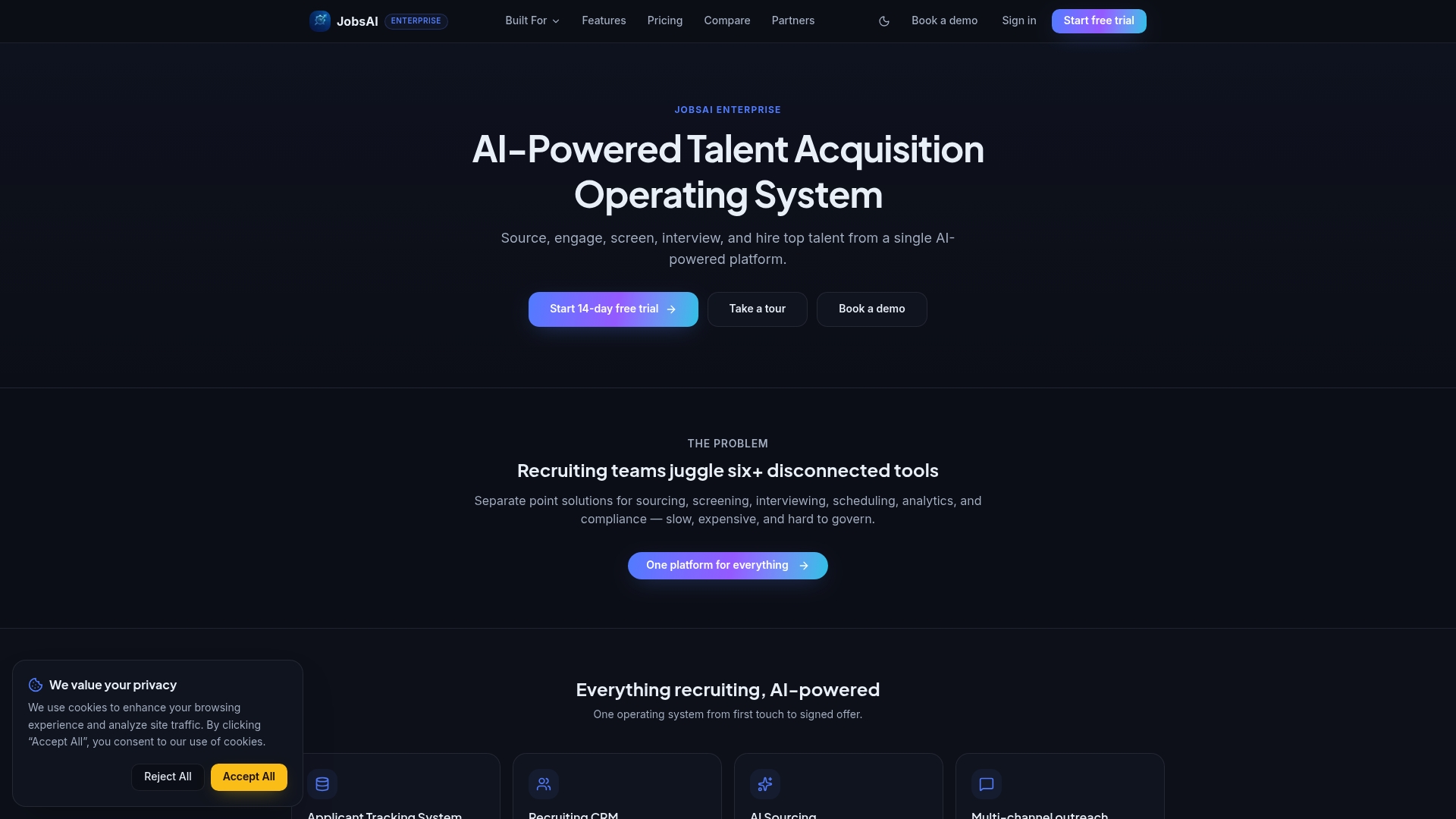
Jobsai Enterprise supports structured scorecard management, configurable AI thresholds per role, and blind screening options to reduce bias at the first review stage. Every shortlisting decision is logged, and human overrides are documented so your criteria improve with each hiring cycle. If you want to see how it fits your workflow, take the platform tour or review the full feature guide to understand what it can do for your team.
FAQ
What is candidate shortlisting?
Candidate shortlisting is the process of filtering a full applicant pool down to the most qualified candidates using predefined, role-specific criteria. It typically occurs after initial applications are received and before interviews begin.
How long should candidate shortlisting take?
Industry benchmarks set the target at under 2 hours for high-volume roles and under 24 hours for specialized positions. Delays beyond five days cause 72% of top candidates to disengage from the process.
How does AI improve the shortlisting process?
AI-powered semantic parsers score candidates against your criteria automatically, cutting manual screening time by up to 60%. This lets recruiters focus on interviewing rather than document review.
What is blind screening in recruitment?
Blind screening removes personally identifiable information such as name, gender, and educational institution from resumes during the first review stage. It reduces unconscious bias by forcing evaluators to focus on skills and experience alone.
How do you measure shortlisting effectiveness?
Track time-to-shortlist, interview-to-offer ratio, candidate quality scores from hiring managers, and drop-off rates. Reviewing these metrics after every completed hire gives you the data to refine criteria and improve shortlist quality over time.
Recommended
See it in your workflow
JobsAI Enterprise runs sourcing, AI screening, and the whole interview pipeline in one place. Book a walkthrough tailored to your team.
Book a demo