
Article
Candidate Follow-Up Best Practices for Recruiters

Candidate Follow-Up Best Practices for Recruiters
Candidate follow-up best practices are defined as the structured communication tactics recruiters and hiring managers use to keep applicants informed, engaged, and moving through the hiring pipeline without dropping out. Poor follow-up is one of the most preventable causes of candidate drop-off. Candidate satisfaction drops to 31% when silence stretches a week or more after an interview. That single number explains why so many strong candidates accept competing offers before you get back to them. The good news is that a clear, repeatable follow-up process fixes most of this, and tools like Jobsai make it easier to execute at scale.
1. What is the ideal follow-up timeline after an interview?
Timing is the single biggest variable in effective candidate follow-up. Send a thank-you within 24 hours, then a polite status check after 5–7 business days if you have not heard back. That cadence respects the candidate’s time while keeping your pipeline moving.
When the interviewer gives a specific decision timeline, wait until that date passes, then allow 1–2 business days before reaching out again. This shows you listened and that you respect their process. Chasing before the stated deadline signals impatience, not enthusiasm.

Limit yourself to two follow-ups total after the interview. The first is the thank-you. The second is the status check. A third message, sent a week after the second with no response, is the absolute maximum. Beyond that, the silence is an answer.
Pro Tip: Send follow-up messages during business hours, between 8 a.m. and 5 p.m. in the recipient’s time zone. Messages that arrive at 11 p.m. on a Friday get buried and read as unprofessional.
2. How to craft follow-up messages that actually get read
The best follow-up messages are short. Around 120 words is the target length. One tight paragraph is ideal. Recruiters who write long, meandering follow-ups train candidates to skim or ignore them entirely.
Every message should include three things:
- The specific job title and interview date
- A brief reference to something discussed in the interview
- A clear next step or an offer to provide additional information
Avoid asking directly whether a decision has been made. That puts the reader on the spot and rarely produces a useful answer. Instead, frame the message as a status check tied to the timeline you were given. The tone should be warm, specific, and forward-looking.
Pro Tip: Match the channel your candidate used to confirm the interview. If they replied by email, follow up by email. Switching channels mid-process creates friction and can feel intrusive.
Respectful, timeline-anchored follow-ups consistently outperform pressure-based messages. Candidates respond better when they feel informed rather than pursued.
3. How automation improves candidate follow-up at scale
Automated communication reduces recruiting communication failures by 45% when triggered by stage changes in the hiring pipeline. That means fewer candidates falling through the cracks simply because a recruiter forgot to send an update.
The most effective automation setups work like this:
- A candidate completes an interview, triggering an automatic thank-you and timeline confirmation
- A candidate advances to the next stage, triggering a personalized status update
- A candidate is not selected, triggering a respectful rejection message with a clear reason
The key word is “personalized.” Automated messages that read like form letters damage your employer brand. The best systems merge the candidate’s name, the role title, and a specific detail from their application into every message.
Candidate satisfaction reaches 88% when contacted within 24 hours of an interview. Automation makes that response time achievable for every candidate, not just the ones at the top of your list.
Jobsai integrates follow-up automation directly into the hiring pipeline, so updates go out at the right stage without requiring manual intervention. Recruiters who use the Jobsai guide to set up automated triggers report spending significantly less time on routine status updates.
4. Comparing follow-up channels: email, LinkedIn, and phone
Email is the standard channel for post-interview follow-up. LinkedIn is an appropriate backup but carries less formality, and direct messages on LinkedIn can feel casual in a context that calls for professionalism. Phone calls work well for final-round candidates or when a decision is time-sensitive.
| Channel | Best use case | Tone | Timing |
|---|---|---|---|
| All stages of hiring | Formal, clear | Within 24 hours post-interview | |
| Passive candidates, early outreach | Semi-formal | Initial contact or backup only | |
| Phone | Final-round, urgent decisions | Direct, personal | Pre-agreed or business hours only |
Sending follow-ups across multiple channels in the same week is not advised. A candidate who receives an email, a LinkedIn message, and a phone call within three days feels tracked, not informed. Pick one primary channel and stay consistent unless the candidate signals a preference for another.
A multi-channel approach works best when it is sequential, not simultaneous. Email first. If no response after 5–7 business days, a LinkedIn message is a reasonable second attempt. A phone call should be reserved for situations where a decision is genuinely time-sensitive.
5. Situational follow-up strategies and mistakes to avoid
Different hiring situations call for different follow-up approaches. Final-round candidates expect more personal communication. Large hiring teams with multiple decision-makers often have slower timelines, so your follow-up cadence should account for that reality.
Common mistakes recruiters make in candidate follow-up:
- Following up too soon. Sending a status check the day after an interview reads as impatient and puts unnecessary pressure on the hiring team.
- Sending vague messages. “Just checking in” with no reference to the role or interview date tells the candidate nothing and wastes their time.
- Going silent after rejection. Candidates who never receive a rejection notice leave negative reviews on platforms like Glassdoor. That silence costs you future applicants.
- Over-communicating. Candidates prefer 5–7 total touchpoints during the hiring process. More than that creates fatigue and signals disorganization.
When a candidate does not respond to two follow-ups, stop. Sending a third or fourth message does not improve your odds. It signals poor judgment and can damage the relationship permanently.
For slow decision cycles, set expectations early. Tell candidates at the end of the interview when they can expect to hear back. Then close the loop internally by aligning with the hiring manager on a concrete next-contact date. That one step prevents most follow-up failures before they happen.
Key takeaways
Effective candidate follow-up requires consistent timing, specific messaging, and the right channel, all coordinated between recruiters and hiring managers before the first message goes out.
| Point | Details |
|---|---|
| Timing drives satisfaction | Contact candidates within 24 hours post-interview to reach the highest satisfaction rates. |
| Keep messages short and specific | Aim for 120 words, reference the role and interview date, and end with a clear next step. |
| Automation prevents drop-off | Stage-triggered automated updates reduce communication failures and keep every candidate informed. |
| Match the channel to the context | Email is the default; use LinkedIn as a backup and phone only for urgent or final-round situations. |
| Coordinate internally first | Align with hiring managers on decision timelines before following up with candidates. |
Why follow-up is where most hiring processes quietly fall apart
The part of recruiting that gets the least attention is the space between the interview and the offer. Hiring managers focus on the decision. Recruiters focus on the pipeline. Nobody owns the update. That gap is where good candidates quietly accept other offers.
What I have seen work consistently is treating follow-up as a process step, not an afterthought. When recruiters and hiring managers agree on a next-contact date before the candidate leaves the building, the follow-up almost always happens on time. When that conversation does not happen, the follow-up gets delayed, the candidate interprets the silence as disinterest, and the offer goes to someone else.
The other thing most articles get wrong about candidate communication is the tone. Candidates are not waiting to be impressed. They are waiting to feel respected. A short, specific message that acknowledges their time and gives them a concrete timeline does more for your employer brand than any polished career page.
Empathy is not a soft skill in recruiting. It is a retention tool. The candidates who feel well-treated during the hiring process are the ones who accept offers, refer friends, and come back when they are ready for their next move.
— EveryBrainAI
How Jobsai helps recruiters follow up faster and more consistently
Keeping up with follow-up across a full pipeline is where manual processes break down. Jobsai is built to handle exactly that.
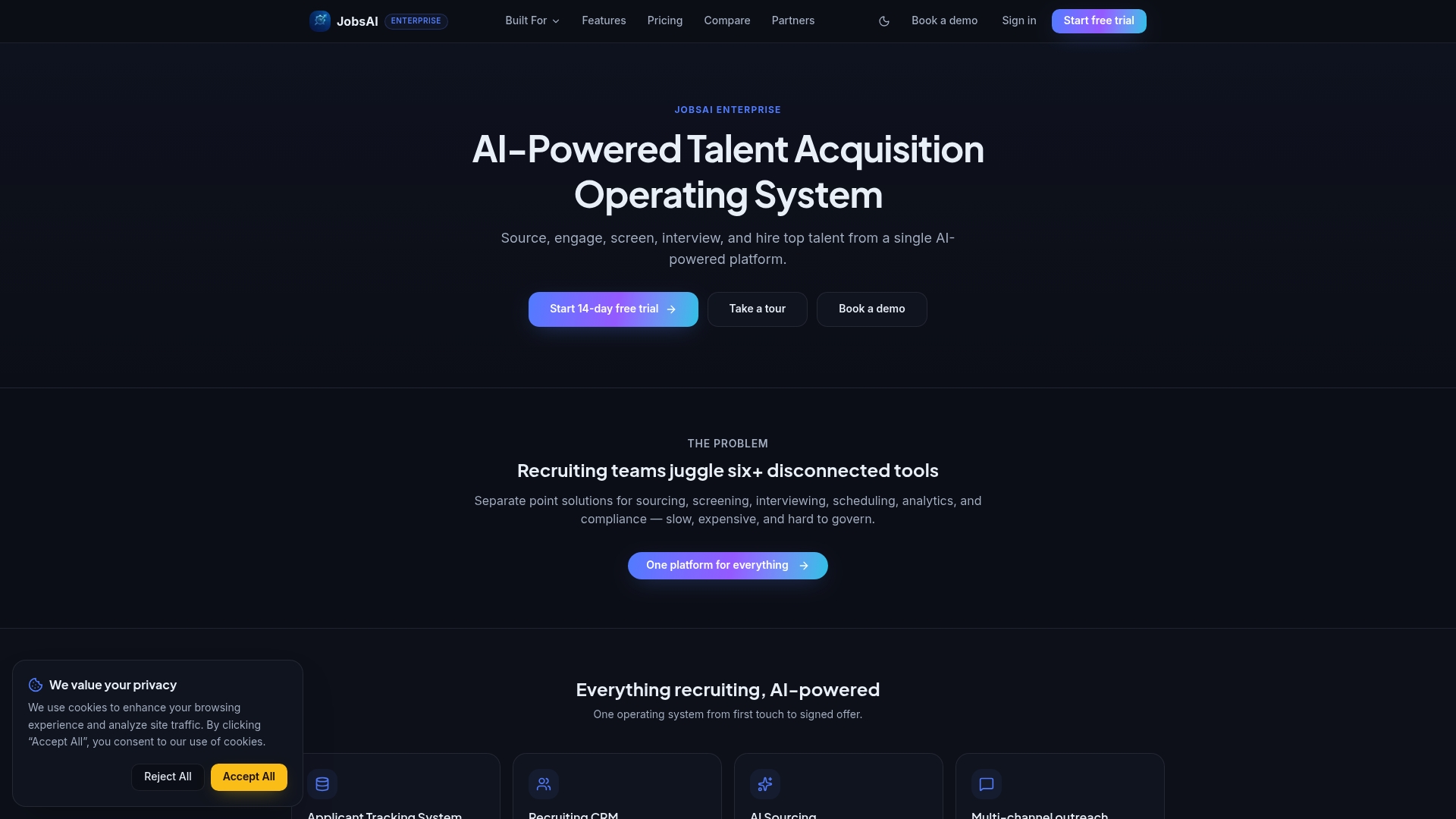
Jobsai automates follow-up messages at every stage of the hiring pipeline, from post-application acknowledgment to post-interview status updates and rejection notices. Messages go out on time, every time, with candidate-specific details merged in automatically. Recruiters stay focused on decisions while Jobsai handles the communication cadence. You can see how it works with a full platform tour, or review pricing to find the right plan for your team size. For teams ready to fix their follow-up process today, Jobsai Enterprise is the place to start.
FAQ
How soon should you follow up after a job interview?
Send a thank-you message within 24 hours of the interview. Follow up with a status check after 5–7 business days if you have not received a response.
How many follow-up messages should a recruiter send?
Two follow-ups are the standard. A thank-you immediately after the interview and one status check a week later. A third message is the absolute maximum if there is still no response.
What should a follow-up email include?
Every follow-up should reference the specific job title, the interview date, and a brief mention of something discussed. End with a clear next step rather than a direct question about the hiring decision.
Is email or LinkedIn better for candidate follow-up?
Email is the stronger channel for formal follow-up at every hiring stage. LinkedIn is a reasonable backup for candidates who do not respond to email, but it carries less formality and should not replace email as the primary method.
How does automation help with candidate follow-up?
Automated follow-up triggered by pipeline stage changes reduces communication failures and keeps candidates informed without requiring manual effort from recruiters at every step.
Recommended
See it in your workflow
JobsAI Enterprise runs sourcing, AI screening, and the whole interview pipeline in one place. Book a walkthrough tailored to your team.
Book a demo