
Article
Top 4 Agentbase.io Alternatives 2026
Top 4 Agentbase.io Alternatives 2026
Managing the entire recruiting workflow across disconnected applicant tracking, sourcing, and CRM tools creates lost time and inconsistent records. Many platforms require multiple integrations or manual exports for key steps like candidate sourcing, screening, and interview management. This comparison covers features, automation level, and pricing across four recruiting platforms so recruiting agencies and HR teams can choose one that fits their workflow.
Table of Contents
Jobsai Enterprise
At a Glance
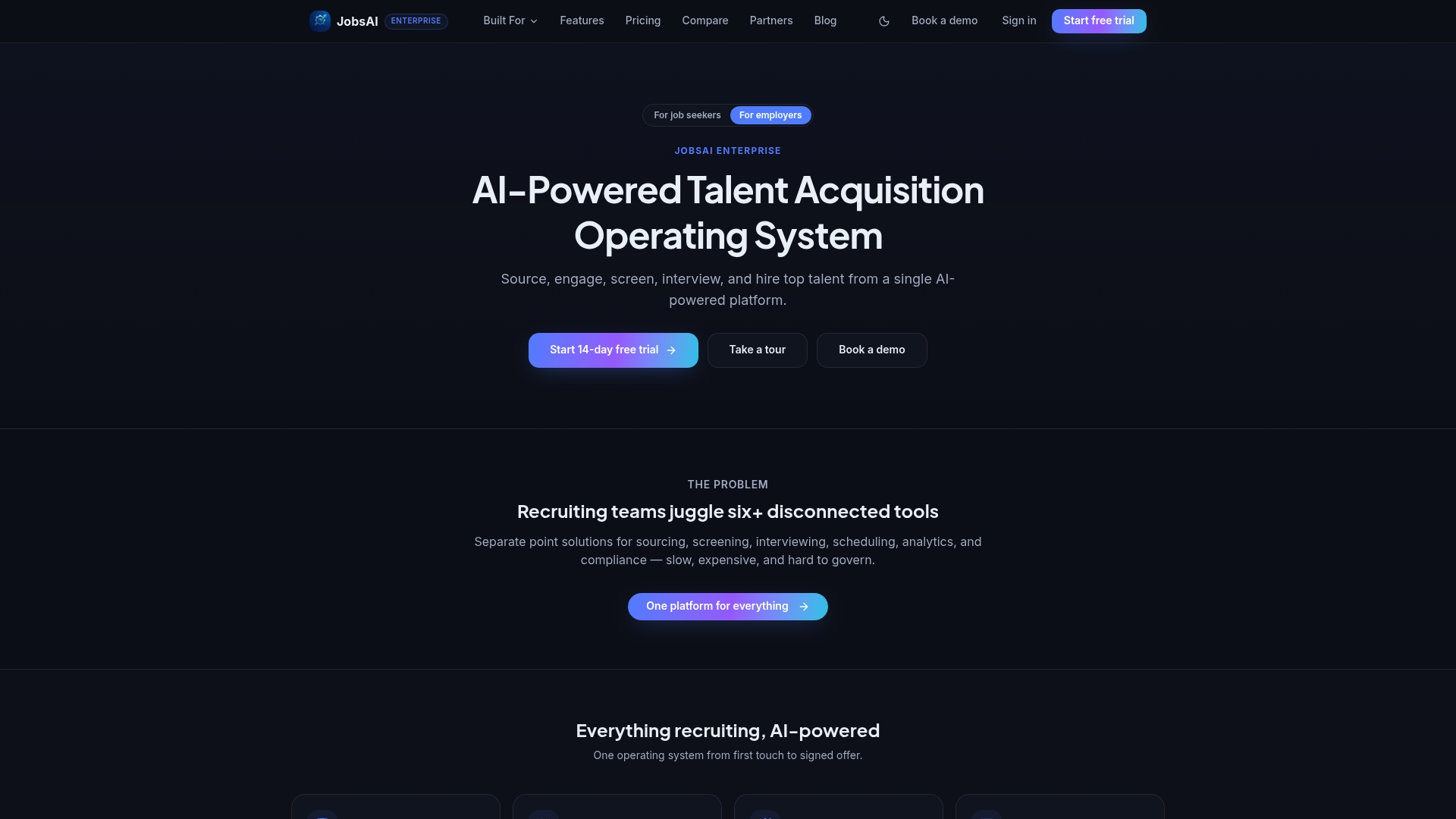
AI voice and avatar interviews produce automated scoring and transcripts. The system pairs an Applicant Tracking System with an AI powered sourcing engine and a recruiting CRM to cover sourcing through onboarding. It targets recruiting agencies, staffing firms, and corporate HR teams that want to cut manual review time.
Core Features
The Applicant Tracking System includes a Kanban pipeline, resume parsing, a candidate database, and career pages. The recruiting CRM supports talent pools, nurturing campaigns, and multi channel outreach by email, SMS, and WhatsApp with automation. AI powered candidate sourcing, automated screening and ranking, plus interview transcripts and scoring supply analytics and compliance visibility for enterprise teams.
Key Differentiator
All in one AI powered platform replaces multiple disconnected tools from sourcing to onboarding. That centralization reduces tool sprawl and keeps candidate records, outreach sequences, and interview data in a single system. For teams using separate ATS, CRM, and interview vendors this cuts handoff friction and simplifies audits.
Pros
Consolidation of ATS, CRM, sourcing, interview automation, and outreach means hiring workflows run inside one system rather than across several tools. Automated screening and ranking reduce manual candidate review time and standardize initial assessments across roles. Analytics and compliance features help enterprise teams track funnels and audit hiring decisions while integrated outreach improves candidate follow up.
Cons
- High cost for small teams or startups.
Notable Integrations
Native connectors include common applicant tracking and HR systems. These integrations let you sync job requisitions and push candidate data without manual exports.
- Greenhouse
- Lever
- Workday
- Bullhorn
- ADP
Who It’s For
Recruiting agencies and staffing firms managing multiple clients will get the most value from the platform. Mid sized and large corporate HR teams that need AI powered sourcing and built in interview automation also fit well. Small teams should weigh licensing cost against the expected automation gains.
Unique Value Proposition
AI voice and avatar interviews with automated scoring and transcripts deliver a concrete time saving on candidate evaluation. That feature moves initial interviews and scoring into a consistent, auditable record inside the hiring workflow. For teams that measure time to decision and candidate experience, this can shorten review cycles and reduce repeated manual screening.
Real World Use Case
A staffing firm used Jobsai Enterprise to automate candidate sourcing and screening. The firm moved interview scheduling and client communication into the same system. Placements happened faster and administrative hours decreased.
Pricing
Pricing is tiered and billed annually with discounts for longer commitments. The vendor lists Professional at $239/month, Agency at $639/month, Business at $1,199/month, and a custom Enterprise plan for larger deployments. Exact fees and contract terms appear on the vendor site.
Website: https://app.jobsai.work
Recruiterflow
At a Glance
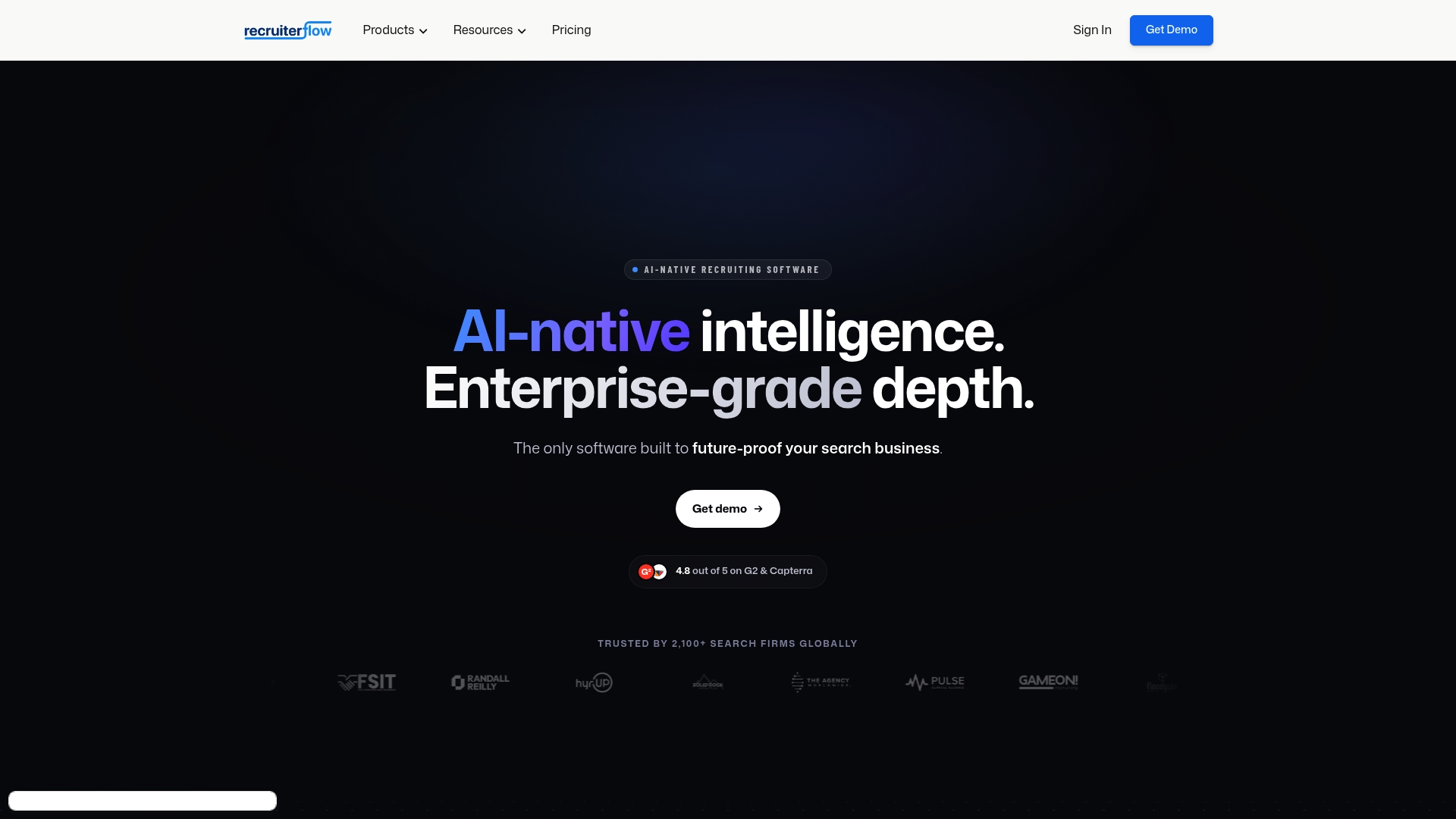
Recruiterflow reports being trusted by over 2,100 search firms globally. It combines an applicant tracking system and a CRM with multichannel outreach and AI agents for sourcing and admin tasks. The vendor advertises that its workflow automation can cut administrative effort by up to 70%, which supports faster recruiter throughput.
Core Features
Recruiterflow surfaces signals across email, LinkedIn, phone, and SMS and uses those inputs to update records automatically while tracking engagement. Its AI Agents such as Notetaker, Source, and Matchmaker automate sourcing and routine admin work, and the unified ATS and CRM keep candidates, clients, and deals visible in one place. The platform also offers branching multichannel sequences, workflow automation, goals and leaderboards, and Recruiterflow BI for reporting and performance analysis.
Key Differentiator
According to the vendor, Recruiterflow is the only recruiting platform built with AI native intelligence that combines advanced automation, sourcing, and analytics without trade offs. That positioning concentrates AI into both candidate discovery and operational tasks so teams spend less time on data entry and more time qualifying and closing. The emphasis on AI across sourcing, CRM maintenance, and reporting separates its approach from standard ATS tools.
Pros
Support is widely praised and many users report faster onboarding and fewer blockers when they adopt the system. The vendor advertises G2 and Capterra ratings of 4.8/5, which suggests broad user satisfaction. Deep AI integration reduces repetitive work, and the combined ATS and CRM plus multichannel sequences let teams run sourcing and outreach from a single workspace.
Cons
-
The platform can present a steep learning curve for teams new to advanced AI features, which may slow initial adoption.
-
Pricing details are not publicly listed, so small teams could face higher costs without clear entry tiers.
-
Customization and integrations can require dedicated onboarding and vendor support to get workflows tuned to specific processes.
Who It’s For
Recruiterflow fits search firms and recruitment agencies that want an AI first, enterprise grade recruiting system. It also suits in house talent teams that run high volume outreach and need unified tracking for candidates and client relationships. Smaller teams with minimal outreach needs may find the platform more than they require.
Real World Use Case
A mid sized search firm uses Recruiterflow agents to surface passive candidates from public signals and to draft outreach sequences. The team captures interaction data across channels, keeps role and pipeline details in the integrated ATS and CRM, and runs Recruiterflow BI reports to measure placement velocity. That workflow reduces manual updates and lets recruiters focus on candidate conversations.
Pricing
Pricing is not specified publicly and appears to be quoted per firm based on size and needs. Prospective buyers should request a vendor quote and clarify which modules and training are included. Expect custom pricing discussions during sales calls.
Website: https://recruiterflow.com
Talismatic
At a Glance
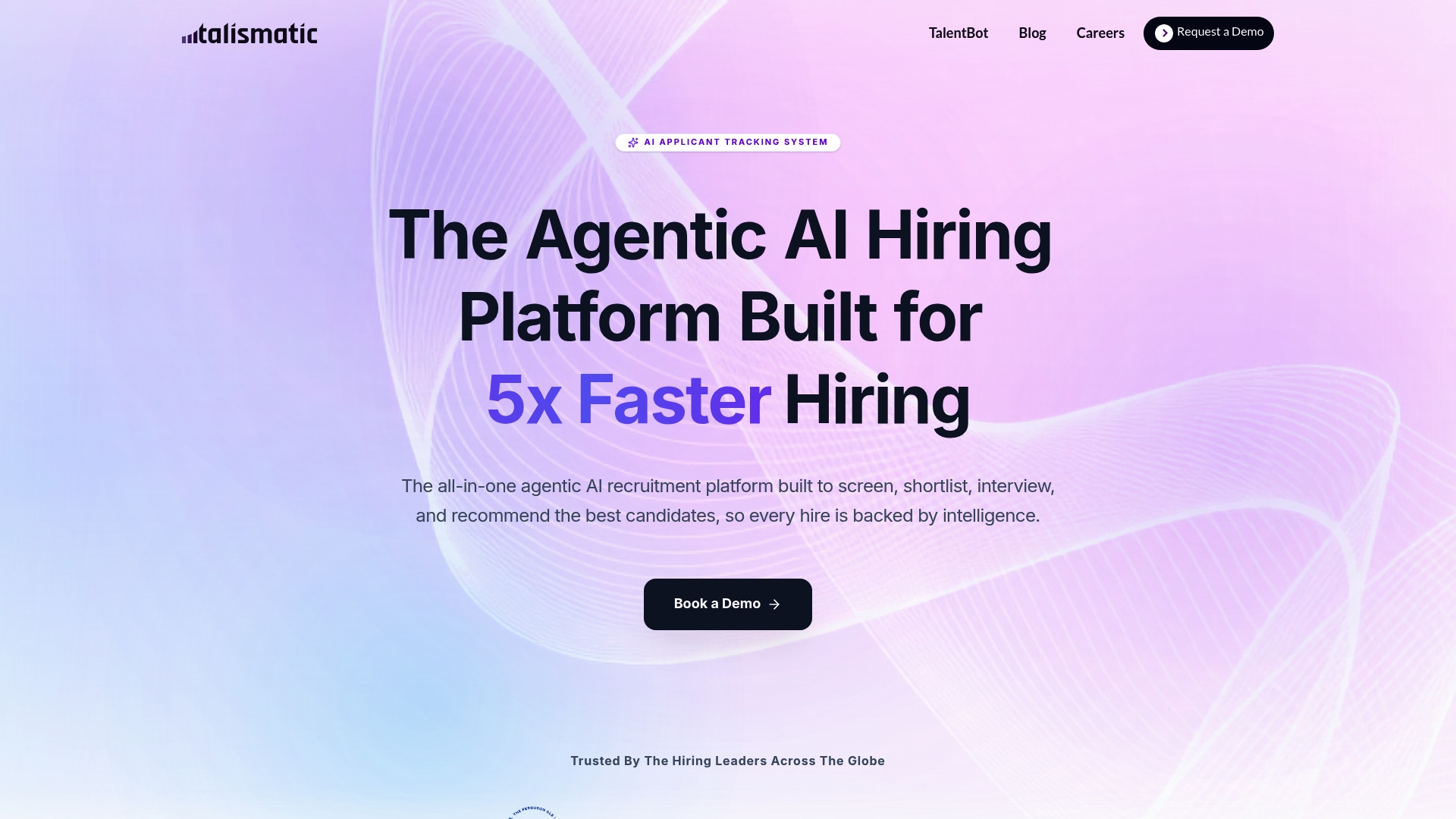
Talismatic’s marketing materials claim it can make hiring five times faster by combining conversational AI with automation across the hiring funnel. The platform emphasizes natural language interaction to create roles, screen resumes, and surface final hire recommendations. That performance claim anchors its positioning for teams focused on speed and automation.
Core Features
Talismatic uses conversational AI to let recruiters ask questions and receive instant candidate insights in plain language. It supports AI-driven job creation, resume screening with skill analysis, and candidate scoring that ranks applicants against role criteria. The product also includes interview intelligence with transcripts and summaries, candidate engagement via a career page assistant, and analytics to reveal funnel bottlenecks.
Key Differentiator
Talismatic pairs natural language interaction with end to end automation so you can run large parts of hiring without manual scripting. Recruiters can ask the system to shortlist candidates, schedule interviews, and generate evaluation summaries using conversational commands. That workflow focus separates it from ATS tools that require manual setup for each step.
Pros
The conversational interface reduces time spent on repetitive queries and lets nontechnical hiring managers get actionable answers quickly. Automated screening and structured scoring convert resumes into measurable candidate profiles, which helps you prioritize interviews with clearer evidence. Interview intelligence produces searchable transcripts and recommendations so feedback cycles close faster and hiring decisions rest on consistent records.
Cons
- Performance depends on data quality and connected systems, which may limit results for incomplete candidate records.
- Teams new to AI recruiting should expect a learning curve around conversational prompts and workflows.
- Pricing details are not listed, making budget planning difficult for smaller recruiting teams.
Who It’s For
Recruiting teams and hiring managers at mid and large organizations that want to reduce manual candidate review and speed hiring. Talent teams that already use structured data formats for resumes and assessments will see the most value. Groups looking for a conversational approach to orchestration rather than a simple applicant database fit best.
Real World Use Case
A global tech company used Talismatic to automate job creation, candidate screening, and interview notes. That claim of five times faster hiring appears in their example where automation cut manual review and centralized interview summaries. Recruiters then used the platform’s recommendations to focus interviews on top candidates with documented skill matches.
Pricing
Pricing is not specified publicly and appears to follow enterprise or custom licensing models. Expect vendor conversations and a tailored quote rather than a self-serve pricing page. Budgeting should include assessment of integration effort and onboarding for conversational workflows.
Website: https://talismatic.com
Niyuk HR
At a Glance
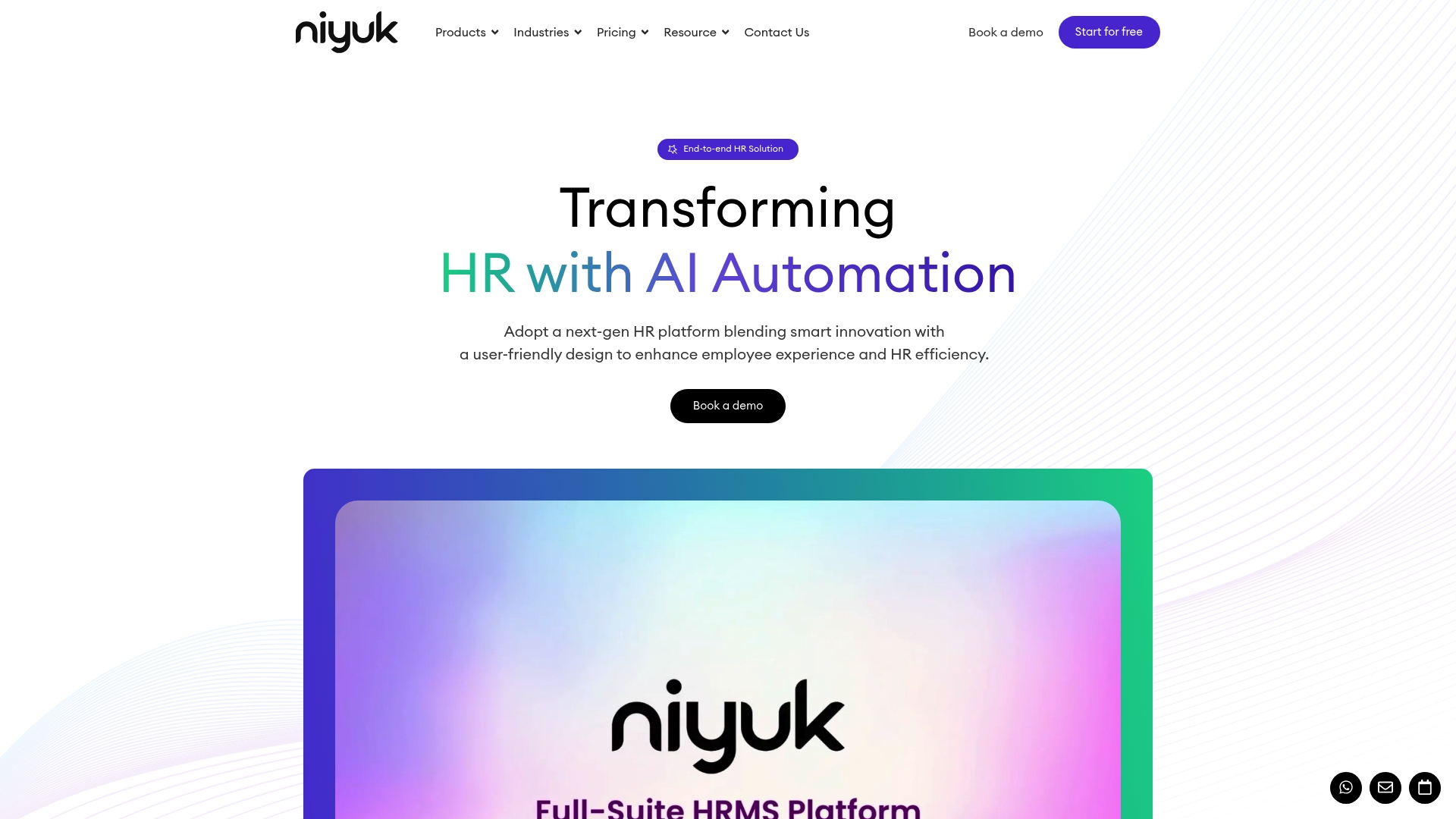
Includes a vendor marketplace for recruitment agencies alongside HRMS, payroll, ATS, performance tracking, and succession planning. The platform groups core HR functions with candidate engagement and an employee helpdesk. Multiple tiered plans and modular add-ons let organizations enable only the features they need.
Core Features
Niyuk HR combines HRMS and payroll processing with an Applicant Tracking System (ATS) so HR teams do fewer platform handoffs. The system adds performance and goal tracking, onboarding workflows, and succession planning informed by AI insights. Candidate screening, sourcing, and interview tools sit next to an employee helpdesk for internal support.
Key Differentiator
Niyuk HR centers on full lifecycle HR operations instead of only candidate sourcing. Its notable angle is merging payroll, HR records, and recruitment tools in one product so teams manage hiring and employee operations from the same place. That focus fits organizations that want fewer point solutions and unified reporting.
Pros
The product reduces context switching by consolidating recruitment, payroll, and employee management into one package, which saves time during handoffs. AI features automate sourcing, candidate screening, and assessments so recruiters can focus on higher value tasks. Flexible subscription tiers and modular add-ons let teams buy core modules first and add functions like expense management or recruitment automation later.
Cons
-
Price could be a barrier for very small companies or startups with tight budgets.
-
New users may face a learning curve to use the AI features and customization options effectively.
-
Some organizations will need deeper customization for niche HR processes than what standard modules provide.
-
The platform relies on cloud access and has limited offline capability for remote or low-connectivity sites.
When It May Not Fit
If your organization has a very small headcount and minimal HR complexity, the subscription and add-on model may not be cost effective. Teams that require heavy offline access or local data processing will find the cloud-first design limiting. Recruiters who only need a lightweight sourcing tool may prefer a narrower, hiring-only solution.
Who It’s For
HR professionals and recruitment agencies that want an integrated HR and hiring system will find the platform suitable. Organizational leaders planning to consolidate payroll, performance, and candidate workflows into one environment will see the most value. Teams that expect to scale HR operations and add modules over time match the offering well.
Real World Use Case
A mid-sized company automates onboarding, payroll, and performance reviews on the same platform while using AI sourcing and assessments to refine candidate shortlists. The HR team reduces manual data entry between payroll and HR records. Recruiters use the vendor marketplace to supplement agency sourcing when internal pipelines run low.
Pricing
Niyuk HR’s marketing materials state plans start at approximately ₹1300 per month for basic modules, with additional fees for extra employees and add-ons. Pricing is subscription based and adjusts to organizational size and selected modules. Vendors can tailor enterprise quotes for higher headcounts and extra functionality.
Website: https://niyuk.ai
Comparison of alternatives
The choice of recruiting software hinges on factors like workflow centralization, AI integration, and licensing structure. Each of the reviewed platforms meets specific needs, presenting concrete benefits and limitations depending on organizational requirements.
Feature breadth and integration
Jobsai Enterprise excels in unifying Applicant Tracking System (ATS), recruiting CRM, and AI-powered interview automation within a single cohesive tool. This centralization minimizes the friction of switching between platforms and ensures consistent data management and compliance. On the other hand, Niyuk HR allows end-to-end HR lifecycle management by integrating recruiting with payroll and performance tracking, which is valuable for teams seeking broader organizational control.
AI capabilities comparison
In terms of leveraging artificial intelligence, Talismatic provides conversational AI that facilitates queries about candidates and automates screening with natural language inputs—ideal for teams accustomed to structured data workflows. Conversely, Recruiterflow includes AI agents for routine tasks like sourcing and admin, reducing repetitive tasks and optimizing recruiter efficiency.
Best fit
- Teams managing workflows through a single tool will benefit from Jobsai Enterprise due to its integrated ATS, CRM, and AI-guided interview system.
- Organizations needing highly customizable integrations and dedicated vendor support should consider Recruiterflow, which offers bespoke options.
- Recruiters desiring conversational AI capabilities for automation will find Talismatic particularly advantageous, emphasizing natural language interaction.
- Companies aiming to align hiring with HR functions such as payroll or performance management will appreciate Niyuk HR.
Our pick
For recruiting teams and agencies looking for a centralized platform that incorporates AI-powered sourcing, interview automation, and compliance-friendly workflows, Jobsai Enterprise is the recommended choice. However, enterprises seeking extensive HR functionalities or conversational AI alternatives may find better alignment with other platforms like Niyuk HR or Talismatic.
Choosing the right recruiting software can simplify workflows by integrating tools efficiently and reducing time spent on manual processes.
| Product Name | Core Feature | Key Differentiator | Best For | Pricing | Notable Limitation |
|---|---|---|---|---|---|
| Jobsai Enterprise | AI-powered ATS with integrated CRM and analytics | Consolidated system replacing multiple disconnected tools | Corporate HR and staffing firms | Professional $239/month, Agency $639/month, others | High cost for small teams or startups |
| Recruiterflow | ATS and CRM with embedded AI agents | AI-first platform optimizing sourcing and operations | Search firms and recruitment agencies | Price not published | Requires onboarding for workflow customization |
| Talismatic | Conversational AI for resume screening and interviews | Natural language interaction supports automation | Mid and large organizations | Price not published | Performance depends on connected system data quality |
| Niyuk HR | HRMS and HR services alongside recruitment tools | Lifecycle integration of HR processes and payroll records | Integrated HR professionals and scaling teams | From ₹1300/month | Limited offline capabilities for remote operations |
Are agentbase.io alternatives meeting your recruiting needs?
Jobsai Enterprise tackles the challenge of managing candidates faster and with less manual effort. Recruiting agencies and hiring teams face repetitive tasks like screening resumes and tracking candidates across separate tools. Jobsai Enterprise combines AI-powered screening, ranking, and organized hiring workflows within one platform. This reduces manual reviews and improves communication with candidates.
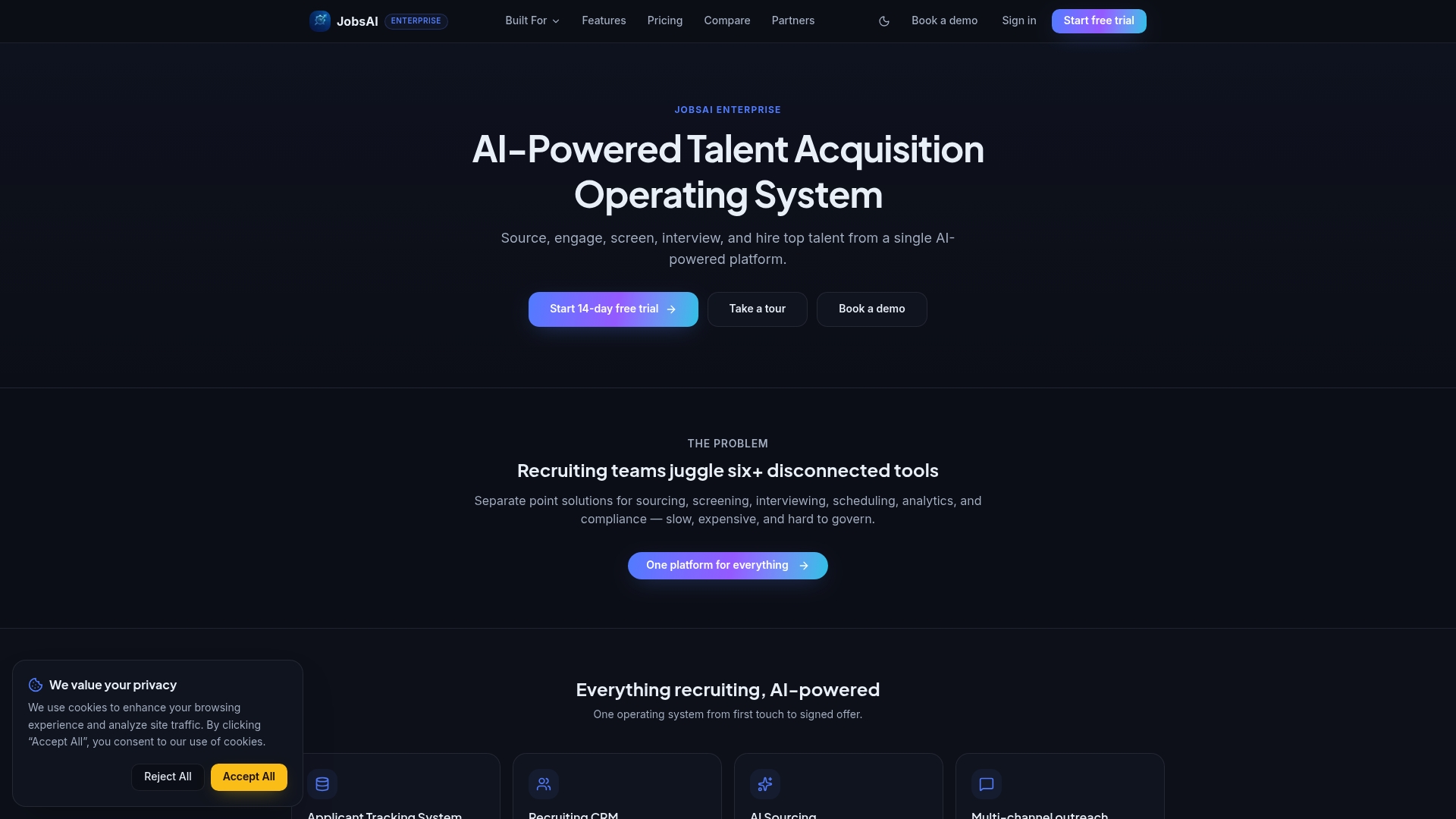
See how Jobsai Enterprise can cut your candidate review time and keep everything in one place. Visit Jobsai Enterprise to match resumes automatically, manage pipelines clearly, and speed up your hiring decisions today.
FAQ
How does Jobsai Enterprise improve time management in candidate evaluation?
Jobsai Enterprise significantly reduces candidate evaluation time. Its AI voice and avatar interviews generate automated scoring and transcripts that streamline the hiring workflow. Using this feature helps recruiting teams make faster, consistent hiring decisions.
What is the difference between Jobsai Enterprise and Recruiterflow in terms of automation?
Recruiterflow utilizes AI Agents to automate routine administrative tasks, significantly enhancing recruiter efficiency. Jobsai Enterprise, on the other hand, combines its ATS and CRM to cover the entire hiring process, from sourcing to onboarding, making it a better fit for teams looking for an end-to-end solution.
Which platform provides built-in candidate scoring?
Jobsai Enterprise includes automated candidate screening and scoring. This feature ranks applicants against predefined criteria, ensuring that recruiters focus on the best matches for their roles. Implementing this helps teams standardize initial assessments effectively.
Can I scale my recruiting efforts with Jobsai Enterprise?
Yes, Jobsai Enterprise is designed for mid-sized and large corporate HR teams that need to scale hiring effectively. Its comprehensive features enable teams to manage extensive outreach and candidate tracking efficiently without relying on multiple tools.
Does Jobsai Enterprise support integration with other HR systems?
Yes, Jobsai Enterprise offers native connectors with various applicant tracking and HR systems. This integration allows for seamless synchronization of job requisitions and candidate data, which simplifies the hiring process.
Recommended
See it in your workflow
JobsAI Enterprise runs sourcing, AI screening, and the whole interview pipeline in one place. Book a walkthrough tailored to your team.
Book a demo