
Article
Candidate Experience Standard: A Complete Guide for HR Teams

Candidate Experience Standard: A Complete Guide for HR Teams
A candidate experience standard is the defined set of consistent practices and measurable service-level expectations governing every interaction a job candidate has throughout the recruitment process. Known formally as a candidate experience framework, this standard covers everything from job discovery and application to final offer or rejection. Qualtrics defines candidate experience as a beginning-to-end perception spanning four to five core recruitment touchpoints. Getting this right is not optional. 66% of candidates say their experience during hiring directly affected whether they accepted an offer.
What is candidate experience standard and why does it matter?
A candidate experience standard is a structured framework that sets measurable expectations for how your organization treats every applicant at every stage. The industry term for this is a candidate experience framework, and it operates through service-level agreements (SLAs), feedback loops, and defined communication timelines. Talent Acquisition Authority identifies SLAs as the core mechanism for operationalizing these standards, specifying internal expectations and metrics that hold recruiters and hiring managers accountable.
The importance of candidate experience standards goes beyond good manners. When standards are inconsistent, candidates withdraw, decline offers, and share negative reviews on platforms like Glassdoor and LinkedIn. Both accepted candidates and rejected applicants influence your talent pipeline. Positive experiences encourage reapplications and word-of-mouth referrals that reduce future sourcing costs.

Standards also create fairness. A defined framework prevents ad hoc treatment where some candidates receive prompt updates while others wait weeks in silence. That inconsistency is the fastest way to damage your employer brand with the very people you want to hire.
What are the key touchpoints in a candidate experience framework?
Candidate experience spans the entire hiring process, covering five primary stages where your standards must be explicitly defined and enforced.
| Stage | Standard expectation | Responsible owner |
|---|---|---|
| Job discovery | Clear, accurate job descriptions with realistic timelines | Talent acquisition lead |
| Application | Confirmation within 24 hours of submission | Recruiting coordinator |
| Screening | Interview invite or rejection within 5 business days | Recruiter |
| Interview | Structured feedback delivered within 48 hours post-interview | Hiring manager |
| Offer or rejection | Final decision communicated within 3–5 business days | Recruiter |
Each stage requires a named owner and a defined SLA. Without ownership, accountability disappears and candidates fall into communication gaps. The interview stage is where most organizations fail. Hiring managers often delay feedback because no SLA forces them to act within a set window.
- Acknowledge every application with an automated confirmation that includes a realistic timeline.
- Set a maximum response window for screening decisions and publish it internally.
- Brief interviewers on feedback deadlines before each interview panel.
- Send a terminal status update to every candidate, including those who are rejected.
Pro Tip: Build your SLAs into your applicant tracking system as automated reminders. If a recruiter has not updated a candidate’s status within the SLA window, the system should flag it before the candidate notices the silence.
How do organizations measure candidate experience standards and success?
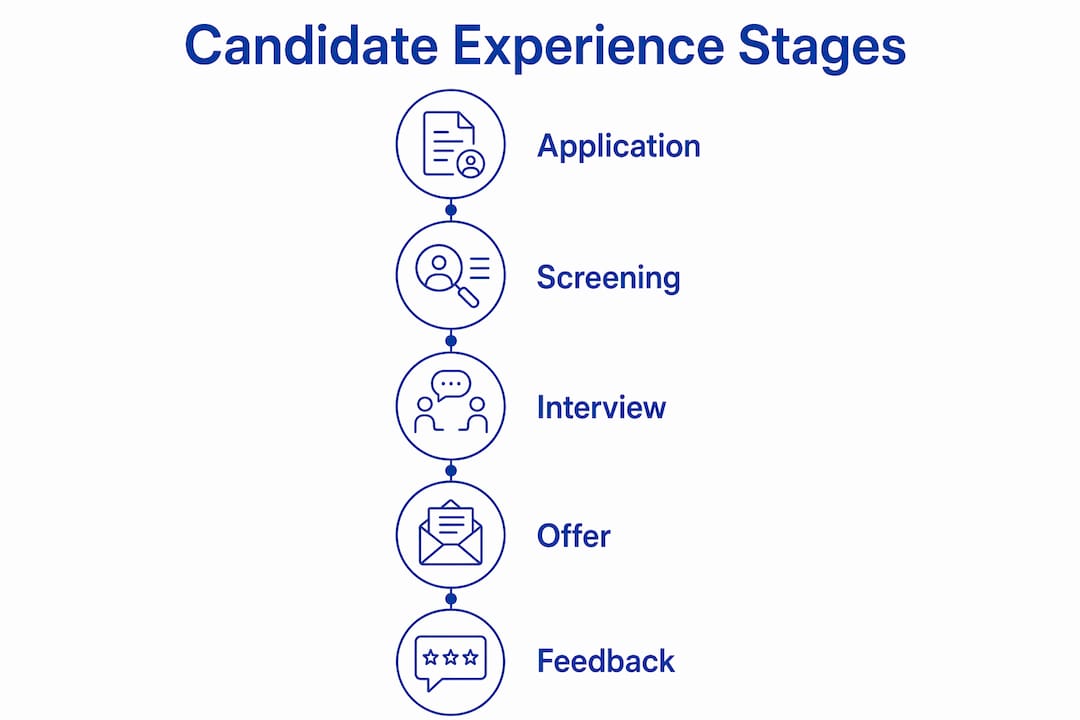
Measuring candidate experience requires separating candidate experience metrics from standard recruiting metrics. Time-to-fill measures operational speed. Candidate NPS (cNPS) measures how candidates actually felt about the process. Both matter, but they answer different questions.
FirstHR and Teamtailor identify these as the core quantitative metrics HR teams should track:
- Candidate Net Promoter Score (cNPS): Measures likelihood of recommending your company to other job seekers.
- Application completion rate: Tracks how many candidates who start an application finish it. A low rate signals friction in your process.
- Time-to-hire: Measures total days from application to accepted offer.
- Offer acceptance rate: Reflects how compelling your process and offer are together.
- Stage-specific communication time: Tracks how long candidates wait between each touchpoint.
Qualitative feedback matters just as much as numbers. Post-interview surveys and post-rejection surveys capture sentiment that cNPS alone cannot explain. The Candidate Experience Institute’s CandE Benchmark recommends a 3-to-5 day decision rule with sub-48-hour feedback turnaround as an operational benchmark for high-performing organizations.
One critical measurement mistake is surveying only hired candidates. Surveying only hires creates biased feedback because rejected candidates, who make up the majority of your applicant pool, are excluded. Their experience is often worse, and ignoring it leads teams to overestimate how well their standards are working.
Pro Tip: Send a short three-question survey to rejected candidates within 48 hours of their rejection notice. Ask about communication clarity, process fairness, and whether they would apply again. The responses will surface gaps your hired candidates never see.
Why do candidate experience standards affect recruitment outcomes and employer brand?
Candidate experience standards directly determine whether your best candidates accept offers or walk away. The data is clear. 66% of candidates said their experience influenced their decision to accept or decline an offer. That means a poorly managed process costs you hires before compensation is even discussed.
“Candidate experience is not a soft metric. It is a direct driver of offer acceptance rates, pipeline health, and employer brand equity.” — AIHR, citing CareerPlug’s Candidate Experience Report
Poor experiences compound over time. A candidate who had a bad experience tells their network. On Glassdoor, a single negative review about a disorganized interview process can suppress application rates for months. For specialized roles where talent pools are small, that reputational damage is particularly costly.
Consistent standards protect your pipeline in both directions. Candidates who are rejected but treated well are far more likely to reapply for future roles and refer colleagues. Good candidate experience encourages reapplications and positive referrals, which reduces sourcing spend over time. The math is straightforward: treating every candidate well is cheaper than rebuilding a damaged employer brand.
What are best practices for implementing candidate experience standards?
Setting standards is the easy part. Sustaining them across a busy hiring team requires process discipline and clear ownership at every stage.
- Define SLAs for every stage. Write down the maximum acceptable wait time between each touchpoint. Vague expectations produce inconsistent behavior.
- Assign a named owner for each SLA. Granular SLA ownership at each stage, from acknowledgment through feedback delivery, prevents the silence gaps that frustrate candidates most.
- Close the loop with every candidate. Sending a terminal status update to all candidates, including rejections, is the single most important standard to enforce. Ghosting after an interview is the top driver of negative employer brand reviews.
- Build ADA and accessibility accommodations into your process. Standardizing does not mean rigidity. Your framework must include documented procedures for candidates who need scheduling flexibility or communication format adjustments.
- Review standards quarterly. Candidate expectations shift with market conditions. A standard that worked in a tight labor market may feel slow when competition for talent increases.
- Train hiring managers, not just recruiters. Most SLA failures happen at the hiring manager stage because managers are not held to the same communication standards as recruiters.
Pro Tip: The most common pitfall is treating candidate experience as a recruiting team responsibility alone. Hiring managers control the interview feedback timeline. Without a formal SLA tied to their role, that stage will always be your weakest link.
How can HR teams tailor candidate experience standards to their organization?
A startup with five open roles and a Fortune 500 company hiring 5,000 people annually cannot use the same framework. Customization is not optional. It is how standards become practical rather than aspirational.
- Small businesses often lack dedicated recruiting coordinators. In this case, automate acknowledgment emails and use a simple SLA checklist that hiring managers can follow without recruiter support.
- High-volume hiring (retail, logistics, call centers) requires faster SLAs and lighter-touch communication. Automated SMS updates and self-scheduling tools reduce manual workload while maintaining responsiveness.
- Specialized or executive roles warrant more personalized communication. Candidates for senior positions expect direct recruiter contact, not automated messages, at key decision points.
- Diversity and inclusion goals should be reflected in your standards. Structured interview scorecards and standardized feedback templates reduce bias and create a more consistent experience across candidate demographics.
Pilot your standards on a single role type before rolling them out organization-wide. Collect feedback from both candidates and interviewers after the pilot. Adjust SLA windows based on what the data shows, not what feels reasonable in theory. The Jobsai Enterprise guide covers how technology supports this kind of iterative refinement across different hiring contexts.
Key Takeaways
A candidate experience standard is only as effective as the SLAs, ownership structures, and feedback loops that enforce it at every stage of the hiring process.
| Point | Details |
|---|---|
| Define SLAs at every stage | Set maximum response times for acknowledgment, screening, interview feedback, and final decisions. |
| Assign named owners | Each SLA must have a specific role accountable for meeting it, not just the recruiting team. |
| Close the loop with all candidates | Send a terminal status update to every applicant, including those who are rejected, within your SLA window. |
| Survey rejected candidates | Sampling only hired candidates overestimates your performance and misses the majority of your applicant pool. |
| Customize by role and volume | Adjust SLA windows and communication formats based on hiring volume, role seniority, and organizational capacity. |
What I have learned about candidate experience standards that most guides skip
Most articles on candidate experience focus on the application and interview stages. The real damage happens after the interview, in the silence that follows. Candidates who complete an interview and hear nothing for two weeks do not just move on. They tell people. They leave reviews. They decline future outreach from your recruiters.
The most underused standard is the rejection notice. Organizations invest heavily in making the interview feel good and then abandon the candidate the moment the decision goes the other way. Closure and timely feedback to all candidates is the standard that separates organizations with strong employer brands from those that constantly struggle to fill pipelines.
I have also seen teams build detailed SLA frameworks that collapse within a quarter because no one owns enforcement. The recruiter assumes the hiring manager will send feedback. The hiring manager assumes the recruiter will follow up. The candidate waits. Granular SLA ownership tied to specific roles is the structural fix, not a reminder email.
Finally, the feedback loop only works if you include rejected candidates in your surveys. Most teams do not. They survey new hires, get positive scores, and conclude their standards are working. Meanwhile, the 90% of applicants who were not hired had a completely different experience. That blind spot is where employer brand damage accumulates quietly until it becomes a sourcing problem.
— EveryBrainAI
How Jobsai supports consistent candidate experience standards
Maintaining candidate experience standards across a busy hiring team requires more than good intentions. It requires systems that track SLAs, flag communication gaps, and collect feedback automatically.
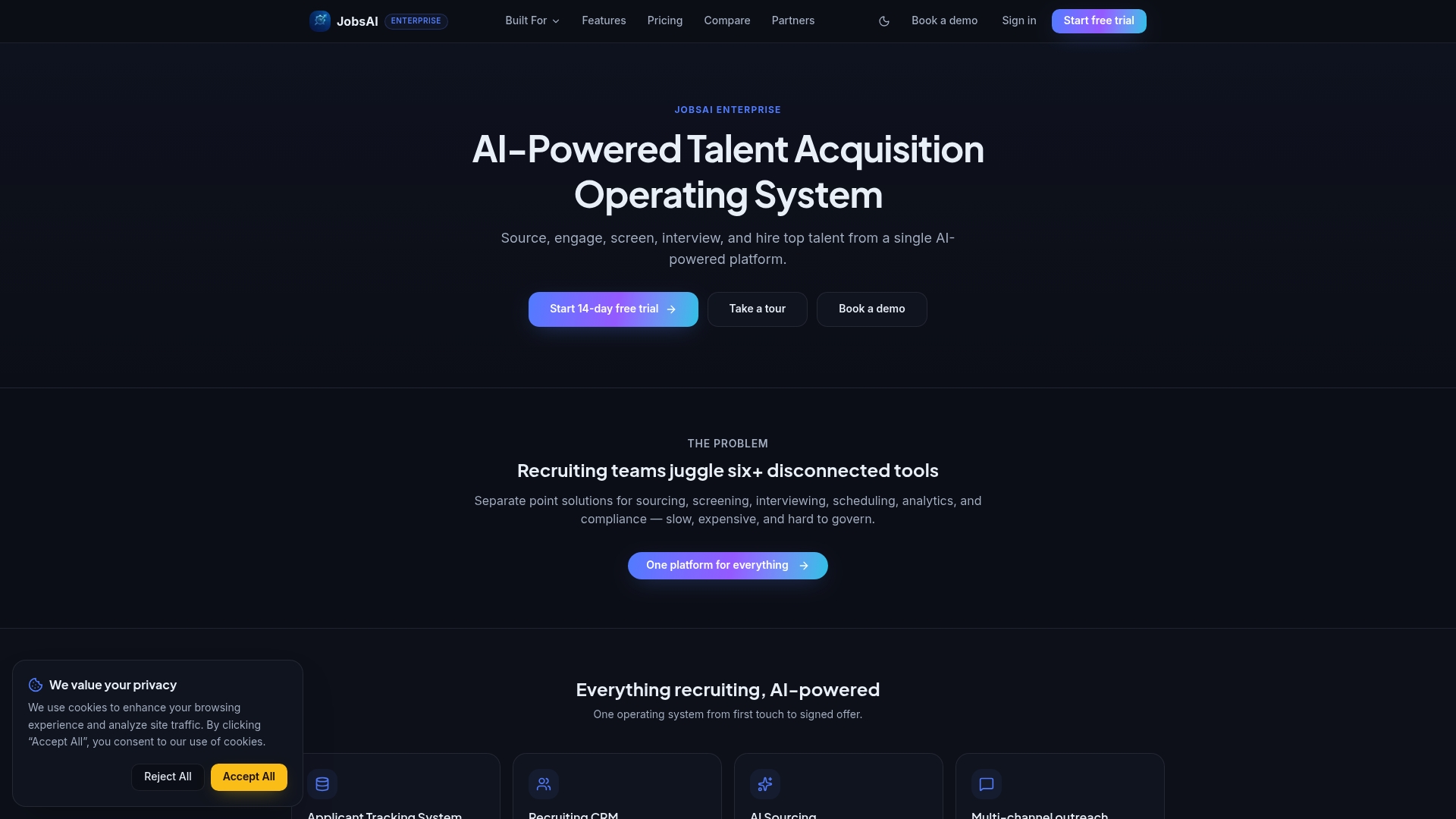
Jobsai Enterprise is built for exactly this. The platform tracks candidate status across every hiring stage, automates follow-up communication, and surfaces SLA breaches before they become candidate complaints. HR teams using Jobsai report faster response times and more consistent candidate engagement across high-volume and specialized roles alike. You can review Jobsai Enterprise pricing to find the plan that fits your team’s hiring volume and workflow needs. For a hands-on look at how the platform enforces candidate experience standards in practice, take the product tour.
FAQ
What does a candidate experience standard include?
A candidate experience standard includes defined SLAs for response times, structured communication at each hiring stage, feedback delivery timelines, and a process for notifying all candidates of their final status.
How does candidate experience affect offer acceptance rates?
Candidate experience directly affects offer acceptance. Research cited by AIHR shows 66% of candidates said their hiring experience influenced their decision to accept or decline an offer.
What metrics should HR teams track for candidate experience?
The core candidate experience metrics are cNPS, application completion rate, time-to-hire, offer acceptance rate, and stage-specific communication turnaround times.
Why should organizations survey rejected candidates?
Rejected candidates represent the majority of your applicant pool. Surveying only hired candidates produces biased results and hides the experience gaps that most damage your employer brand.
How often should candidate experience standards be reviewed?
Review your standards at least quarterly. Candidate expectations and labor market conditions shift, and SLA windows that worked previously may need adjustment as hiring volume or competition for talent changes.
Recommended
See it in your workflow
JobsAI Enterprise runs sourcing, AI screening, and the whole interview pipeline in one place. Book a walkthrough tailored to your team.
Book a demo