
Article
Candidate Engagement Tracking: A Recruiter's Guide

Candidate Engagement Tracking: A Recruiter’s Guide
TL;DR:
- Candidate engagement tracking monitors candidate interactions throughout recruitment to improve decision-making and reduce drop-offs. It relies on signals like clicks, responses, and conversions, which are more reliable than email open rates due to privacy changes. Using centralized dashboards and tracking key stages helps recruitment teams act on behavior patterns and optimize communication strategies.
Candidate engagement tracking is the systematic monitoring of candidate interactions and communications throughout the recruitment process to improve hiring outcomes. In practice, it means recording every touchpoint, from the first application click to the final offer response, and using that data to make faster, more confident decisions. The industry term most commonly used is candidate engagement tracking, though you will also see it called candidate interaction monitoring or pipeline engagement analysis in ATS documentation. Recruiters who apply this practice consistently reduce drop-off rates, catch communication gaps early, and build stronger candidate relationships at scale.
What is candidate engagement tracking and why does it matter?
Candidate engagement tracking is defined as the ongoing collection and analysis of behavioral signals that candidates produce as they move through your hiring pipeline. These signals include email opens, link clicks, application completions, interview confirmations, and response times. Each signal tells you something different about where a candidate stands and what your next move should be.
The core value is diagnostic. When a candidate goes silent after a screening call, engagement data tells you whether they never received your follow-up email, ignored it, or opened it without responding. Those three scenarios require three different responses from your team. Without tracking, you are guessing. With it, you are making a decision based on evidence.
Candidate experience tracking also protects your employer brand. Candidates who feel ignored or poorly communicated with share that experience publicly. Monitoring engagement lets you catch communication failures before they become reputation problems. Consistent candidate updates and clear communication reduce drop-offs and build trust at each stage of the hiring process.
What are candidate engagement metrics and how do they provide insight?
Candidate engagement metrics are the specific data points your team collects to measure how candidates interact with your outreach and process. Not all metrics carry equal weight, and understanding the difference between strong and weak signals is what separates effective tracking from noise collection.
The most commonly tracked metrics include:
- Email open rates. A basic indicator of whether your message reached the candidate’s attention. Treat this as a weak signal only.
- Click-through rates. When a candidate clicks a link in your email, that action shows active intent. This is a stronger signal than an open.
- Application completion rate. The percentage of candidates who start and finish your application form. Low completion often signals a friction problem in your process, not a candidate quality issue.
- Response time. How quickly a candidate replies to outreach. Slow responses can indicate low interest or competing offers.
- Event participation. Attendance at virtual career fairs, hiring events, or information sessions. This is one of the highest-intent signals available.
- Stage conversion rate. The percentage of candidates who move from one pipeline stage to the next. Drops at specific stages reveal where your process loses candidates.
Email open rates deserve special attention because they are the most misread metric in recruitment. Gmail’s proxy server changes caused a measurable decrease in reported open rates, making them an unreliable indicator of actual candidate interest. That shift means teams that built follow-up workflows around open rate thresholds were triggering actions based on false data.
Pro Tip: Never base a follow-up decision on a single metric. Combine at least two signals, such as a click plus a non-response, before escalating or deprioritizing a candidate.
How do recruitment dashboards and engagement tools support candidate tracking?
Recruitment dashboards are the operational center of any candidate engagement tracking program. They aggregate data from multiple sources and present it in a format that lets recruiters act quickly without digging through raw reports.

Workday’s Candidate Engagement Dashboard offers dedicated tabs for interaction tracking and email open and click analytics, giving teams a real-time view of recruitment communication effectiveness. That kind of centralized visibility means a recruiter can see, in one screen, which candidates have engaged with outreach and which have gone cold. Platforms like Survale take this further by enabling filtering by recruiter and department, so hiring managers can isolate performance issues at a granular level.
The table below outlines the core features found in candidate engagement dashboards and what each one delivers for your team.
| Dashboard feature | What it does for your team |
|---|---|
| Interaction timeline | Shows every touchpoint with a candidate in chronological order |
| Email analytics | Tracks opens and clicks to measure outreach effectiveness |
| Stage conversion tracking | Identifies where candidates drop out of the pipeline |
| Event participation log | Records attendance at hiring events and virtual sessions |
| Role-based filtering | Lets each stakeholder view data relevant to their function |
| Automated alerts | Notifies recruiters when a candidate has not responded within a set window |
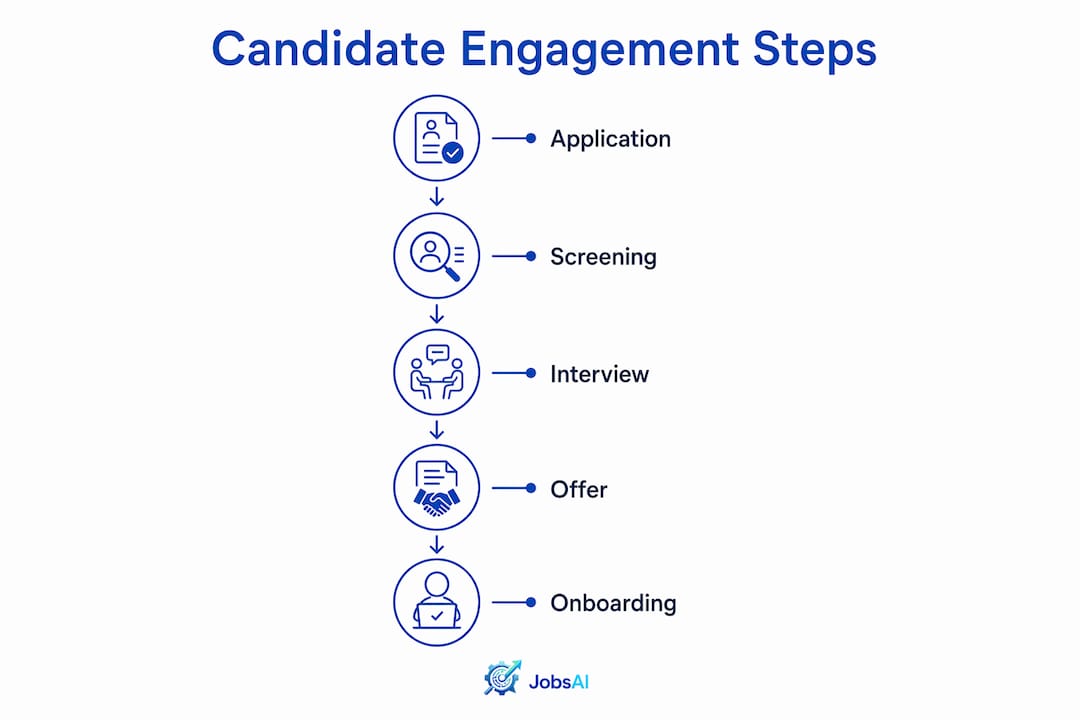
Recruitment dashboards also aggregate broader hiring metrics like time to hire, pipeline volume, and offer acceptance rates, giving HR leaders the data they need to prioritize where to focus attention. The combination of candidate-level detail and team-level summary is what makes dashboards worth the setup investment.
Pro Tip: Set up role-based dashboard views from day one. Recruiters need candidate-level detail. Hiring managers need stage conversion summaries. Giving everyone the same view creates confusion, not clarity.
What are the challenges and nuances in interpreting candidate engagement data?
Engagement data is only useful when you interpret it correctly. Several factors can distort the signals you collect, and over-relying on any single metric leads to poor decisions.
Privacy technology is the biggest disruptor right now. Email clients and security tools increasingly pre-fetch email content, which registers as an open even when the candidate never read the message. Recruitment teams that audit their open-rate-dependent workflows and shift focus to clicks and conversions get a more accurate picture of true candidate interest. This is not a minor adjustment. It changes how you design follow-up sequences entirely.
The most common pitfalls in engagement data interpretation include:
- Treating an open as confirmation of interest. An open may be triggered by a security scanner, not a human.
- Ignoring response time patterns. A candidate who consistently replies within hours and then goes silent for four days is signaling something worth investigating.
- Conflating stage conversion with engagement. A candidate can move through stages passively, driven by recruiter action, without ever showing genuine interest.
- Over-automating follow-ups. Sending three automated emails to a candidate who clicked your link and then called your office creates a poor experience.
Engagement tracking works best when it informs recruiter judgment, not when it replaces it. Data tells you what happened. Your team decides what it means.
Tracking engagement at recruitment handoff points, specifically post-application, post-screening, and post-interview, helps teams distinguish between process delays caused by communication failures and those caused by genuine candidate fit issues. That distinction drives targeted fixes rather than blanket process overhauls.
How to implement effective candidate engagement tracking in your hiring process?
Building a working engagement tracking system takes more than turning on a dashboard. It requires mapping your process, setting clear goals, and building habits around the data you collect.
-
Map your candidate journey first. Identify every touchpoint where a candidate interacts with your team or your content. Common touchpoints include the job posting, the application form, the confirmation email, the screening call, the interview invitation, and the offer letter. Each one is a potential tracking point.
-
Define your key performance indicators before you start collecting data. Decide which metrics matter most for your specific goals. If your biggest problem is post-interview ghosting, stage conversion rate and response time are your primary KPIs. If you are losing candidates at the application stage, completion rate matters more.
-
Configure your ATS to capture engagement signals automatically. Most modern applicant tracking systems include built-in email analytics and pipeline tracking. ATS-driven updates and automated emails are the foundation of consistent candidate communication. Set them up to log every interaction without requiring manual entry from your team.
-
Build escalation rules based on combined signals. For example: if a candidate has not responded within 48 hours and has not clicked any link in your last two emails, flag them for a personal outreach attempt. If they clicked but did not respond, send one more targeted message before moving on.
-
Review your engagement data weekly, not monthly. Recruitment moves fast. A weekly review of your candidate follow-up patterns lets you catch drop-off trends before they affect your pipeline. Monthly reviews surface patterns too late to act on them.
-
Refine your messaging based on what the data shows. If click rates on your interview invitation emails are low, test a different subject line or send time. Engagement tracking is not just a reporting tool. It is a feedback loop for your communication strategy.
Centralizing all of this data in one platform is the difference between a tracking system that works and one that gets abandoned after two weeks. When recruiters have to pull data from three different tools to answer one question, they stop asking the question.
Key Takeaways
Candidate engagement tracking gives recruiters the data they need to act on candidate behavior rather than assumptions, with the most reliable signals coming from clicks, conversions, and response patterns rather than email opens alone.
| Point | Details |
|---|---|
| Define engagement tracking clearly | It is the systematic monitoring of candidate interactions across every recruitment touchpoint. |
| Prioritize strong signals | Clicks, conversions, and response times are more reliable than email open rates. |
| Use centralized dashboards | Platforms that aggregate interaction data, email analytics, and pipeline metrics reduce blind spots. |
| Track at handoff points | Post-application, post-screening, and post-interview are the most actionable stages for engagement data. |
| Combine signals before acting | No single metric should drive a follow-up or deprioritization decision on its own. |
The metric that most recruiters are still getting wrong
After years of working with recruiting teams, the pattern I see most often is this: teams invest in a dashboard, set up their tracking, and then anchor every follow-up decision to email open rates. It feels logical. Someone opened your email, so they are interested. Someone did not open it, so they are not. The problem is that this logic stopped being reliable the moment email clients started pre-fetching content.
What I have found actually works is building a two-signal rule. Before any follow-up decision, require at least two data points pointing in the same direction. A click plus a non-response tells you the candidate saw your message and chose not to reply. That is worth a personal call. An open with no click and no response is ambiguous enough to warrant one more automated touch before you move on.
The other thing I would push back on is the idea that more data always means better decisions. I have seen teams with beautiful dashboards full of metrics who still struggled to fill roles because nobody had agreed on what the data meant or what to do about it. The candidate experience standard your team holds itself to matters more than the number of metrics you track. Decide what good engagement looks like at each stage, write it down, and measure against that definition. Everything else is just noise with a nice chart.
— Hippolyte A.
Jobsai Enterprise brings engagement tracking into your hiring workflow
Recruiters who want to put these practices to work without building a system from scratch have a direct path forward with Jobsai Enterprise.
Jobsai Enterprise is an AI-powered talent acquisition operating system built for recruiting agencies and hiring teams. It centralizes candidate screening, pipeline management, and communication tracking in one platform, so your team spends less time pulling data and more time acting on it. The platform includes candidate engagement dashboards, automated follow-up workflows, and email analytics that give you the signal clarity this article describes. You can take a tour to see how the engagement tracking features work in practice, or visit the Jobsai Enterprise platform to learn more about what it offers your team.
FAQ
What is candidate engagement tracking in recruitment?
Candidate engagement tracking is the practice of monitoring and recording candidate interactions, such as email clicks, application completions, and interview confirmations, throughout the hiring process to improve communication and reduce drop-off.
Which candidate engagement metrics are most reliable?
Click-through rates, stage conversion rates, and response times are the most reliable indicators of genuine candidate interest. Email open rates have become less dependable due to privacy technology changes that can register false opens.
How do engagement dashboards help recruiters?
Engagement dashboards centralize interaction data, email analytics, and pipeline metrics in one view, allowing recruiters to identify communication gaps and act on candidate behavior in real time rather than after the fact.
When should recruiters track engagement most closely?
The most actionable tracking points are post-application, post-screening, and post-interview. Monitoring engagement at these handoff stages helps teams identify whether delays are caused by communication failures or candidate fit issues.
Can engagement tracking work without dedicated software?
Basic tracking is possible with spreadsheets and manual logging, but it breaks down quickly at scale. ATS platforms with built-in email analytics and pipeline dashboards make consistent, accurate tracking practical for teams managing more than a handful of candidates at a time.
Recommended
See it in your workflow
JobsAI Enterprise runs sourcing, AI screening, and the whole interview pipeline in one place. Book a walkthrough tailored to your team.
Book a demo