
Article
Why Consistent Hiring Criteria Matter for HR Teams

Why Consistent Hiring Criteria Matter for HR Teams
TL;DR:
- Consistent hiring criteria ensure fair and interview process by applying a uniform standard to all candidates. They improve decision accuracy, reduce bias, and support legal compliance through structured evaluation methods.
Consistent hiring criteria are defined as the standardized question sets, scoring rubrics, and evaluation benchmarks that every interviewer applies equally to every candidate for a given role. Without them, two candidates for the same position can be judged by entirely different standards depending on who interviews them. That gap is where bias enters, legal risk grows, and hiring quality drops. Understanding why consistent hiring criteria matter is the first step toward building a process that is fair, defensible, and repeatable at scale.
The industry term for this practice is structured interviewing. It combines predetermined questions, behaviorally anchored rating scales, and calibrated interviewers to produce evaluations that hold up under scrutiny. Structured interviews produce higher predictive validity for job performance than unstructured formats. That means your hiring decisions become more accurate, not just more defensible.

Why consistent hiring criteria matter: bias, fairness, and better decisions
Standardized processes are the most direct tool HR teams have for reducing both unconscious and conscious bias. When every candidate answers the same questions and gets scored on the same rubric, personal impressions carry less weight. The evaluation shifts from “did I like this person?” to “how did this person score against the benchmark?”
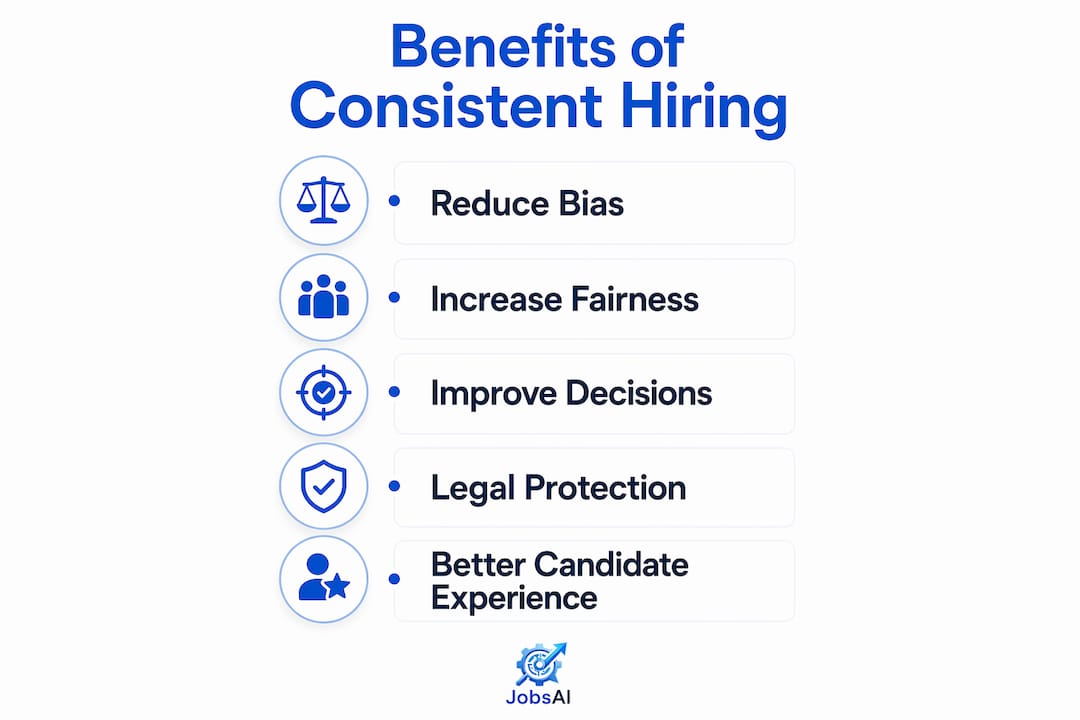
Structured assessment tools have increased predictive validity and decreased adverse impact compared to unstructured methods. Adverse impact refers to hiring patterns that disproportionately exclude protected groups, even without intent. Reducing it is both an ethical obligation and a legal one.
The table below shows how structured and unstructured approaches compare across key fairness dimensions:
| Dimension | Structured approach | Unstructured approach |
|---|---|---|
| Question consistency | Same questions for all candidates | Questions vary by interviewer |
| Scoring method | Behaviorally anchored rubric | Subjective impression |
| Bias exposure | Lower | Higher |
| Legal defensibility | Strong | Weak |
| Predictive validity | Higher | Lower |
A few practical benefits of consistent candidate evaluation stand out:
- Candidates from non-traditional backgrounds get scored on demonstrated competency, not pedigree.
- Diversity and inclusion efforts gain traction because the process itself stops filtering out qualified candidates unfairly.
- Hiring teams can compare candidates directly because scores reflect the same criteria, not different interviewers’ priorities.
Pro Tip: Use behaviorally anchored rating scales (BARS) for each interview question. These scales define what a “3 out of 5” answer actually looks like, so two interviewers score the same response the same way.
Panel interviews scored independently by multiple evaluators reduce individual bias and provide defensible records. Running independent scoring before group discussion prevents the loudest voice in the room from dominating the outcome.
How consistent recruitment standards protect you legally
Legal compliance is one of the clearest benefits of hiring consistency, and one of the most underappreciated. In the U.S., antidiscrimination law under Title VII of the Civil Rights Act, the Americans with Disabilities Act, and the Age Discrimination in Employment Act all require that hiring decisions be based on job-related criteria applied equally to all candidates.
“Consistent interview standards are a legal requirement to meet antidiscrimination obligations. Structured processes provide legal documentation required to mitigate bias and support hiring outcomes.”
When a candidate files a discrimination complaint, the first thing an investigator or court looks for is documentation. Did every candidate get the same questions? Were scores recorded before a hiring decision was made? Can you show that the criteria were job-related? Without consistent standards, those questions become very difficult to answer.
Key compliance practices that structured hiring supports:
- Written scorecards completed during or immediately after each interview.
- A documented rationale for every hire and every rejection.
- Audit trails showing that criteria were set before the process began, not after a preferred candidate emerged.
- Interviewer training records demonstrating that evaluators understood the rubric before they used it.
Pro Tip: Store completed scorecards and interview notes in a centralized system. If a hiring decision is ever challenged, you need records that are timestamped and tied to specific candidates, not reconstructed from memory.
Consistent criteria provide legal defensibility in discrimination claims. That defensibility is not just about winning lawsuits. It is about building a process that rarely produces the conditions for a claim in the first place. Reviewing your mid-market hiring challenges can help you identify where documentation gaps are most likely to appear.
Balancing standardization and flexibility in your rubrics
Rigid rubrics create their own problems. A rubric that only accepts one type of correct answer will penalize candidates who arrive at the right outcome through a different path. That is especially common in roles that attract candidates from varied industries or educational backgrounds.
Rigid rubrics can inadvertently exclude high-potential, non-traditional candidates due to narrow evaluation. The fix is not to abandon structure. It is to build flexibility into the rubric itself.
| Approach | Rigid rubric | Flexible rubric |
|---|---|---|
| Scoring examples | None provided | Examples for each score level |
| Novel responses | Penalized | Evaluated on merit |
| Interviewer discretion | Minimal | Guided by criteria |
| Candidate diversity | Lower | Higher |
| Reliability | Inconsistent without training | Consistent with calibration |
Rubrics must include detailed examples for each scoring level, from poor to outstanding, to avoid inconsistent interpretation by interviewers. Without those examples, two interviewers will define “outstanding” differently, which defeats the purpose of a shared rubric.
Practical steps for building flexible but consistent rubrics:
- Write out what a “1,” “3,” and “5” answer looks like for each question before interviews begin.
- Allow interviewers to note when a candidate’s approach was unexpected but still valid.
- Run calibration sessions where interviewers score the same sample answer independently, then compare results.
- Revisit rubrics after each hiring cycle to close gaps where scoring diverged.
Flexibility in scoring criteria accounts for diverse candidate approaches and reduces unfair penalization. The goal is a rubric that is consistent in what it measures, not rigid in the exact form of the answer it accepts.
How to implement consistent hiring criteria in practice
Implementation is where most teams fall short. The principles are clear, but the execution requires upfront work that hiring managers often skip when they are under pressure to fill a role quickly.
Successful hiring teams define criteria, rubrics, and benchmarks before screening resumes to maintain aligned, objective evaluation throughout. Starting criteria definition after you have already reviewed resumes introduces anchoring bias. You begin to build the rubric around the candidates you have already seen rather than the role you actually need to fill.
Follow these steps to build a consistent process from the ground up:
- Define role success criteria first. Before writing a job description, list the three to five competencies that predict success in the role. These become the foundation of every evaluation tool.
- Develop vetted interview questions. Each question should map directly to a competency. Avoid questions that test general intelligence or cultural fit without a defined rubric for scoring them.
- Build scorecards before interviews begin. A scorecard with weighted competencies and scoring examples gives every interviewer the same frame of reference. Reviewing how to score resumes against job requirements can help you align your resume screening criteria with your interview rubric.
- Train and calibrate interviewers. Training is not a one-time event. Run calibration exercises before each hiring cycle, especially when new interviewers join the panel.
- Use technology to document and track. Manual scorecards get lost or filled out inconsistently. A platform that captures structured feedback in real time creates the audit trail you need for both quality control and legal compliance.
Standardized interview questions, order, and concise phrasing improve fairness and candidate comparability. Benchmarking answers before interviews and allowing for valid unanticipated responses are recognized best practices in structured hiring.
Pro Tip: After each hiring cycle, compare scores across interviewers for the same candidate. Large discrepancies signal a calibration problem, not a candidate problem. Address them before the next round.
Consistent hiring processes improve candidate experience and employer brand by making expectations and evaluations transparent. Candidates who experience fair processes often remain advocates even if not hired, which benefits future talent attraction. That is a long-term return on a process investment that most teams overlook.
Key Takeaways
Consistent hiring criteria are the foundation of fair, legally defensible, and accurate talent acquisition. Without them, bias fills the gaps that structure leaves open.
| Point | Details |
|---|---|
| Define criteria before screening | Set competencies and rubrics before reviewing any resumes to prevent anchoring bias. |
| Use structured interviews | Same questions and scoring rubrics for all candidates produce more accurate and defensible decisions. |
| Build flexible rubrics | Include scoring examples for each level so interviewers evaluate novel responses fairly. |
| Document every decision | Timestamped scorecards and written rationales are your legal protection if a decision is challenged. |
| Calibrate interviewers regularly | Score discrepancies between interviewers signal a training gap, not a candidate issue. |
The part most hiring teams get wrong
I have reviewed hiring processes across dozens of organizations, and the most common failure point is not the rubric. It is the timing. Teams build evaluation criteria after they have already formed opinions about candidates. They call it “finalizing the scorecard,” but what they are actually doing is reverse-engineering a justification for a decision already made.
The fix is simple but requires discipline. Define what good looks like before you see a single resume. That means writing out your competency definitions, your scoring examples, and your benchmark answers before the job is posted. When you do that, the evaluation process becomes a genuine measurement exercise rather than a confirmation exercise.
Interviewer calibration is the second piece most teams skip. Running a 30-minute calibration session where your panel scores the same sample answer independently, then compares results, reveals scoring drift before it contaminates a real hiring decision. I have seen calibration sessions expose situations where two interviewers using the same rubric scored the same answer three points apart on a five-point scale. That is not a rubric problem. That is a shared-understanding problem, and it is fixable.
The long-term payoff is real. Organizations that commit to structured, consistent evaluation build hiring track records they can actually learn from. When your data is clean and your criteria are stable, you can look back at who succeeded and who did not, and refine your process accordingly. That feedback loop is how hiring gets better over time, not just more defensible.
— Hippolyte A.
How Jobsai Enterprise supports consistent hiring at scale
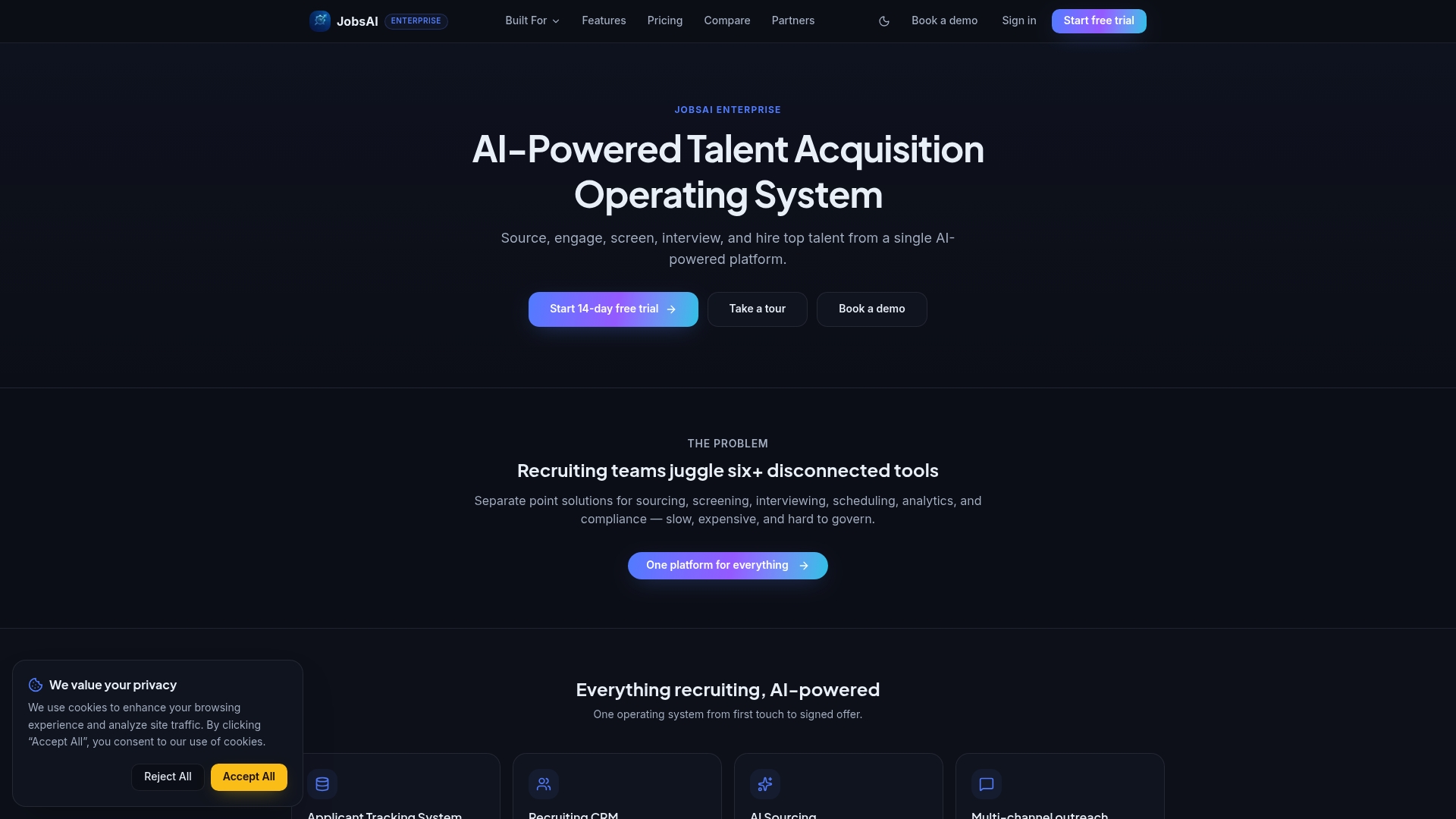
Jobsai Enterprise is built for hiring teams that need structure without adding administrative burden. The platform automates candidate screening and ranking against defined job criteria, so your rubric is applied consistently from the first application to the final scorecard. Every evaluation is captured in one place, creating the audit-ready documentation that compliance requires.
For teams managing high volumes or multiple roles at once, Jobsai Enterprise reduces the manual work of tracking candidate progress and interviewer feedback. You can see where scoring diverges, where candidates drop off, and where your process needs calibration. Explore the full platform capabilities to see how structured hiring criteria translate into faster, more confident decisions. Pricing details are available at Jobsai Enterprise pricing.
FAQ
What are consistent hiring criteria?
Consistent hiring criteria are standardized competencies, interview questions, and scoring rubrics applied equally to every candidate for a role. They form the basis of structured interviewing and reduce both bias and legal risk.
How do structured interviews reduce bias?
Structured interviews use the same predetermined questions and identical scoring rubrics for all candidates, which shifts evaluation from personal impression to documented, job-related evidence.
What laws require consistent hiring standards in the U.S.?
Title VII of the Civil Rights Act, the Americans with Disabilities Act, and the Age Discrimination in Employment Act all require that hiring decisions be based on job-related criteria applied equally. Consistent standards provide the documentation needed to demonstrate compliance.
How do you prevent rubrics from being too rigid?
Include illustrative examples for each scoring level and allow interviewers to note valid responses that differ from the benchmark. Calibration sessions before each hiring cycle keep scoring aligned without eliminating evaluator judgment.
How does technology support hiring consistency?
Platforms like Jobsai Enterprise capture structured feedback in real time, flag scoring discrepancies between interviewers, and maintain timestamped records that support both quality control and legal defensibility.
Recommended
See it in your workflow
JobsAI Enterprise runs sourcing, AI screening, and the whole interview pipeline in one place. Book a walkthrough tailored to your team.
Book a demo