
Article
Resume Screening Checklist for Recruiters: 2026 Guide

Resume Screening Checklist for Recruiters: 2026 Guide
TL;DR:
- A resume screening checklist is a structured tool that ensures consistent, fair evaluation of job candidates. Implementing it in phases improves accuracy, reduces bias, and streamlines high-volume hiring. Regular review and collaboration enhance its effectiveness and alignment with current role needs.
A resume screening checklist is a structured, criteria-based evaluation tool that helps recruiters and hiring managers identify qualified candidates consistently and fairly across every job application review. Without a documented checklist, screening decisions rely on gut feel, which introduces bias and slows hiring. The industry term for this process is “applicant screening,” and a well-built checklist is its operational backbone. In 2026, recruiting teams that integrate ATS-based scoring models with defined knockout criteria cut review time significantly while improving candidate quality. This guide covers every element your checklist needs, how to roll it out in phases, and how to adapt it for different roles and hiring volumes.
1. Key criteria for every resume screening checklist
Screening criteria should be role-output oriented, focused on observable indicators tied to job success rather than vague traits like “culture fit” or job titles. Every checklist item should answer one of four questions: Is the candidate eligible? Do their responsibilities match the role? Do they meet the key skills threshold? Is there enough signal to proceed?
Here are the core criteria every candidate screening checklist must include:
- Role alignment: Compare the candidate’s actual job scope and autonomy to your requirements, not just their title. A “Manager” at a five-person startup carries a very different scope than the same title at a 5,000-person corporation.
- Must-have skills and certifications: List non-negotiable technical skills and credentials upfront. Flag any application that does not meet them as a knockout.
- Measurable achievements: Look for quantified results, not just responsibilities. “Reduced onboarding time by 30%” tells you far more than “managed onboarding process.”
- Employment patterns: Note gaps longer than six months, frequent short tenures under one year, and whether the candidate’s location or remote flexibility matches the role.
- Knockout vs. signal criteria: Knockout criteria eliminate candidates who cannot do the job. Signal criteria, like a relevant side project or industry certification, indicate upside potential.
- Education and eligibility requirements: Confirm any legally required credentials, work authorization, or minimum education thresholds.
Pro Tip: Build a scoring rubric before you open a single resume. Defining must-have skills, relevant experience, and educational background beforehand saves hours and lets you sort applicants into yes, maybe, and no piles quickly.
2. A phased approach to implementing your checklist

Implementing an automated screening workflow typically takes 4–6 weeks across four phases. Rushing this process produces a checklist that looks good on paper but fails in practice.
Phase 1: Assessment (week 1)
Audit your current screening process. Document where decisions are made, how long each step takes, and where candidates fall through the cracks. Collect baseline metrics: time-to-screen, pass-through rates, and offer acceptance rates.
Phase 2: Configuration (weeks 2–3)
Build your scoring model. Assign weights to each criterion based on job impact. Configure knockout rules in your ATS so that unqualified applications are filtered before a recruiter touches them. Map each checklist item to a specific job requirement.
Phase 3: Deployment (weeks 4–5)
Run a pilot on a select group of open requisitions. Compare outcomes against your historical data. Conduct an adverse impact analysis to confirm the checklist does not disproportionately screen out protected groups.
Phase 4: Optimization (week 5 onward)
Collect recruiter feedback after each hiring cycle. Track which checklist items predicted strong hires and which produced false positives. Update scoring weights accordingly.
| Phase | Timeline | Key Output |
|---|---|---|
| Assessment | Week 1 | Baseline metrics, process map |
| Configuration | Weeks 2–3 | Scoring model, ATS knockout rules |
| Deployment | Weeks 4–5 | Pilot results, adverse impact report |
| Optimization | Week 5+ | Updated weights, feedback log |
Pro Tip: Pilot testing with historical data before full rollout catches scoring errors that would otherwise affect dozens of candidates. Run your new checklist against past hires first to validate it.
3. Common pitfalls in resume screening and how to avoid them
Most screening errors come from the same handful of mistakes. Knowing them in advance saves you from repeating them.
- Title-matching traps: Screening by job title alone produces misleading results. Focus on the scope of work, team size managed, and decisions made independently. Evaluating actual scope rather than titles gives you a far more accurate picture.
- Undocumented decisions: Every screening decision should include a brief written rationale. This protects against bias claims and makes it easier to calibrate your checklist over time.
- Skipping observable evidence: Subjective impressions like “strong communicator” or “seems like a good fit” have no place in a first-pass screen. Stick to job-relevant, observable evidence.
- Ignoring AI-generated content: Resume authenticity requires closer scrutiny in 2026. Red flags include over-polished phrasing, inconsistent timelines, and buzzword overload with no concrete specifics.
- Stale criteria: A checklist built for a role six months ago may not reflect what the hiring manager needs today. Review your criteria before every major hiring push.
“A resume screening checklist is a documented, consistent filter. Its job is to decide who merits next steps, not who is perfect. Treating it as a final hiring decision tool is the most common and most costly mistake recruiters make.” — HRHelperG Candidate Screening Guide
Consistent application of documented criteria reduces recruitment bias and creates a defensible, auditable record of every screening decision. That matters both for fairness and for legal compliance.
4. How to tailor your checklist for different roles and hiring volumes
A single checklist template does not fit every role. The criteria that matter for a senior software engineer differ sharply from those for a high-volume customer service hire.
Adjusting for role level and function
For senior or specialized roles, weight autonomy, scope, and measurable impact heavily. For entry-level roles, shift weight toward potential indicators: relevant coursework, internships, and demonstrated learning speed. For roles requiring specific licenses or certifications, those become hard knockouts regardless of everything else.
Handling high-volume hiring
Seasonal spikes and urgent roles require a leaner checklist with fewer, higher-confidence knockout criteria. Adding too many criteria during a volume push creates bottlenecks. The sourcing to screening workflow matters here: the faster you can route applications to the right filter, the less backlog you accumulate.
Industry-specific adaptations
Technology roles benefit from skills-based screening with portfolio or GitHub links as signal criteria. Corporate HR and finance roles often require credential verification as a hard knockout. Staffing agency contexts demand faster turnaround, so knockout criteria should be tight and scoring models pre-configured per client.
Integrating automated screening with ATS APIs and building scoring models allows teams to handle volume without sacrificing consistency. The key is configuring the system to reflect your actual hiring priorities, not generic defaults.
Pro Tip: Revisit your checklist before seasonal hiring or after any major workflow change. A quick review of must-haves, ATS settings, and scorecard alignment takes under an hour and prevents weeks of misaligned screening.
Key takeaways
A resume screening checklist works best as a documented, criteria-based filter that routes candidates to the next step, not as a final hiring verdict.
| Point | Details |
|---|---|
| Define criteria before screening | Build your scoring rubric before reviewing any applications to stay consistent. |
| Use knockout rules strategically | Separate hard disqualifiers from signal indicators to avoid eliminating strong candidates. |
| Implement in phases | A 4–6 week rollout with pilot testing produces more reliable results than a full immediate launch. |
| Document every decision | Brief written rationale for each screening call reduces bias and supports audits. |
| Revisit criteria regularly | Update your checklist before each major hiring cycle to keep it aligned with current role needs. |
What I’ve learned from building screening checklists that actually hold up
The most common mistake I see is treating the screening checklist as a hiring decision rather than a routing tool. Recruiters spend time trying to determine if a candidate is “the one” at the resume stage, when the only real question is: does this person merit a conversation? That shift in framing changes everything about how you build and use the checklist.
The second thing I’ve learned is that automation without calibration creates a false sense of accuracy. An ATS can apply your scoring model at scale, but if the model was built on bad assumptions, you will screen out good candidates systematically and never know it. Balancing automation with human judgment is not a soft recommendation. It is a structural requirement, especially for roles where soft skills and team dynamics matter.
The third lesson is harder to hear: most checklists are not reviewed often enough. Teams build them once, integrate them into the ATS, and forget them. Hiring needs shift. Job market conditions change. The checklist that worked in january may be filtering out your best candidates by july. Building a quarterly review into your recruiting calendar is not overhead. It is quality control.
Finally, the teams that get the most out of their checklists are the ones that treat them as shared tools, not individual workflows. When recruiters, hiring managers, and HR partners all contribute to the criteria and review the outcomes together, the checklist gets sharper with every cycle. That feedback loop is where the real value compounds. For teams managing candidate shortlisting at scale, this collaborative approach is the difference between a checklist that ages well and one that quietly drifts out of alignment.
— Hippolyte A.
How Jobsai Enterprise supports your screening workflow
Jobsai Enterprise is built for recruiting teams that need to screen and rank candidates at speed without losing consistency or quality.
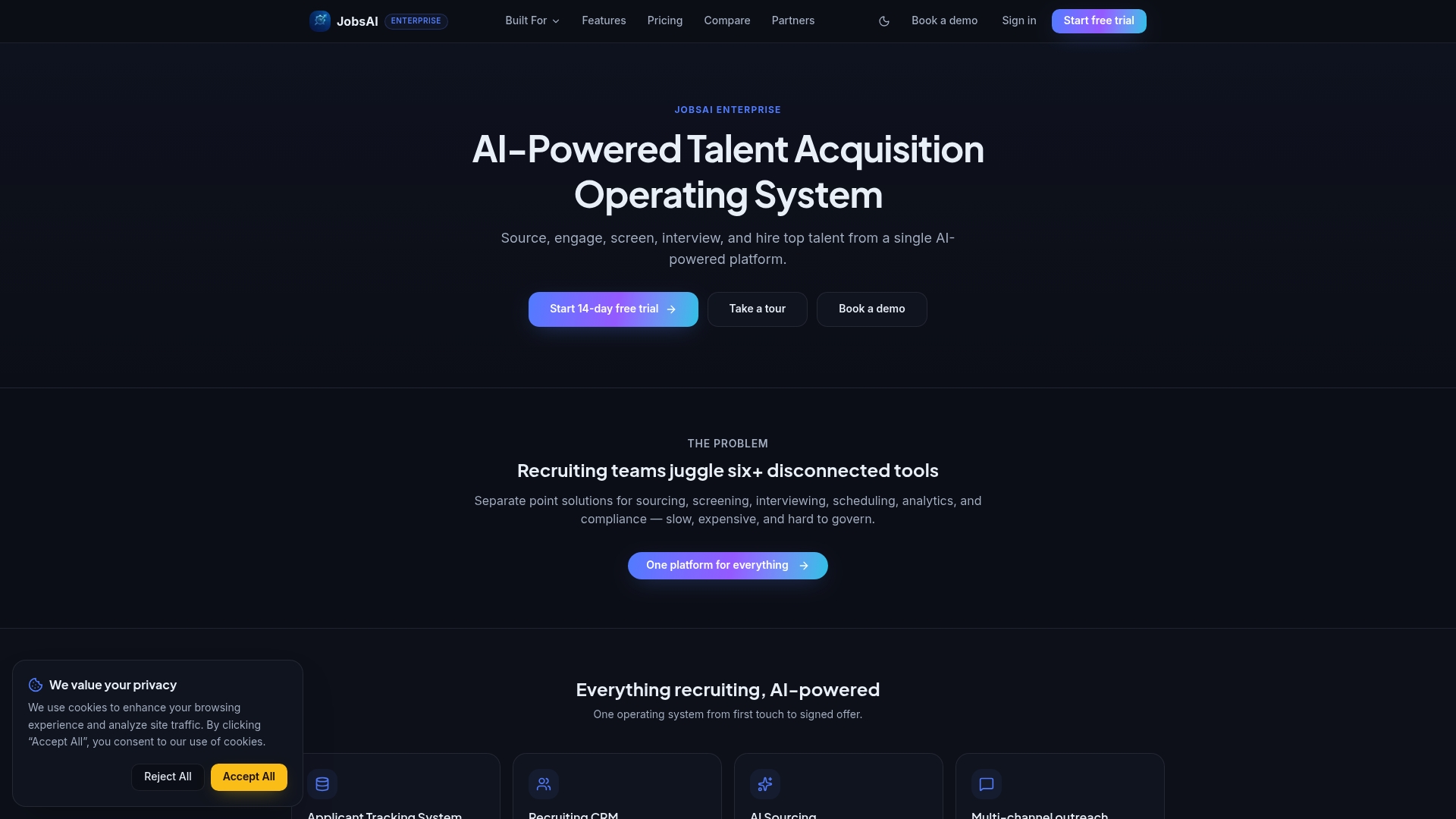
The platform applies your knockout rules and scoring weights automatically, so every application gets evaluated against the same criteria. Recruiters see ranked candidate lists with documented rationale, not raw stacks of resumes. Built-in workflow automation handles follow-up communication and status updates, which removes the manual work between screening steps. For teams managing high volumes or multiple client accounts, Jobsai Enterprise’s AI-powered screening adapts scoring models per role and tracks outcomes over time. The result is a faster, more consistent process that gets better with each hiring cycle.
FAQ
What is a resume screening checklist?
A resume screening checklist is a documented set of criteria that recruiters use to evaluate job applications consistently. It defines knockout requirements, scoring weights, and signal indicators before any resume is reviewed.
How many criteria should a screening checklist include?
Most effective checklists include 5–8 core criteria, separating hard knockouts from weighted signal indicators. Adding too many criteria slows screening and increases the risk of filtering out qualified candidates.
How do I reduce bias in resume screening?
Applying the same documented criteria to every candidate and recording a brief rationale for each decision reduces bias and creates an auditable record. Avoid subjective impressions and focus on observable, job-relevant evidence.
How often should I update my screening checklist?
Review your checklist before each major hiring cycle or after any significant change to the role, team structure, or hiring volume. Routine updates keep your criteria aligned with what the hiring manager actually needs.
Can AI tools replace a manual resume screening checklist?
AI tools apply your criteria at scale, but they do not replace the criteria themselves. The checklist defines what matters for the role. AI executes that logic consistently across hundreds of applications.
Recommended
See it in your workflow
JobsAI Enterprise runs sourcing, AI screening, and the whole interview pipeline in one place. Book a walkthrough tailored to your team.
Book a demo