
Article
Recruiters: Run a 2 Hour Candidate Rediscovery Sprint

Recruiters: Run a 2 Hour Candidate Rediscovery Sprint
Candidate rediscovery means mining your existing applicant database for people who already applied, interviewed, or almost got the job, instead of sourcing new candidates from scratch. The payoff is direct: faster fills and lower cost per hire, because the vetting work is already partly done. It works for in-house talent acquisition teams, staffing firms, and any high-volume recruiter, but only when three things are in place: searchable, clean ATS data, a consistent tagging system, and a real re-engagement workflow instead of a one-off email blast.
TL;DR:
- Rediscovery relies on maintaining searchable, clean ATS data with consistent tags and active re-engagement workflows to be effective.
- Shortening time-to-fill by about a dozen days and increasing hire speed depends on regular, automated searches and profile enrichment.
- Key components include tagging past finalists, building reusable searches, owning talent pools, and refreshing contact information within a six-month window.
- Monthly rediscovery sprints should involve structured searches, filtered shortlists, personalized outreach, and tracking responses for continuous improvement.
- Tools with automation, AI matching, and analytics capabilities make scaling rediscovery feasible and help demonstrate its measurable impact on hiring metrics.
Table of Contents
- What Does Candidate Rediscovery Actually Mean?
- Why Rediscovery Matters for Time-to-Fill and Cost Per Hire
- What Systems Do You Need to Run Rediscovery Well?
- How Do You Run a Monthly Rediscovery Sprint?
- What Messaging Actually Gets Rediscovered Candidates to Respond?
- What Metrics Prove Rediscovery Is Working?
- How Does Technology Make Rediscovery Scalable?
- Quick-Start Checklist: Your First Rediscovery Sprint
- Treat the ATS as a Live Asset, Not an Archive
- How JobsAI Enterprise Turns Rediscovery Into a Repeatable Habit
- Sources
- FAQ
What Does Candidate Rediscovery Actually Mean?
Candidate rediscovery is the practice of searching your own applicant tracking system for people who fit a current opening but weren’t hired last time. That includes silver medalists (finalists who lost out to another candidate), past applicants who were qualified but untimely, and warm prospects who engaged with your company before but never formally applied.
It’s not a replacement for outbound sourcing or job board spend. Rediscovery works alongside those channels, not instead of them. Treat it as the first search you run, not the only one.
A few boundaries worth setting early:
- Rediscovery targets people already in your system, not cold leads from LinkedIn or referrals.
- It requires consent and data hygiene: a candidate who applied two years ago may have moved, changed careers, or asked to be removed from your database.
- Profiles decay fast. Contact details and interest levels can go stale within about six months, which is why rediscovery only works when paired with enrichment, not left as a static archive search.
Why Rediscovery Matters for Time-to-Fill and Cost Per Hire
Rediscovery shortens the hiring funnel because part of the screening work already happened. Teams that formalize the practice report that rediscovered candidates can account for a large share of sourced hires, and piloted programs cut time-to-fill by about a dozen days compared to sourcing everything externally.
A quick stat worth repeating in your next stakeholder meeting: nearly half of sourced hires in disciplined rediscovery programs come from candidates already sitting in the database.
The benefits go beyond speed:
- Rediscovered candidates often convert faster because they already have context on your company, role, and culture.
- Recruiter time shifts from cold outreach to warm re-engagement, which usually has a higher response rate.
- Sourcing budgets stretch further since fewer paid job postings and less agency spend are needed for roles the database can already fill.
Rediscovered candidates also tend to onboard faster because the employer relationship isn’t starting from zero.
What Systems Do You Need to Run Rediscovery Well?
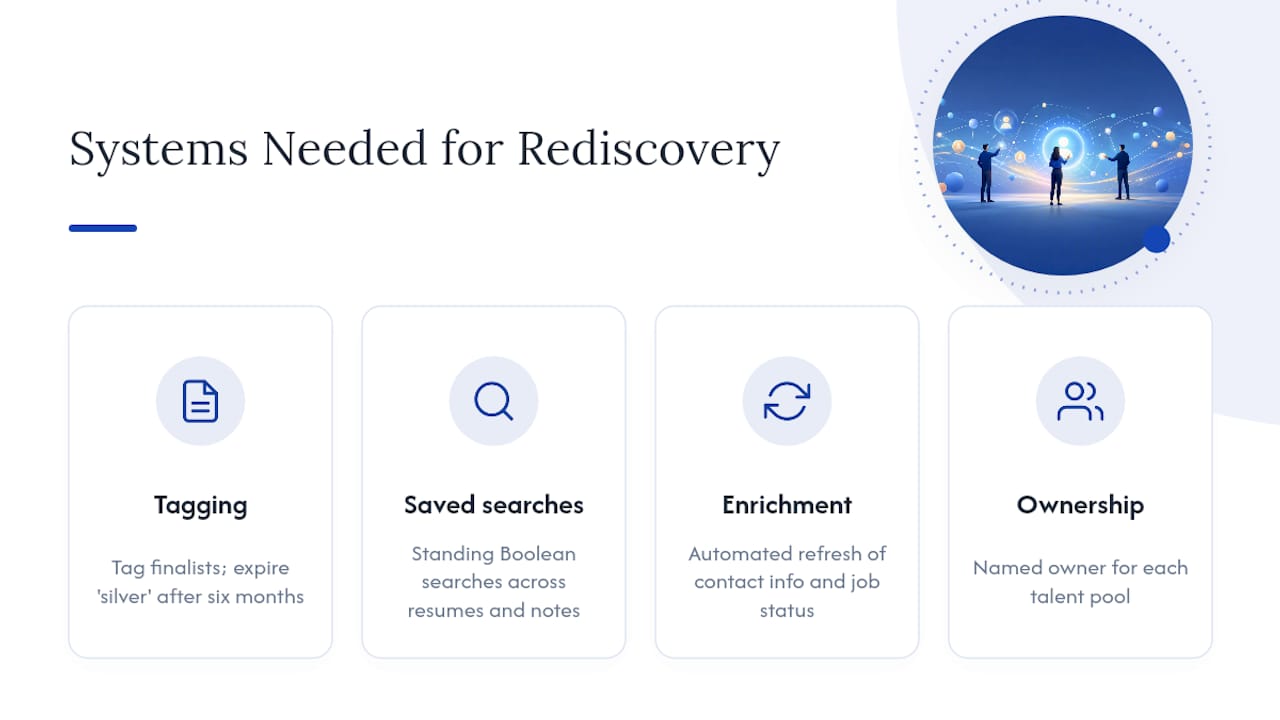
Rediscovery fails when it’s treated as a one-time database dump. It works when four components run continuously.
Tagging taxonomy. Every finalist who didn’t get an offer should get a consistent tag, most commonly “silver medalist,” plus role family and skill tags. Without this, you’re stuck manually rereading resumes every time a similar req opens.
Saved searches and keyword strategy. Build standing searches for your recurring role families using Boolean logic across resumes, notes, and application answers. Practitioners commonly build a reusable candidate library rather than starting a fresh search for every requisition.
Profile enrichment. Contact info and job status change constantly. Automated enrichment refreshes email addresses, phone numbers, and current employment status so you’re not calling a disconnected line.
Talent pool ownership. Someone on the team needs to own each pool. Without a named owner, pools become a dumping ground nobody revisits, and your candidate database and talent pools turn into digital clutter instead of a live asset.
Pro Tip: Set a six-month expiration flag on every silver-medalist tag. If the candidate hasn’t been re-contacted by then, treat their contact info as unverified and run enrichment before reaching out.
How Do You Run a Monthly Rediscovery Sprint?
Rediscovery works best as a recurring sprint, not a periodic scramble. Here’s a sequence you can run this month with a small team and a few hours of focused time.
- Block two hours for a recruiter or sourcer to run three structured searches: silver medalists from the last 12 months, recent applicants filtered by role family, and a skill-based Boolean search across resumes and notes.
- Requalify the shortlist. Pull 15 to 25 names per search, then filter for current relevance, roughly 30 minutes.
- Set outreach triggers. Anyone still employed and skill-matched gets a personalized message within 48 hours of being shortlisted.
- Run outreach in a single batch rather than trickling messages out over weeks, which makes response tracking easier.
- Log replies and progression in a simple tracker. At minimum, capture reply rate and how many candidates move to an interview.
- Review results at month’s end and adjust which role families get priority searches next cycle.
This entire loop, done consistently, is what separates a database that gets mined from one that just accumulates resumes.
What Messaging Actually Gets Rediscovered Candidates to Respond?
Feedback loops are the most underused lever in rediscovery. Candidates who got a timely, specific rejection reason are far more likely to respond positively when you reach back out later. Silence after a rejection does the opposite: it signals the company doesn’t value the candidate’s time, and that memory sticks.
A few practical rules for outreach:
- Lead the subject line with the value to the candidate, not your company name. “A [Role] opening that fits your background” outperforms “We’re hiring.”
- Cap follow-ups at one or two touches across different channels (email, then SMS) before moving on.
- If a candidate replies but isn’t ready to reapply, move them into a longer nurture sequence instead of dropping them.
- Always give candidates an easy way to opt out. Consent isn’t a one-time checkbox; it’s an ongoing courtesy that protects your employer brand.
Sequenced re-engagement, including interview-first invitations and weekly silver-medalist sweeps, measurably reduces candidate drop-off in high-volume hiring environments. Tools like the AI follow-up email generator from AmmarAI can help draft that first outreach message without sounding like a form letter.
What Metrics Prove Rediscovery Is Working?
Four numbers tell stakeholders whether rediscovery is earning its keep:
- Rediscovery share of hires: the percentage of total hires sourced from your existing database rather than external channels.
- Rediscovery conversion rate: shortlisted rediscovered candidates who reach an interview or offer stage.
- Time-to-fill delta: the gap between rediscovery-sourced fills and externally sourced fills for comparable roles.
- Cost-per-hire delta: the savings from skipping job board spend or agency fees on rediscovered hires.
A clean way to prove impact is a simple A/B split: run rediscovery-first on half your open requisitions in a role family and external sourcing-first on the other half, then compare results after 30 days. Report these numbers monthly on a small dashboard, ideally the same candidate engagement tracking view your team already checks for pipeline health.
How Does Technology Make Rediscovery Scalable?
Manual database searches don’t scale past a few hundred candidates. Automation is what turns rediscovery from an occasional favor into a repeatable channel.
The capabilities that matter most:
- Saved search templates that rerun automatically when new roles open in the same family.
- Automated enrichment that refreshes contact details before they go stale, addressing the six-month decay problem directly.
- AI resume-to-role matching that surfaces candidates a keyword search would miss.
- Bulk outreach campaigns across email, SMS, and WhatsApp with response tracking built in.
When evaluating any rediscovery-capable platform, check four things: how fast searches return results across your full history, how often enrichment runs, how much control you have over outreach frequency, and whether analytics tie rediscovery activity back to actual hires. Weak platforms handle one of these well and ignore the rest.
Pro Tip: Ask any vendor demo to show a saved search rerunning automatically against new applicants, not just a one-time filtered export. That’s the difference between a rediscovery tool and a glorified spreadsheet.
Quick-Start Checklist: Your First Rediscovery Sprint
Run this sequence once and you’ll have real numbers to bring to your next leadership meeting.
- Tag every silver medalist from the past 12 months (owner: recruiter, SLA: same week).
- Run three saved searches across role families you hire for most often.
- Hold a one-hour shortlist review session with the hiring manager.
- Send the first outreach batch within 48 hours of the review.
- Track replies and interview progression for 30 days.
Success at minimum means one qualified candidate reaching interview stage from the database, with a measurable reply rate to report upward.
Treat the ATS as a Live Asset, Not an Archive
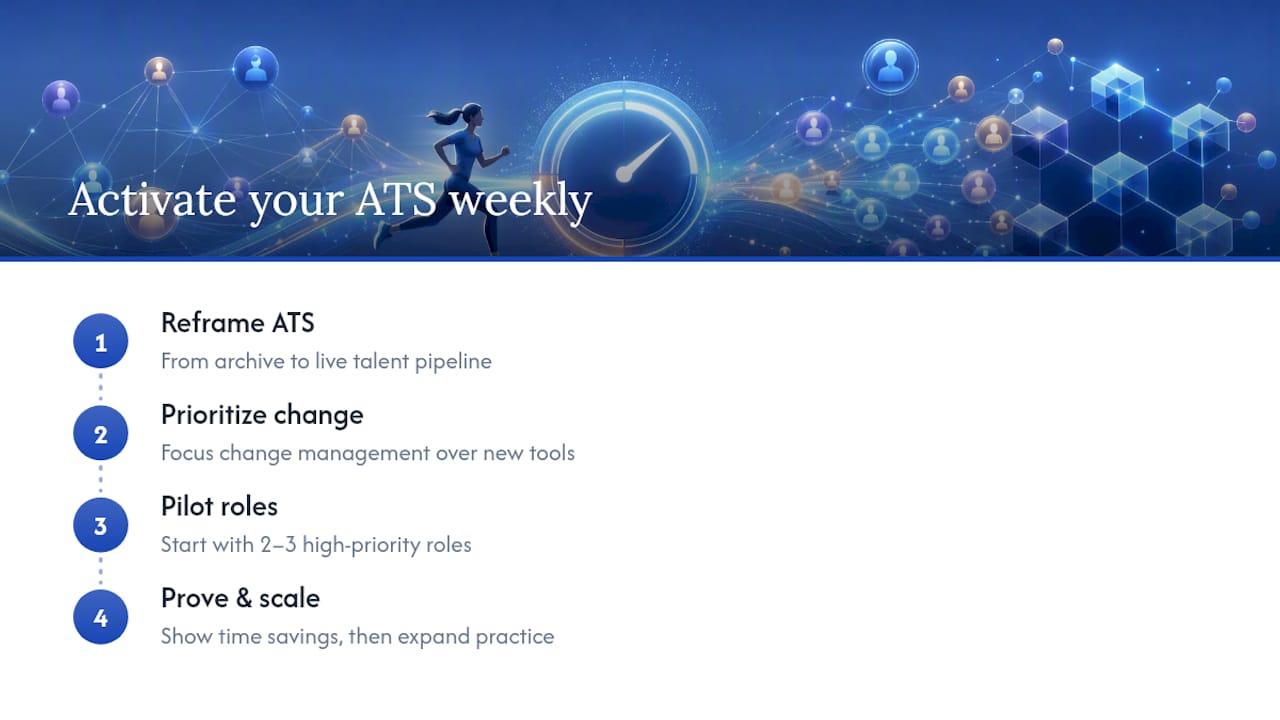
Most teams already have the candidates they need. They just never built a system to find them again. The mistake isn’t a lack of sourcing effort, it’s treating the ATS like cold storage instead of an active talent pipeline that needs regular attention.
Change management matters more than tooling here. Recruiters need rediscovery built into their weekly cadence, not treated as an occasional side project when sourcing gets slow. Start with two or three high-priority roles, prove the time savings, then expand.
— Hippolyte A.
How JobsAI Enterprise Turns Rediscovery Into a Repeatable Habit
Manually rerunning searches, updating contact info, and tracking replies across spreadsheets is exactly the kind of work that stalls rediscovery before it becomes a habit. Some AI-powered talent acquisition platforms bring saved search templates, automated candidate enrichment, AI resume-to-role matching, and bulk outreach campaigns into one workspace, so your team spends time reviewing shortlists instead of rebuilding searches every month.
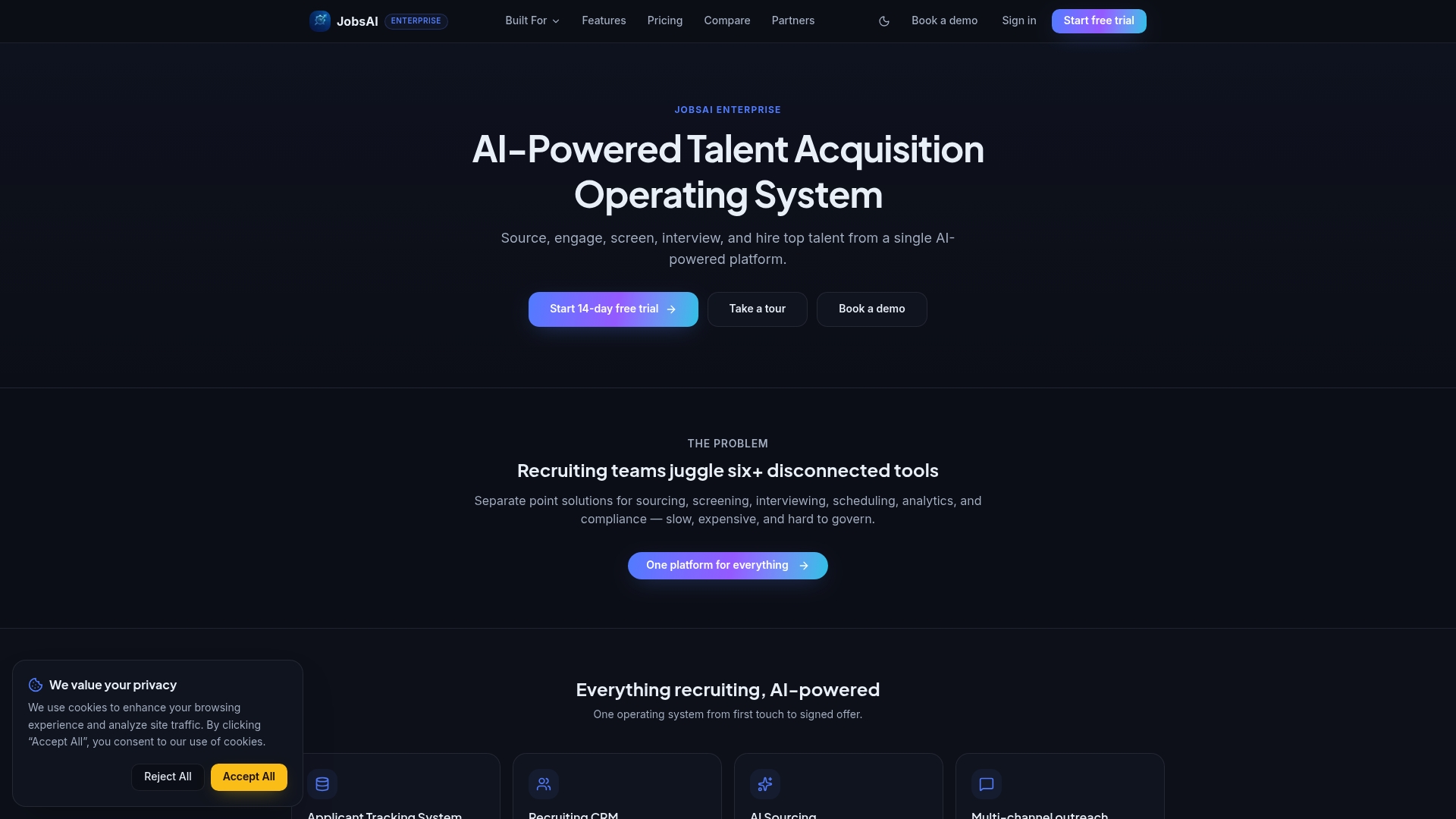
The analytics layer tracks reply rates and progression to interview automatically, which means the metrics your stakeholders care about are already sitting in a dashboard instead of a manual tracker. If you want to see how the search, enrichment, and outreach pieces connect in practice, take a tour of JobsAI Enterprise and walk through a live rediscovery workflow before your next hiring sprint.
Sources
- How to Rediscover and Re-Engage Top Candidates
- 46% of Sourced Hires Were Already in Your Database: Building a Systematic Talent Rediscovery Function
- Candidate Rediscovery Techniques
FAQ
What Is Candidate Rediscovery in Recruiting?
Candidate rediscovery is the practice of searching your existing applicant database for qualified past applicants, including silver medalists, instead of sourcing every role externally.
How Do Headhunters Find Candidates Through Rediscovery?
Headhunters and recruiters run saved Boolean searches, keyword filters, and tag-based queries against their ATS to surface past applicants who match a new role, then verify and refresh their contact details before reaching out.
What Is the Hardest Type of Role to Fill Through Rediscovery?
Highly specialized technical or executive roles are the hardest to fill through rediscovery alone, since the qualified candidate pool is smaller and profiles age faster in fast-moving fields; these roles usually still need external sourcing alongside database searches.
How Often Should We Run a Rediscovery Sprint?
A monthly rediscovery sprint, covering three structured searches and a shortlist review, keeps candidate data fresh and produces a steady stream of warm leads without overwhelming recruiter capacity.
Do We Need Candidate Consent to Re-Engage Past Applicants?
Yes. Reaching back out to past applicants should include an easy opt-out and respect any prior request to be removed from your database, which keeps rediscovery compliant with privacy expectations like GDPR and protects your employer brand.
Recommended
See it in your workflow
JobsAI Enterprise runs sourcing, AI screening, and the whole interview pipeline in one place. Book a walkthrough tailored to your team.
Book a demo