
Article
The Role of Diversity in Talent Acquisition for HR Teams

The Role of Diversity in Talent Acquisition for HR Teams
TL;DR:
- Embedding diversity into hiring processes improves organizational resilience and decision-making through inclusive structures.
- Implementing structured interviews, diverse sourcing, and monitoring metrics ensures equitable candidate advancement and retention.
Diversity in talent acquisition is defined as the intentional inclusion of candidates from varied demographic, cultural, cognitive, and experiential backgrounds throughout every stage of the hiring process. The role of diversity in talent acquisition goes well beyond legal compliance with EEOC guidelines or EEO-1 reporting requirements. Inclusive culture ranks among the top three candidate considerations regardless of a candidate’s background, making DEI a direct driver of talent attraction. That means your sourcing strategy, job descriptions, interview structure, and onboarding process all shape whether top candidates choose you or walk away. HR professionals who treat diversity as core hiring infrastructure, not a campaign, build workforces that are more competitive, more resilient, and more capable of sustained growth.
What strategic benefits does diversity bring to talent acquisition?
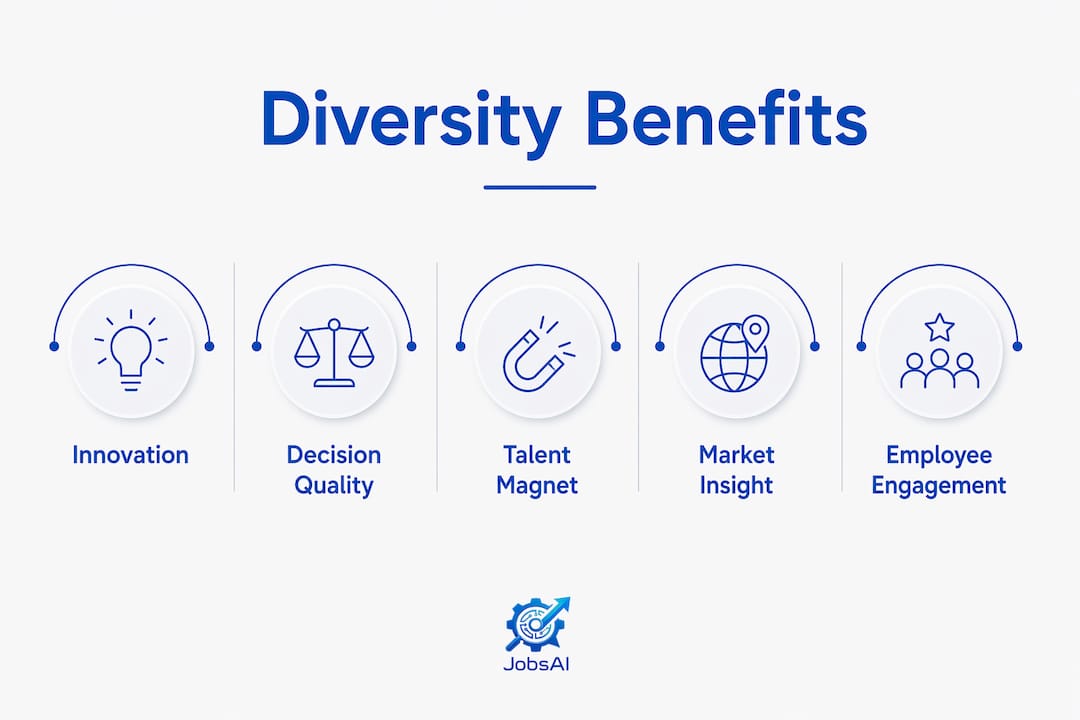
Diverse teams produce better decisions. Cognitive diversity, meaning the mix of different thinking styles, problem-solving approaches, and lived experiences on a team, reduces groupthink and surfaces blind spots that homogeneous groups miss. This is not a soft benefit. It shows up in product decisions, customer service quality, and risk assessment.

The ethical case is equally clear. Inclusion embedded as organizational character is more resilient than performance-based inclusion that leadership can withdraw when priorities shift. Deontological ethics holds that fair treatment is an obligation regardless of outcome. Virtue ethics frames inclusion as a reflection of organizational integrity. Both traditions point to the same conclusion: inclusion is not a bet on business outcomes. It is a standard of conduct.
The business outcomes follow anyway. Organizations that embed inclusion into their hiring architecture report stronger employee satisfaction, higher retention among underrepresented groups, and broader customer loyalty. Treating diversity recruiting as core business infrastructure rather than a side project ensures consistent accountability and measurable impact over time.
“Inclusion embedded in the architecture of decision-making stabilizes diversity as a standard practice rather than a campaign vulnerable to shifting leadership priorities. The organizations that get this right stop asking whether diversity is worth it and start measuring how well their systems support it.”
The distinction between performative and embedded inclusion matters here. Performative inclusion shows up in awareness months, diversity statements, and one-time training sessions. Embedded inclusion shows up in how every requisition is written, how every interview panel is structured, and how every hiring manager is evaluated.
How do current talent acquisition processes impact diversity outcomes?
The sourcing layer is where most diversity gaps begin. If your pipeline draws exclusively from the same universities, job boards, and professional networks, you will keep hiring from the same demographic pools. Partnerships with HBCUs, Hispanic-Serving Institutions, and associations serving underrepresented groups expand diverse talent pipelines in ways that dominant sourcing channels cannot replicate on their own.
Job descriptions create the next filter. Masculine-coded language decreases female applicants, and unnecessary degree requirements restrict candidate pools without improving hire quality. Studies by Textio and the Journal of Applied Psychology confirm that language and credential choices in job postings have measurable effects on who applies. Auditing every job description for neutral language and skills-based requirements is not optional if you want a broad, qualified applicant pool.
Evaluation practices determine whether diverse candidates who enter the funnel actually advance. Structured interviews with standardized questions and scoring rubrics reduce bias more effectively than unstructured interviews or unconscious bias training alone. Unstructured interviews reward candidates who mirror the interviewer’s communication style, which consistently disadvantages candidates from different cultural or socioeconomic backgrounds.
Data monitoring closes the loop. EEO-1 reporting, adverse impact analysis, and pipeline funnel metrics by demographic group tell you where candidates drop out and why. Without this data, diversity efforts are invisible. With it, you can identify exactly which stage of your process is creating the most attrition among underrepresented candidates.
Technology adds both efficiency and risk. AI screening tools introduce risks of adverse impact by excluding protected classes if trained on historically biased data. EEOC technical assistance is clear that algorithmic fairness requires ongoing monitoring, not a one-time setup. Any AI-powered screening system needs regular fairness audits to stay compliant and effective.
Pro Tip: Pair your AI screening tool with consistent hiring criteria reviewed by your HR team quarterly. Criteria drift is one of the most common ways bias re-enters a process that started with good intentions.
| Hiring stage | Common diversity risk | Recommended intervention |
|---|---|---|
| Sourcing | Narrow channel reliance | Add HBCU, HSI, and professional association partnerships |
| Job descriptions | Coded language and degree inflation | Audit for neutral language and skills-based requirements |
| Screening | Algorithmic bias in AI tools | Conduct regular adverse impact analysis |
| Interviews | Unstructured evaluation favoring similarity | Implement standardized questions and scoring rubrics |
| Onboarding | Isolation of diverse hires | Build structured inclusion touchpoints in the first 90 days |
What are common misconceptions about diversity in hiring?
The most persistent misconception is that DEI hiring lowers qualification standards. It does not. Diversity hiring expands the definition of a qualified candidate to include people whose credentials look different but whose capabilities are equivalent or superior. Restricting your search to a narrow credential profile is what lowers quality, because it eliminates candidates who could perform the role well.
A second misconception is that unconscious bias training alone moves the needle. The research does not support this. Bias training increases awareness but rarely changes behavior at the point of a hiring decision. Structural interventions produce more reliable results.
Diverse defaults, a choice architecture approach that preselects a demographically diverse candidate slate as the starting point for review, significantly increases hiring of underrepresented groups. Four experiments and a mini meta-analysis confirm this method works by establishing organizational norms rather than relying on individual bias reduction. The effect holds even for decision-makers with strong implicit stereotypes.
- Treating DEI as a campaign rather than hiring infrastructure produces inconsistent results that fade when leadership attention shifts.
- Blind résumé review alone has mixed impact on diversity. It must be paired with inclusive job descriptions, structured interviews, and ongoing interviewer development to produce sustained change.
- Accountability gaps are the most common reason diversity programs stall. When hiring managers are measured only on speed and cost, diversity outcomes suffer. Adding pipeline diversity metrics to manager performance goals changes behavior.
Pro Tip: Frame diversity goals as fairness and business outcomes when presenting them to hiring managers. Managers respond better to “we are missing qualified candidates” than to compliance language. The outcome is the same, but the motivation sticks.
What practical strategies embed diversity effectively in hiring?
Embedding diversity into hiring requires changes at every stage of the process, not just sourcing or interview training. Here is a structured approach that works across industries and team sizes.
- Audit your sourcing channels. Map every channel you use and check the demographic reach of each. If your channels overlap heavily, you are fishing from the same pool. Add at least two new partnerships with organizations serving underrepresented groups each quarter.
- Rewrite job descriptions with neutral language. Remove degree requirements that are not genuinely necessary. Replace subjective descriptors like “culture fit” with specific behavioral competencies. Use tools like Textio to flag coded language before posting.
- Implement structured interview frameworks. Standardize questions across all candidates for a given role. Use a scoring rubric that all interviewers complete independently before discussing. This reduces anchoring bias and produces more defensible hiring decisions.
- Set diversity KPIs at every funnel stage. Track application rates, interview advancement rates, offer acceptance rates, and 90-day retention rates by demographic group. Review these metrics monthly, not annually.
- Build inclusive onboarding. A diverse hire who feels isolated in the first 90 days is a retention risk. Assign structured mentors, schedule regular check-ins, and create peer networks that connect new hires across the organization.
- Link diversity outcomes to hiring manager performance goals. The best diversity hiring practices change how every requisition is treated, connecting diversity results directly to manager accountability.
| Strategy | Primary impact | Measurement |
|---|---|---|
| Sourcing channel audit | Broader applicant pool | Demographic breakdown of applicants |
| Neutral job descriptions | Higher application rates from underrepresented groups | Application volume by demographic |
| Structured interviews | Reduced evaluator bias | Interviewer score variance |
| Diversity KPIs by funnel stage | Identifies drop-off points | Stage-by-stage demographic data |
| Inclusive onboarding | Retention of diverse hires | 90-day and 1-year retention rates |
Key Takeaways
Embedding diversity into talent acquisition as core hiring infrastructure, not a campaign, produces the most consistent and measurable improvements in workforce quality and organizational performance.
| Point | Details |
|---|---|
| Diversity is a talent magnet | Inclusive culture ranks in the top three factors candidates weigh when choosing an employer. |
| Structured interviews reduce bias | Standardized questions and scoring rubrics outperform unstructured interviews and bias training alone. |
| Job descriptions filter applicants | Coded language and unnecessary degree requirements shrink diverse candidate pools before sourcing begins. |
| Accountability drives results | Linking pipeline diversity metrics to manager performance goals changes hiring behavior at the decision point. |
| Diverse defaults work | Preselecting a diverse candidate slate as the default starting point raises representation even among biased decision-makers. |
Why diversity in hiring is an infrastructure problem, not a culture problem
I have watched organizations spend significant budget on DEI programs that produce almost no change in who actually gets hired. The pattern is consistent. Leadership announces a commitment, HR runs a training series, and six months later the hiring data looks identical to the year before. The problem is almost never a lack of good intentions. It is a lack of structural accountability.
The organizations I have seen make real progress share one trait: they treat diversity the same way they treat revenue. They measure it at every stage. They assign ownership. They review the numbers in leadership meetings. When a sourcing channel consistently underperforms on demographic reach, they cut it or supplement it, the same way they would cut a marketing channel with poor conversion.
The resistance I encounter most often comes from hiring managers who feel that diversity requirements slow them down or constrain their choices. That resistance usually softens when you show them the data on candidate quality from structured, diverse pipelines. The candidates are there. The process just was not finding them before.
Building inclusion into decision-making architecture is the shift that makes diversity durable. It stops depending on which leader is in the room or how much political will exists this quarter. It becomes the default. That is the only version of diversity hiring that survives leadership transitions, budget cycles, and shifting organizational priorities.
— Hippolyte A.
How Jobsai Enterprise supports diversity-focused hiring at scale
HR teams that want to move from intention to measurable diversity outcomes need more than good policies. They need a system that makes structured, consistent hiring the default for every requisition.
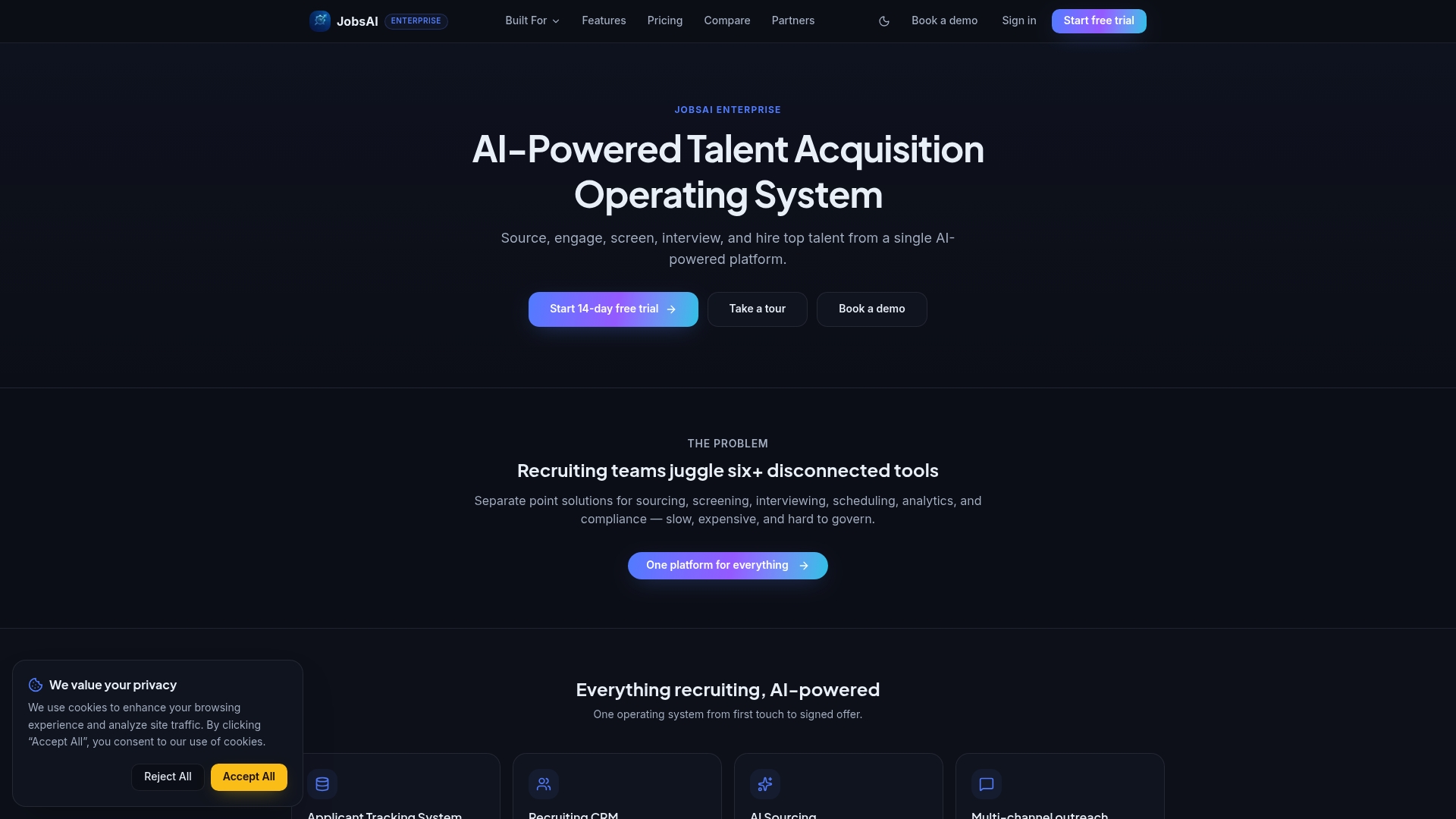
Jobsai Enterprise is an AI-powered talent acquisition operating system built for recruiting teams that need speed and consistency across high volumes of candidates. Its AI screening capabilities rank applicants against structured job criteria, reducing the evaluator variance that lets bias creep into early-stage decisions. The candidate database and talent pools feature helps teams build and maintain diverse pipelines across requisitions. Corporate HR teams can explore how Jobsai Enterprise fits their diversity hiring infrastructure and review available plans on the pricing page.
FAQ
What is the role of diversity in talent acquisition?
Diversity in talent acquisition is the practice of intentionally recruiting candidates from varied demographic, cultural, and experiential backgrounds to build a more capable and equitable workforce. It functions as both a talent magnet and a business performance driver when embedded into hiring infrastructure.
Does diversity hiring mean lowering qualification standards?
No. Diversity hiring expands the definition of a qualified candidate to include people whose credentials differ from traditional profiles but whose capabilities are equivalent or stronger. Restricting searches to narrow credential profiles is what reduces candidate quality.
How do structured interviews support diversity in hiring?
Structured interviews use standardized questions and scoring rubrics applied consistently to every candidate. This format reduces evaluator bias and produces more predictive, defensible hiring decisions compared to unstructured interviews.
What metrics should HR teams track for diversity in hiring?
HR teams should track application rates, interview advancement rates, offer acceptance rates, and 90-day retention rates by demographic group at every stage of the hiring funnel. Adverse impact analysis and EEO-1 reporting provide the regulatory baseline.
What is a diverse default in hiring?
A diverse default is a choice architecture intervention that preselects a demographically diverse candidate slate as the starting point for hiring review. Research confirms this method raises representation of underrepresented groups by establishing organizational norms rather than relying on individual bias reduction.
Recommended
See it in your workflow
JobsAI Enterprise runs sourcing, AI screening, and the whole interview pipeline in one place. Book a walkthrough tailored to your team.
Book a demo