
Article
Staffing Agency Industry Specializations: 2026 Guide

Staffing Agency Industry Specializations: 2026 Guide
Staffing agency industry specializations define the recruitment service areas where agencies build focused expertise to improve candidate fit and speed of hire. The largest U.S. staffing sectors include IT, healthcare, finance, manufacturing, and hospitality, each demanding tailored recruitment knowledge due to unique skills and regulatory requirements. Choosing the right type of agency, one that genuinely knows your sector, directly affects how fast you fill roles and how long those hires stay.
Here is a quick orientation to the main specialization types:
- Temporary staffing agencies place workers for short-term or project-based assignments across industries like manufacturing, hospitality, and office support.
- Permanent and direct placement agencies focus on full-time hires, often for mid-level to senior roles where cultural fit and long-term retention matter most.
- Trade-specific and industry-specific agencies concentrate on a single sector, such as healthcare, IT, or engineering, building deep candidate networks and regulatory knowledge.
- Outsourcing and consulting staffing firms manage entire workforce functions or provide contract-based project teams, often in finance, legal, or technology.
The distinction between a generalist firm and a sector-focused one is not just about niche branding. Specialized agencies speak the industry’s language, recognize the skills that actually matter, and identify critical competencies that a generalist recruiter would likely miss.
What are the main staffing agency industry specializations?
The U.S. staffing market covers a wide range of sector-focused models. Understanding each one helps you match your hiring needs to the right type of agency.

Temporary staffing
Temporary staffing agencies place workers for defined periods, covering seasonal surges, project peaks, or short-term absences. Industries like retail, warehousing, food service, and light manufacturing rely heavily on this model. The agency handles payroll, benefits administration, and workers’ compensation for the placed worker, which reduces the employer’s administrative burden during high-volume periods.

Permanent and direct placement
Permanent placement agencies recruit candidates for full-time roles and typically charge a fee based on the placed candidate’s first-year salary. These agencies invest more time in cultural fit assessment and reference verification because the placement is meant to last. They are most common in professional services, finance, and executive-level hiring.
Trade-specific and industry-specific agencies
This is where specialization has the most measurable impact. Agencies focused on a single sector, such as healthcare, IT, engineering, or legal, develop candidate pools that are pre-vetted for industry-specific credentials and technical competencies. A healthcare staffing firm, for example, tracks nursing licenses, CPR certifications, and health system orientation requirements as part of its standard process. Aerotek, one of the most recognized names in engineering and technical staffing, built its reputation by focusing on skilled trades and technical disciplines rather than trying to serve every sector.
Niche agencies also maintain exclusive partnerships with employers who prefer not to post roles publicly, giving candidates access to opportunities that never appear on job boards.
Outsourcing and consulting staffing
Some agencies go beyond individual placements and manage entire workforce functions. Managed service providers (MSPs) oversee contingent workforce programs for large enterprises, while consulting staffing firms deploy project teams in areas like IT implementation, financial auditing, or regulatory compliance. These models work best when a company needs a structured, ongoing workforce solution rather than a single hire.
Key U.S. industry specializations at a glance
| Sector | Typical placement types | Key credential requirements |
|---|---|---|
| Healthcare | Nurses, allied health, physicians | State licenses, CPR, TB test, orientation |
| Information technology | Developers, architects, cybersecurity | Technical certifications, portfolio review |
| Engineering | Civil, mechanical, electrical engineers | PE license, project experience |
| Finance and accounting | Analysts, CPAs, controllers | CPA license, regulatory knowledge |
| Hospitality | Hotel staff, event coordinators | Food handler permits, service experience |
| Manufacturing | Machine operators, quality technicians | OSHA training, equipment certifications |
Generalist vs. specialist agencies
Generalist firms cast a wide net and can fill roles across many sectors, which is useful when you have diverse hiring needs across departments. The trade-off is depth. Generalist firms often miss the nuanced cultural and technical requirements that drive long-term retention, while specialized agencies vet candidates for both behavioral and technical fit within a specific sector. For roles where a wrong hire is costly, a specialist agency is the more reliable choice.
Why specialized staffing agencies tend to outperform generalists
The core advantage of a specialized agency is domain depth. When a recruiter has spent years placing software engineers or ICU nurses, they know what a strong candidate profile actually looks like, not just what keywords to search for.
- More precise candidate matching. Niche agencies identify critical skill sets more effectively because they understand the real requirements of the role, not just the job description.
- Pre-vetted talent pools. Specialized agencies maintain candidate databases screened for industry-specific competencies, so they can respond to a new order faster than a generalist starting from scratch.
- Access to unadvertised roles. Exclusive employer partnerships mean candidates gain access to positions that never reach public job boards, which also benefits employers who want a quieter, more targeted search.
- Better cultural alignment. Agencies that specialize in a sector understand its workplace culture, compensation norms, and career progression patterns, which leads to stronger candidate-employer fit.
- Higher retention rates. Placements made by specialist agencies tend to last longer because the match goes beyond skills to include industry context and cultural expectations.
- Faster time-to-fill. A focused candidate pool and deep employer relationships reduce the time between a job order and a qualified presentation.
Agencies that learn the language, players, and culture of their chosen sector also build credibility that translates into more productive client conversations and sustainable growth over time.
How to choose the right staffing agency for your hiring needs
Selecting a staffing agency is a practical decision that starts with a clear picture of what you actually need.
- Define your hiring profile. Clarify the role type (temporary, contract, permanent), the volume of positions, and the urgency of the hire before you contact any agency. An agency that excels at high-volume light industrial placements is not the right partner for a CFO search.
- Match the agency’s sector focus to your industry. Ask directly which industries the agency specializes in and what percentage of their placements fall in your sector. A firm that places mostly in healthcare but claims to cover finance is a generalist in disguise.
- Evaluate their candidate pipeline. Ask how many pre-vetted candidates they currently have in your role category and how recently those profiles were updated. A stale database is a slow database.
- Check licensing and compliance credentials. Staffing agencies that place workers must comply with Fair Labor Standards Act requirements and applicable state labor laws. Confirm the agency holds the appropriate licenses for your state and sector.
- Assess geographic reach. Some specialized agencies operate nationally; others focus on specific metro areas. If you have multi-site hiring needs, confirm the agency can cover all relevant locations without stretching thin.
- Review their track record. Ask for placement retention data, average time-to-fill for your role type, and references from clients in your industry.
- Weigh niche focus against flexibility. A highly specialized agency is the right call for technical or credentialed roles. For general administrative or support hiring, a generalist with a strong local network may fill positions faster.
Pro Tip: When evaluating agency partners, ask whether they use skills-based screening rather than keyword filters alone. Skills-based approaches surface qualified candidates that automated keyword searches routinely overlook, which is especially important in technical fields where job titles vary widely.
How AI and automation are reshaping specialized staffing agencies
Technology is changing what specialized staffing agencies can do, and how fast they can do it. The agencies pulling ahead in 2026 are the ones using AI to handle administrative volume so their recruiters can focus on the work that actually requires human judgment.
- AI candidate matching goes beyond keywords. Semantic matching understands that “senior financial analyst with FP&A background” and “5 years of financial reporting experience” describe overlapping profiles. That distinction matters most in specialized sectors where job titles are inconsistent across employers.
- Automation recovers recruiter time. A typical 10-person staffing agency can save approximately 40 recruiter hours per week by automating resume screening, ATS data entry, and candidate follow-up sequences.
- Client communication runs on autopilot. Placement confirmations, timesheet reminders, and satisfaction check-ins are high-frequency but low-judgment tasks. Automating these workflows recovers 6–10 hours of account manager time per week, freeing them to focus on relationship-building and escalation handling.
- Compliance monitoring reduces risk. In healthcare staffing, AI credentialing management tracks nursing licenses, CPR certifications, and health system orientation completions automatically. AI-managed credentialing systems reduce compliance failures by 60–80% and eliminate the last-minute placement holds that generate the most costly client escalations.
- Back-office automation improves cash flow. Automating payroll data collection, timesheet processing, and invoice generation can eliminate up to 15 hours of back-office manual work weekly at a midsize agency, reducing billing errors and keeping cash flow consistent.
- ATS reactivation finds candidates you already own. AI-powered reactivation sends personalized outreach to dormant candidates in your database whose profiles match current open orders, generating qualified leads from a database the agency already owns at no additional sourcing cost.
Agencies that separate administrative functions from relationship management using AI consistently report better client retention and faster placement cycles.
Pro Tip: If your agency uses an ATS like Bullhorn or Crelate, layer an AI matching tool on top rather than relying solely on native keyword search. The combination of semantic matching and your existing candidate database is where the fastest sourcing gains come from.
Jobsai Enterprise is built specifically for this workflow. Its AI-powered platform for staffing firms handles candidate screening, ranking, and follow-up in one place, so your recruiters spend their time on placements, not on data entry. For teams that want to understand exactly where AI fits and where human judgment should stay, the AI in recruiting guide is a practical starting point.
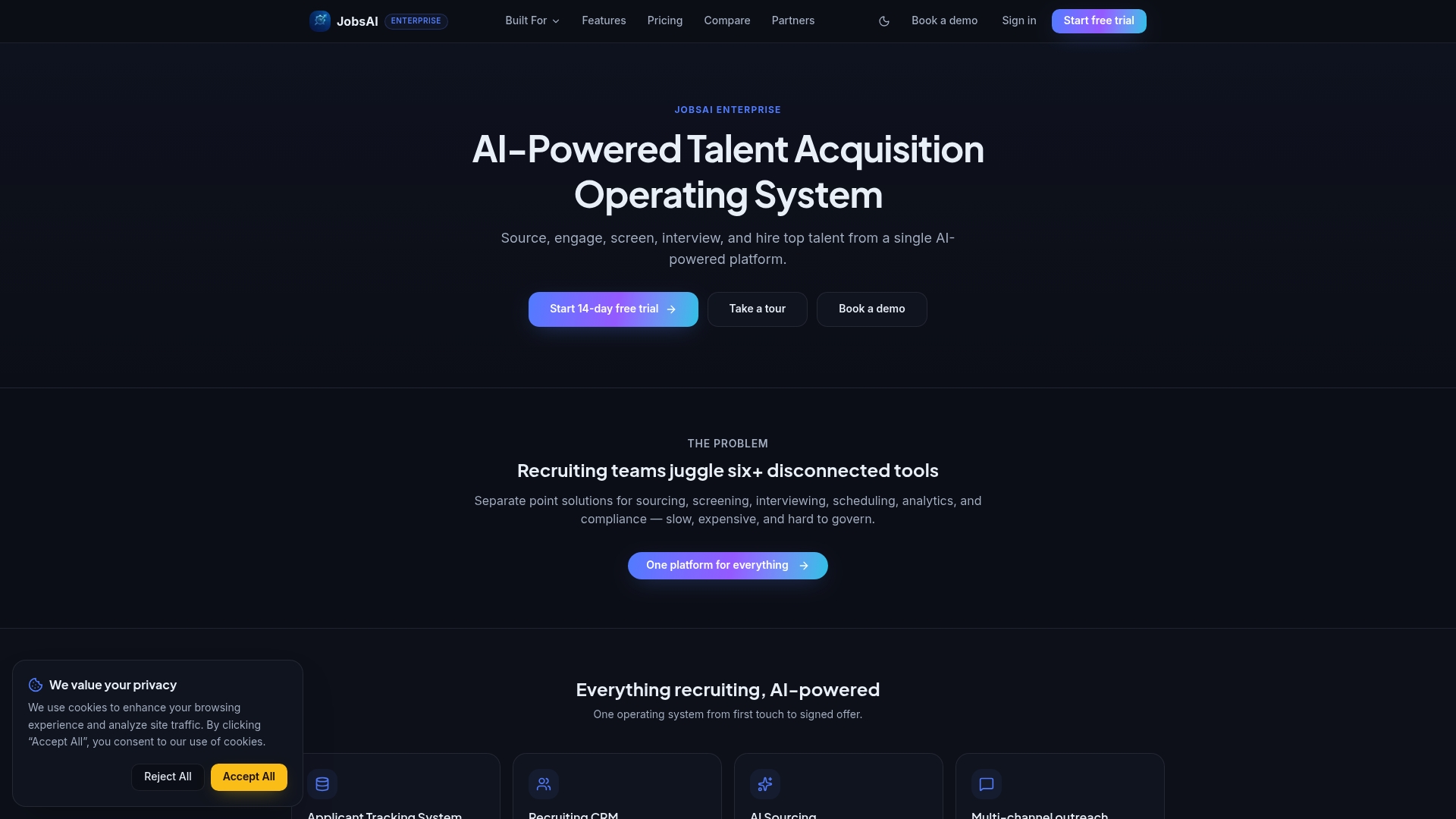
If you are ready to see how AI changes the pace of specialized recruiting, Jobsai Enterprise is worth a closer look.
Key Takeaways
Specialized staffing agencies consistently outperform generalists in technical and credentialed sectors because domain depth, pre-vetted talent pools, and AI-driven workflows combine to produce faster placements and stronger long-term retention.
| Point | Details |
|---|---|
| Specialization improves match quality | Niche agencies identify critical skill sets and cultural fit that generalist firms routinely miss. |
| AI saves 40 hours weekly | A 10-person agency can recover approximately 40 recruiter hours per week through automation of screening and follow-up. |
| Compliance automation reduces failures | AI credentialing management cuts compliance failures by 60–80% in healthcare staffing. |
| Account manager time recovered | Automating client communications recovers 6–10 hours of account manager time per week. |
| Agency selection starts with role clarity | Define role type, volume, urgency, and sector before evaluating any agency partner. |
FAQ
What type of industry is a staffing agency?
Staffing agencies operate within the professional services sector, functioning as intermediaries that match employers with workers across industries including IT, healthcare, finance, manufacturing, and hospitality.
What are the main staffing models used in the U.S.?
The primary models are temporary staffing, permanent direct placement, contract-to-hire, executive search, and outsourced workforce management (MSP). Each serves different hiring timelines and role types.
Which industries use staffing agencies the most?
IT, healthcare, finance, manufacturing, and hospitality are the largest sectors relying on specialized staffing agencies, driven by high turnover rates, credential requirements, and fluctuating demand.
What are the key functions a staffing agency performs?
Core functions include candidate sourcing, skills screening, credential verification, interview coordination, offer management, onboarding support, payroll administration for placed workers, and ongoing compliance monitoring.
How does specialization affect the quality of candidates you receive?
Specialized agencies maintain pre-vetted talent pools screened for sector-specific competencies, which means the candidates they present are more likely to meet both the technical requirements and the cultural expectations of the role.
Recommended
See it in your workflow
JobsAI Enterprise runs sourcing, AI screening, and the whole interview pipeline in one place. Book a walkthrough tailored to your team.
Book a demo