
Article
Construction Workforce Hiring Strategy for 2026

Construction Workforce Hiring Strategy for 2026
TL;DR:
- A structured hiring strategy combines multi-channel sourcing, fast assessment, and project-aligned workforce planning to meet industry demands.
- Building a strong onboarding process and retention practices reduces early turnover and maintains productivity.
A construction workforce hiring strategy is a structured, multi-channel approach to recruiting, selecting, and retaining skilled workers across all project phases. The construction industry faces 349,000 net new workers needed in 2026, and 92% of firms report difficulty finding qualified candidates. That combination makes reactive hiring a losing game. The firms that win use a deliberate system: targeted sourcing, structured selection, project-aligned workforce planning, and retention practices that start before day one.
What are the most effective recruitment channels for construction hiring?
Multi-channel sourcing is the foundation of any reliable construction talent acquisition effort. Relying on a single channel, whether that is a general job board or word of mouth, leaves too many roles unfilled for too long.

Employee referral programs deliver the highest return at the lowest cost. Referral bonuses of $250–$500 paid after a new hire completes 90 days keep both the referrer and the new worker invested in the outcome. Covering just 2–3 sourcing channels this way can fulfill 80% of hiring needs at a lower cost than staffing agencies.
Beyond referrals, the most productive channels for construction hiring include:
- Trade school and apprenticeship partnerships. Connect directly with local programs, Joint Apprenticeship Training Committees (JATC), and Associated Builders and Contractors (ABC) chapters. These relationships put you in front of candidates before they enter the open market.
- Niche job boards and social media groups. General job boards attract unqualified applicants. Construction-specific boards and active LinkedIn or Facebook groups for specific trades reach workers who are already in the field.
- Veteran transition programs. Veterans bring discipline, safety awareness, and hands-on technical skills. Programs like Helmets to Hardhats connect transitioning service members directly to construction careers.
- Community outreach. High school career fairs, community college events, and local union halls build a pipeline of workers who are not yet actively searching but are open to the right opportunity.
Pro Tip: Track cost-per-hire and 90-day retention rate by channel. Most teams discover that referrals and trade school partnerships outperform paid job boards by a wide margin. Cut the underperforming channels and reinvest that budget where the data points.
How can structured hiring processes improve speed and quality?
Structured hiring cuts time-to-hire without sacrificing candidate quality. Firms that implement skill-based interviews, pre-employment assessments, and rapid review cycles reduce hiring timelines from 60+ days to under 30 days. That speed matters because qualified tradespeople rarely wait more than a week before accepting another offer.
A structured process follows a clear sequence:
- Pre-screen for non-negotiables first. Confirm certifications, licenses, and physical requirements before scheduling any interview. This removes unqualified candidates in minutes, not days.
- Use skill-based interviews. Ask candidates to walk through how they would handle a specific jobsite scenario. Generic behavioral questions reveal little about trade competence.
- Run a paid practical skills test. A 30-minute on-site skills test predicts hiring success better than interviews alone. It evaluates technical competence, safety awareness, and cultural fit simultaneously.
- Review applications within 24 hours. Candidates interpret slow responses as disorganization or disinterest. A same-day or next-day acknowledgment keeps top candidates engaged.
- Extend offers within 7 days. Delays beyond one week cost firms their top choices. The structured offer timeline is not a courtesy. It is a competitive requirement.
Compliance is part of the process, not an afterthought. I-9 non-compliance fines range from $252 to $2,507 per form, and OSHA violations can reach $145,027 per incident. Getting paperwork right from the start protects the firm and the worker.
Pro Tip: The most expensive hiring failures happen after the offer is accepted, not before. Poor onboarding logistics, missing PPE on day one, or unclear site arrival instructions cause immediate early turnover. Assign one person to own the logistics between offer acceptance and the first day on site.
How should construction hiring align with project phases?
Workforce planning tied to project milestones prevents the last-minute scrambles that drive up costs and reduce quality. The goal is to map labor needs by trade, skill level, and timeline well before mobilization begins.
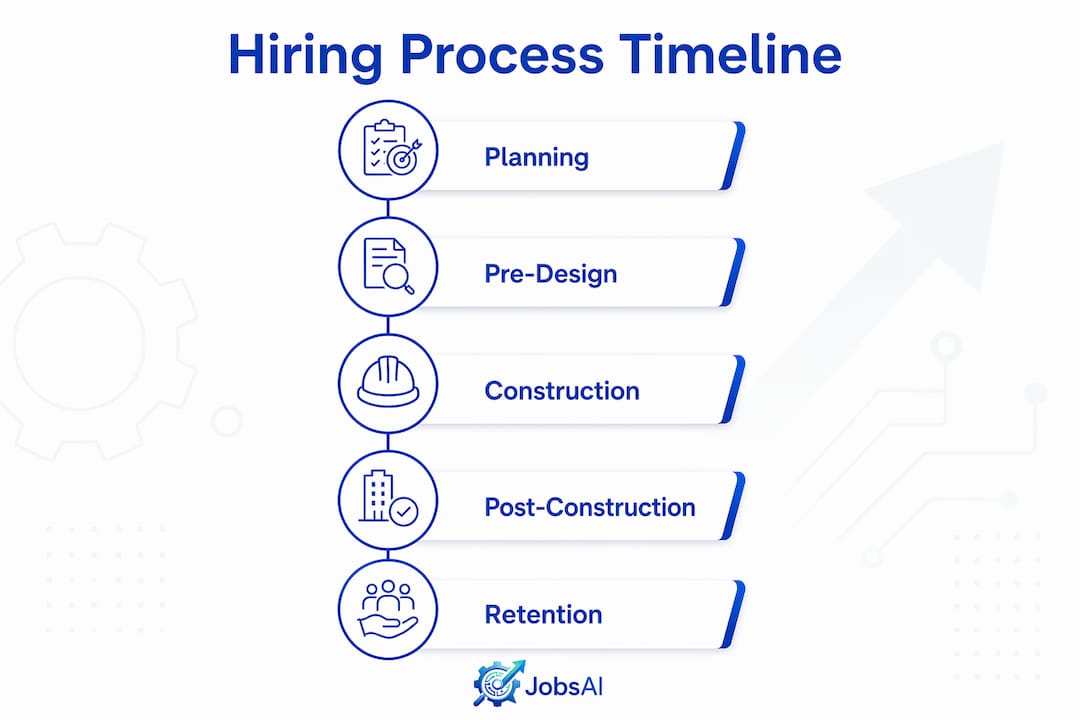
Senior mission-critical roles require the longest lead time. Positions like Senior Superintendents and Project Managers need 6–12 months of recruitment lead time before the project mobilizes. Treating these hires the way procurement treats long-lead equipment orders is the right mental model. If the crane needs to be ordered nine months out, so does the superintendent who will operate within its radius.
The table below shows how hiring activity should map to project phases.
| Project phase | Hiring priority | Lead time |
|---|---|---|
| Pre-design and planning | Senior Superintendents, Project Managers | 6–12 months before mobilization |
| Design and procurement | Foremen, Safety Officers, Estimators | 3–6 months before mobilization |
| Early construction | Skilled tradespeople by specialty | 4–8 weeks before phase start |
| Peak construction | General labor, equipment operators | 2–4 weeks before ramp-up |
| Project closeout | Reduced crew, punch-list specialists | Ramp-down begins 60 days before completion |
One useful planning tool is the “rookie ratio,” which tracks the proportion of new or less experienced workers on a crew at any given time. Keeping that ratio below a defined threshold, say no more than 20–25% new workers per crew, maintains productivity and safety standards during ramp-up phases.
Coordination with the design and procurement teams also matters. When design changes shift the project timeline, hiring plans need to shift with them. A workforce planning calendar shared across project management, procurement, and HR prevents the gaps that cause costly delays.
What retention strategies reduce turnover in construction?
Retention is a people-first strategy. The most effective construction hiring best practices treat the period between offer acceptance and the 90-day mark as the highest-risk window for losing workers.
Safety orientation and hands-on training before the first jobsite day are the single most effective retention tools available. No worker, regardless of experience level, should arrive on site without a structured introduction to the site’s safety culture and procedures. This sets expectations and signals that the company takes its people seriously.
“Retention starts at day one with safety orientation and hands-on training before the jobsite. No one is ‘too experienced’ for a safe start. This approach reduces early turnover and builds the cultural foundation that keeps workers engaged long-term.”
The following practices build on that foundation:
- Assign a buddy or mentor. New hires who have a go-to person for questions in the first 30 days stay longer and perform better. This costs nothing and pays back immediately.
- Show a clear advancement path. Workers who can see where they are headed in two or three years are far less likely to leave for a competitor offering the same wage. Post internal promotion histories. Talk about career growth in onboarding.
- Pay competitive market rates and offer year-round work. Seasonal layoffs are one of the top reasons skilled workers leave construction for other industries. Firms that structure projects to minimize gaps in employment retain more of their workforce from year to year.
- Build a safety-first culture. Workers talk. A reputation for taking safety seriously attracts better candidates and keeps current employees from looking elsewhere.
Half of all construction turnover occurs within the first 90 days. That means the investment in structured onboarding, mentorship, and clear communication pays the highest return in the earliest weeks of employment.
Key Takeaways
A reliable construction workforce hiring strategy combines early sourcing, structured selection, project-aligned planning, and retention practices that begin before day one.
| Point | Details |
|---|---|
| Start senior hiring early | Begin recruiting Superintendents and Project Managers 6–12 months before mobilization. |
| Use multi-channel sourcing | Referrals, trade school partnerships, and niche boards fulfill most hiring needs at lower cost. |
| Structure the selection process | Skill-based interviews and on-site tests cut time-to-hire and improve candidate quality. |
| Align hiring with project phases | Map labor needs by trade and timeline to avoid last-minute scrambles and staffing gaps. |
| Retain workers from day one | Safety orientation, mentorship, and clear career paths reduce the 90-day turnover window. |
What I have learned about construction hiring that most guides skip
By Hippolyte A.
After working closely with construction hiring teams across a range of project sizes, the pattern I see most often is this: firms invest heavily in sourcing and almost nothing in the 72 hours between offer acceptance and the first day on site. That gap is where the real attrition happens. A worker who accepted your offer on Friday but received no site arrival instructions, no PPE confirmation, and no contact over the weekend is already reconsidering by Monday morning.
The second thing most guides understate is how much a 30-minute paid skills test changes the quality of your hires. Interviews in construction are often too conversational. A candidate who sounds confident in a meeting room may struggle with the actual task. Putting someone on site for half an hour, with pay, tells you more than three rounds of interviews ever will. It also signals respect for the candidate’s time and expertise.
My honest view on senior hiring is that most firms treat it like any other open role. They post, they wait, they scramble. The firms that consistently land top Superintendents and Project Managers treat those searches the way they treat long-lead procurement. They start early, they stay in contact with candidates over months, and they close fast when the right person is ready. That discipline is rare, and it is exactly why those firms have better projects.
The AI in recruiting conversation is worth having too. Automation handles the volume work well. The human judgment stays where it belongs: in the skills test, the offer conversation, and the first week on site.
— Hippolyte A.
How Jobsai Enterprise supports construction talent acquisition
Construction hiring teams manage high volumes of applicants across multiple trades, project phases, and locations at the same time. That volume creates the exact conditions where manual review slows everything down and good candidates fall through the cracks.
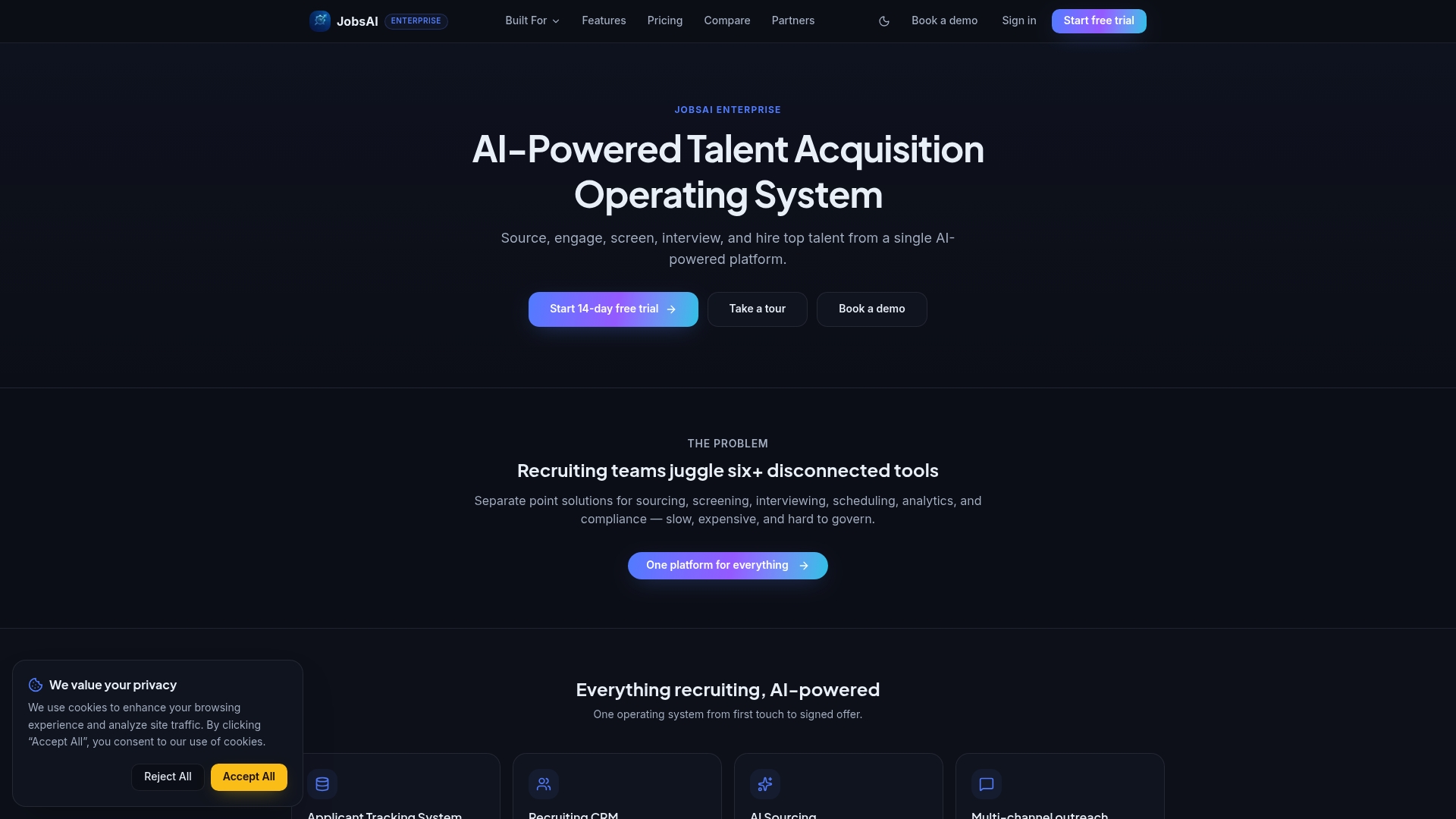
Jobsai Enterprise is an AI-powered talent acquisition operating system built for teams that need to screen, rank, and manage candidates faster without adding headcount. The platform automates candidate screening and ranking so your team reviews only the applicants who meet your actual requirements. It also supports talent pool management so you can build and maintain pipelines for hard-to-fill trades well before a project mobilizes. For construction HR teams ready to move faster and hire with more consistency, the Jobsai Enterprise platform overview shows exactly how it fits your workflow.
FAQ
How many workers does the construction industry need in 2026?
The construction industry needs approximately 349,000 net new workers in 2026. This shortage makes proactive recruitment and retention planning non-negotiable for any firm with active projects.
What is the fastest way to reduce time-to-hire in construction?
Structured hiring, including pre-screening, skill-based interviews, and application review within 24 hours, cuts hiring timelines from 60+ days to under 30 days. Speed at every step keeps qualified candidates from accepting competing offers.
When should construction firms start recruiting senior roles?
Senior roles like Superintendents and Project Managers require 6–12 months of lead time before project mobilization. Starting late on these hires is one of the most common causes of project delays.
Why do construction workers leave in the first 90 days?
Most early turnover traces back to poor onboarding logistics, unclear expectations, and no structured introduction to site safety culture. Assigning a mentor and completing safety orientation before day one significantly reduces dropout in the first 90 days.
Are employee referral programs worth the bonus cost in construction?
Yes. Referral programs with bonuses of $250–$500 paid at 90 days fulfill up to 80% of hiring needs at a lower cost per hire than staffing agencies. The 90-day retention requirement also aligns the referrer’s incentive with the firm’s retention goal.
Recommended
See it in your workflow
JobsAI Enterprise runs sourcing, AI screening, and the whole interview pipeline in one place. Book a walkthrough tailored to your team.
Book a demo