
Article
US Gig Workforce Recruitment Tips for Hiring Teams

US Gig Workforce Recruitment Tips for Hiring Teams
TL;DR:
- Effective gig recruitment relies on precise job briefs and matching sourcing platforms to role types. Structured vetting, compliant onboarding, and formal governance reduce legal risks and improve hiring speed. Building pre-vetted talent pools and using AI-powered systems enhance process consistency and candidate assessment.
US gig workforce recruitment tips are practical strategies hiring managers use to efficiently source, assess, onboard, and manage freelance and contract talent. Gig hiring, formally known as contingent workforce management, differs from traditional recruitment in one critical way: the role scope, deliverables, and classification status must be defined before a single candidate is contacted. With over 80% of gig candidates discovering jobs through social media rather than job boards, recruiters who rely on outdated sourcing methods lose qualified talent before the process even starts. The strategies below address every stage of the gig hiring cycle, from writing the brief to managing compliance.
1. US gig workforce recruitment tips start with a precise job brief
Top-tier gig talent ignores vague job postings. They require specific deliverables, defined start and end dates, and clear payment terms to assess availability before applying. A brief that says “short-term project, flexible hours” tells a skilled freelancer nothing useful and signals a disorganized client.
A strong gig job brief includes:
- Project scope: What the worker will produce, not just what they will do
- Deliverables: Specific outputs with measurable quality standards
- Timeline: Start date, milestones, and end date
- Payment terms: Rate, payment schedule, and method
- Work mode: Remote, on-site, or hybrid, plus required time zone availability
- Communication tools: Slack, Asana, email, or video calls, specified upfront
- Approval ownership: Who reviews and signs off on completed work
80% of freelance project failures trace back to unclear briefs. A detailed brief reduces revision cycles, improves freelancer engagement, and filters out candidates who are not a genuine fit before you spend time reviewing applications.
Pro Tip: Include a one-paragraph “day in the life” description in your brief. It gives candidates a realistic preview of the working relationship and reduces early dropouts after hire.

2. Match your sourcing platform to the role type and hiring speed
Balancing speed and compliance is the core decision in gig sourcing. Direct contractor platforms offer immediacy but require different legal workflows than W-2 staffing agencies. Choosing the wrong channel costs time and creates classification risk.
Here is how to match platform type to hiring need:
- Freelance marketplaces work best for project-based, skill-specific roles where you can review portfolios and ratings before outreach. Response times are moderate, and you manage the contract directly.
- On-demand staffing platforms suit high-volume, shift-based roles where speed matters more than deep vetting. These platforms handle worker classification but charge a premium for that convenience.
- Staffing agencies provide W-2 workers with markup rates that typically range between 20% and 50% above base pay. That markup covers payroll taxes, benefits administration, and compliance, which is worth the cost when classification risk is high.
- Professional networks and communities work well for senior or specialized roles where referrals and reputation matter more than platform ratings.
- Pre-vetted internal talent pools are the fastest and most cost-effective channel. Recruiters who maintain a database of past contractors can fill roles in hours rather than days.
Measure channel effectiveness by tracking time-to-fill, cost-per-hire, and 30-day retention rates for each platform. Data from those three metrics tells you where to concentrate your sourcing budget.
3. Build and maintain a pre-vetted talent pool
The fastest gig hire is a rehire. Recruiters who treat every completed engagement as a talent pool entry cut future time-to-fill significantly. A pre-vetted pool means you already know the worker’s output quality, communication style, and reliability.
Behavioral intelligence drives this approach. Tracking data from every job view, application, and completed engagement lets you automate reactivation of qualified past workers when a matching role opens. Jobsai Enterprise supports this with a built-in candidate database and talent pools feature that organizes pre-vetted contractors by skill, availability, and past performance.
Maintaining a talent pool requires discipline. Tag every contractor with role type, skill level, last engagement date, and rehire eligibility. Review the pool quarterly to remove inactive contacts and add new completions. A well-maintained pool is a competitive advantage that most hiring teams underuse.
4. Vet gig candidates with structured, paid trial tasks
Portfolios and ratings tell you what a candidate has done. A paid trial task tells you how they work with your team, your tools, and your standards. These are different things, and the distinction matters.
Best practices for vetting gig talent include:
- Paid trial periods of 4–8 hours to evaluate actual project fit and quality of output. Trial tasks improve matching and reduce engagement risks before a full contract is signed.
- Portfolio review with specificity: Look for work that matches your industry, output format, and complexity level, not just general quality.
- Reference checks focused on process: Ask past clients about communication frequency, how the candidate handled feedback, and whether deadlines were met without reminders.
- Communication style assessment: Send a detailed brief and evaluate the quality of their clarifying questions. Strong candidates ask smart questions early.
- Classification review: Confirm the worker meets IRS and state criteria for independent contractor status before the trial begins.
Trial periods typically cost $50–$200 depending on role complexity. That is a small investment compared to the cost of a full engagement with the wrong candidate.
Pro Tip: Use the trial task brief as a screening tool. Candidates who ask no clarifying questions before starting often deliver work that misses the mark. Candidates who ask three to five specific questions usually deliver on target.
5. Separate contractor onboarding from employee onboarding
Most organizations make one consistent mistake: they run contractors through the same onboarding process as full-time employees. This creates confusion, compliance risk, and wasted time for both parties.
Contractor onboarding should focus on contract signing, project expectations, confidentiality, system access, payment instructions, and offboarding triggers. It should not include benefits enrollment, culture orientation sessions, or long-term career development discussions.
A structured contractor onboarding checklist covers:
| Step | Action Required |
|---|---|
| Contract signing | Independent contractor agreement with scope, rate, and IP terms |
| Confidentiality | NDA or data handling agreement signed before system access |
| System access | Minimum necessary tools only, with defined access expiration |
| Payment setup | Invoice format, payment schedule, and preferred method confirmed |
| Communication norms | Response time expectations, preferred channels, and meeting cadence |
| Milestone review | Scheduled check-ins tied to deliverable dates, not calendar weeks |
| Offboarding triggers | Conditions for contract end, access revocation, and final payment |
Setting these expectations on day one prevents the most common friction points in gig engagements: missed deadlines, payment disputes, and scope creep.
6. Apply gig governance to reduce classification and legal risk
Worker misclassification is the most expensive mistake in gig hiring. Misclassifying gig workers exposes organizations to tax liabilities, benefit obligations, and penalties under IRS Revenue Ruling 87-41 and state laws like California AB5. The financial and reputational damage from a single misclassification audit can exceed the cost of years of proper governance.
A formal gig governance process includes:
- Pre-defined project briefs with deliverables, approval owners, and classification assessments completed before any work begins.
- Approved contract templates reviewed by legal counsel and updated annually to reflect state law changes.
- Centralized contract tracking that logs every active and completed contractor engagement, including payment records and project outcomes.
- Classification checklists based on IRS behavioral control, financial control, and relationship type criteria applied to every new engagement.
- Escalation protocols for department managers who want to create informal contractor arrangements outside the approved process.
A common operational failure is allowing department managers to create informal contractor arrangements via email without formal governance. Centralizing this process through HR or procurement eliminates that risk. By mid-2026, HR leaders should treat standardized gig governance as a baseline operational requirement, not an advanced practice.
Key Takeaways
Effective gig workforce recruitment requires precise role definition, structured vetting, compliant onboarding, and formal governance applied consistently across every engagement.
| Point | Details |
|---|---|
| Write specific job briefs | Include deliverables, timelines, payment terms, and tools to attract qualified candidates and reduce revisions. |
| Match platform to role type | Choose between freelance marketplaces, staffing agencies, and talent pools based on speed, cost, and classification needs. |
| Use paid trial tasks | A 4–8 hour paid trial at $50–$200 is the most reliable way to assess real candidate fit before full engagement. |
| Separate contractor onboarding | Run contractors through a focused process covering contracts, access, payment, and milestones, not employee orientation. |
| Enforce gig governance | Centralize contract tracking and classification reviews to prevent misclassification under IRS Revenue Ruling 87-41 and state laws like California AB5. |
What I’ve learned about gig recruitment after years of watching teams get it wrong
The shift from ad-hoc gig hiring to structured, data-driven processes is real, but most teams are still somewhere in the middle. They have a governance policy on paper and an informal email chain in practice. That gap is where the legal and operational risk lives.
The teams that hire gig talent well share one habit: they treat the job brief as a contract, not a job posting. Every word in that brief sets an expectation. Vague language at the brief stage becomes a dispute at the invoice stage. I have seen engagements fall apart not because the candidate was wrong, but because no one agreed on what “done” looked like.
The other thing I have noticed is that speed and compliance are not opposites. Recruiters who build pre-vetted talent pools and standardized contract templates can fill a gig role faster than teams who start from scratch every time, and they do it with less legal exposure. The investment in process pays back on the third or fourth hire, not the first.
Behavioral data is the next frontier. Tracking which job descriptions generate the most qualified applicants, which platforms convert best, and which contractors rehire at the highest rate gives you a feedback loop that most teams ignore. That data is sitting in your ATS and your payment records right now. The question is whether you are using it.
— Hippolyte A.
How Jobsai Enterprise supports structured gig hiring
Gig recruitment works best when your process runs on a system built for it, not adapted from a system built for something else.
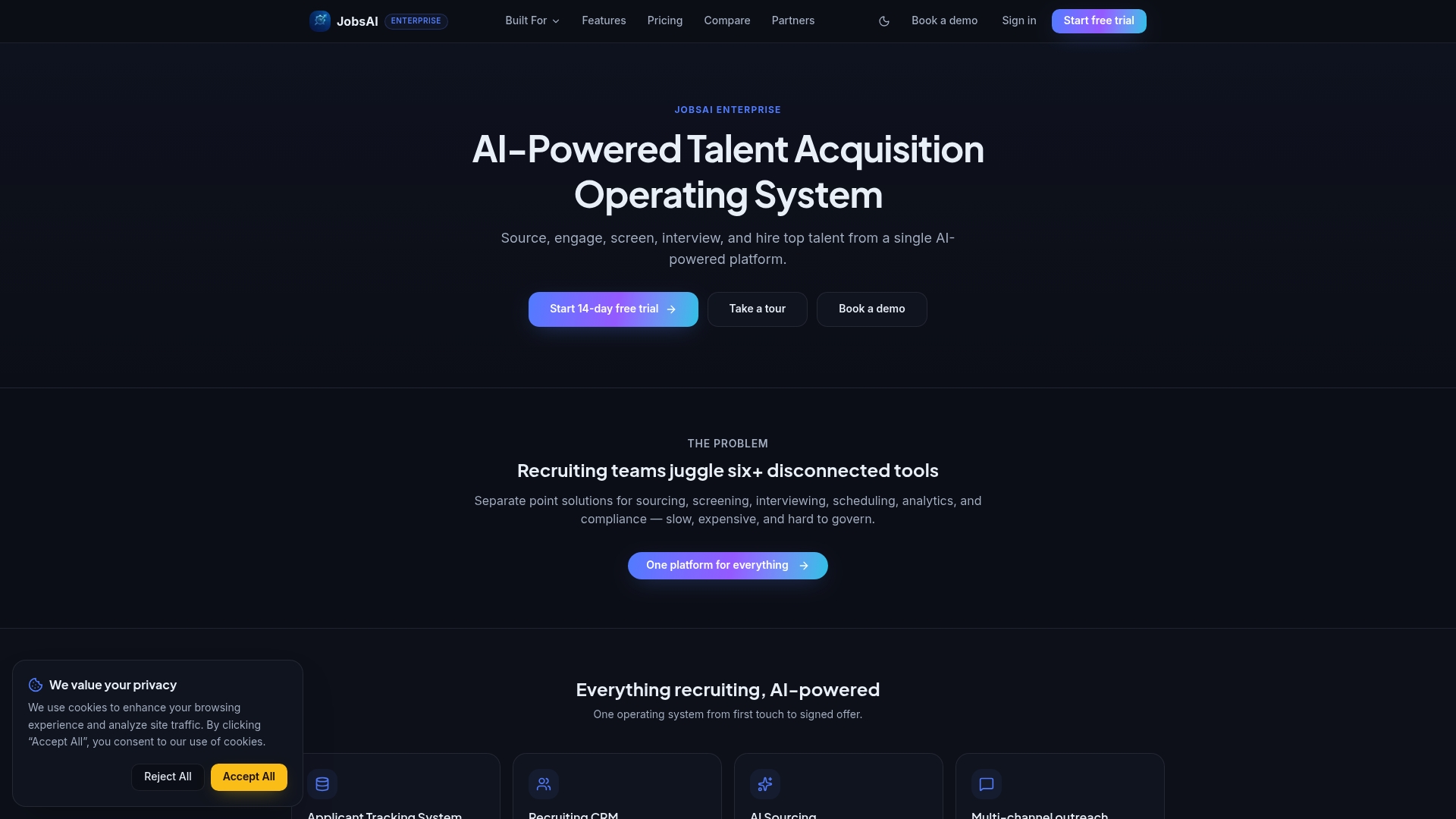
Jobsai Enterprise is an AI-powered talent acquisition operating system designed for hiring teams managing high volumes of freelance and contract candidates. It screens and ranks applicants automatically, organizes pre-vetted contractors into searchable talent pools, and automates follow-up so qualified candidates do not fall through the gaps. The recruiting CRM tracks every contractor interaction, contract status, and project outcome in one place. Corporate HR teams and talent acquisition leaders can explore how Jobsai Enterprise fits their specific hiring workflows and see which features match their current gig recruitment challenges.
FAQ
What is the biggest mistake in gig recruitment?
The most common mistake is writing vague job briefs. 80% of freelance project failures trace back to unclear scope, missing deliverables, or undefined payment terms.
How do I classify a gig worker correctly?
Apply the IRS three-part test covering behavioral control, financial control, and the type of relationship. State laws like California AB5 add additional criteria, so review both federal and state standards before classifying any contractor.
What does a paid trial task cost?
Paid trial tasks typically cost $50–$200 depending on role complexity and last 4–8 hours. That cost is far lower than the risk of a full engagement with a poor-fit candidate.
How should contractor onboarding differ from employee onboarding?
Contractor onboarding covers contract signing, confidentiality, system access, payment setup, and offboarding triggers. It does not include benefits enrollment, culture orientation, or long-term development planning.
What is gig governance?
Gig governance is a formal process for managing contractor engagements, including pre-defined briefs, approved contract templates, classification checklists, and centralized tracking of all active and completed contractor relationships.
Recommended
See it in your workflow
JobsAI Enterprise runs sourcing, AI screening, and the whole interview pipeline in one place. Book a walkthrough tailored to your team.
Book a demo