
Article
What a Business Development Consultant Does for Growth

What a Business Development Consultant Does for Growth
A business development consultant is hired to build and improve the systems that turn outreach into revenue: pipeline strategy, partnership channels, and go-to-market moves that a company’s current team doesn’t have time or expertise to build alone. The outcome they deliver is measurable commercial traction, more qualified conversations, faster partner deals, or a clearer path to a new market, not just advice.
Two groups read this differently. If you’re weighing the career, the next step is matching your background to a niche and packaging a repeatable offer. If you’re a founder or hiring manager, the next step is a structured evaluation process before you sign anyone.
Key Takeaways
A business development consultant earns their fee by building measurable pipeline, partnership, or go-to-market systems, not by delivering advice alone.
| Point | Details |
|---|---|
| Definition matters | A consultant builds the systems (pipeline, partnerships, outreach) that turn strategy into revenue, distinct from strategy advice alone. |
| Niche drives pricing | Narrow focus on one industry, channel, or company size speeds traction and supports higher rates. |
| Engagement models vary | Hourly, project, retainer, and performance-based pricing all exist; test with a fixed-scope project first. |
| Hiring needs structure | Use a written checklist covering scope, references, and success metrics before signing any engagement. |
| Screening tools help | JobsAI Enterprise’s AI ranking and recruiting CRM speed up shortlisting when hiring for business development roles internally. |
Table of Contents
- What a Business Development Consultant Actually Does
- Core Responsibilities and a Sample Week of Work
- Skills, Experience, and Credentials Clients Expect
- How to Become a Business Development Consultant
- Career Trajectory, Compensation, and How Consultants Charge
- Why Businesses Hire a Business Development Consultant
- Hiring Checklist: How to Evaluate a Consultant
- Common Specializations and How to Choose a Niche
- Tactical Consultant vs. Strategic Business Advisor: What’s the Difference
- Where JobsAI Enterprise Fits Before You Hire
- Sources
- FAQ
What a Business Development Consultant Actually Does
The role sits between strategy and execution. A business development consultant helps a company find and win more revenue by defining who to target, how to reach them, and building the outreach, qualification, and partnership systems that convert activity into pipeline. That’s different from a generic strategy engagement, which stops at recommendations.
Typical deliverables include:
- Pipeline maps showing where deals stall and why
- Ideal customer profiles (ICPs) built from win/loss data, not guesswork
- Go-to-market plans for new products, regions, or segments
- Partnership and channel strategies, including partner scorecards
- Sales process redesigns: qualification criteria, handoff points, CRM stages
Compare that to a sales rep (executes quota, doesn’t design the system), a growth marketer (owns demand generation, not partnerships or sales process), or a strategy advisor (sets direction but rarely builds the machinery). Engagements run as fixed projects, monthly retainers, or fractional leadership roles where the consultant effectively acts as a part-time VP of business development.
Core Responsibilities and a Sample Week of Work
A working week for a business development consultant rarely looks like sitting in a strategy room all day. It’s split across research, relationship building, and reporting.
- Monday: Review pipeline data and account activity from the prior week
- Tuesday: Discovery calls with prospects or partner candidates
- Wednesday: Outreach sequence design or refinement (email, LinkedIn, warm intros)
- Thursday: Partner or client stakeholder meetings
- Friday: Analytics review, reporting, and adjustments to targeting or messaging
Deliverables get measured, not just described. Common metrics include new qualified meetings booked per month, conversion lift from one pipeline stage to the next, or number of active partnership agreements created in a quarter.
The handoff matters as much as the work itself. A consultant typically delivers the strategy, the process, and the initial build. The client team owns ongoing execution, CRM hygiene, and relationship maintenance once the engagement ends. Consultants who blur this line, combining strategy with fractional execution of outreach or lead qualification, tend to show results faster because clients see early signal instead of waiting for a strategy document to gather dust.

Skills, Experience, and Credentials Clients Expect
Clients hire for pattern recognition, not credentials. The skill clusters that matter most are commercial strategy (can this person spot the fastest path to revenue), sales process design, partnership sourcing, data analysis, and stakeholder management, since consultants often report to founders, sales VPs, and marketing leads simultaneously.
A checklist of what actually gets a consultant hired:
- A track record in the client’s industry or a closely adjacent one
- A repeatable framework they can point to, not a one-off success story
- Case studies with real numbers: pipeline growth, deal size, close rate
- References who will speak to results, not just professionalism
Formal degrees matter far less than this list. Technical fluency helps close the gap: CRM systems (HubSpot, Salesforce), analytics tools for pipeline reporting, outreach automation platforms, and enough financial modeling to build a business case for a new channel or market. Experienced advisors like Ram Charan emphasize mastery of fundamentals, cash, margin, velocity, treating growth as an operating and leadership challenge rather than a purely tactical one. That framing separates consultants who can execute a campaign from those who can actually shift a company’s trajectory.
How to Become a Business Development Consultant
Getting into this work follows a fairly predictable sequence, even though the path looks different for everyone.
- Build seller-side or client-side experience. Spend a few years in sales, partnerships, or growth roles before consulting. Clients pay for pattern recognition earned somewhere else first.
- Learn the market you want to serve. Understand its buying cycle, common objections, and typical deal size before pitching anyone.
- Build one repeatable offering. Don’t sell “business development help.” Sell a specific process: a 90-day outbound system, a partner program launch, a pricing overhaul.
- Collect case studies. Your first two or three clients matter more than your resume. Document real before/after numbers.
- Set pricing and packaging, then test it. Start with a defined-scope project before offering open-ended retainers.
Choosing a niche early speeds up traction considerably. Narrow focus, a specific industry, company size, or channel, means faster referrals and higher rates, because you stop competing on generality. Modern independent consultants often combine a fixed-scope build with an ongoing short retainer, which gives clients fast, measurable value instead of a long, vague discovery phase.
Pro Tip: Price your first three engagements as fixed-scope projects, not retainers. It forces you to define exactly what “done” looks like, and that clarity is what clients actually pay for.
Career Trajectory, Compensation, and How Consultants Charge
Most people move through recognizable stages: associate or junior consultant working under someone else’s brand, senior consultant running full engagements solo, fractional leader embedded part-time inside a client’s leadership team, and eventually strategic advisor or boutique firm owner working with a small number of high-value clients.
Compensation shapes vary by stage and structure:
- Employed business development roles typically pay a base salary plus commission tied to closed revenue
- Independent consultants working hourly often bill in the low-to-mid triple digits per hour depending on niche and experience
- Project-based engagements get priced against scope and expected pipeline impact, not time spent
- Retainer arrangements run monthly and scale with the size of the mandate and how much execution work is included
- Performance-based deals tie a portion of fees to revenue generated, common with partnership-focused work
Building a practice that supports premium rates usually takes a few years of consistent case studies in one niche. Consultants who can show measurable ROI in a specialized lane, not general advice, are the ones who move out of hourly billing and into retainer or performance-based work. Labor-market research from sources like Hiring Lab tracks how demand and compensation shift for commercial and recruiting-adjacent roles, useful context if you’re timing a career move.
Why Businesses Hire a Business Development Consultant
The business case is straightforward: a consultant’s deliverables, ICPs, outreach systems, partnership pipelines, tie directly to outcomes leadership already cares about. More qualified pipeline. Faster partner-sourced revenue. Pricing and packaging that finally matches what the market will pay.
The outsized-impact use cases repeat across industries: entering a new market segment, launching a partner or channel program from scratch, or redesigning a go-to-market motion that’s stopped producing results. Success shows up on a timeline. Month one usually brings clearer targeting and a documented process. Month three shows early pipeline movement, more qualified meetings, first partner conversations. Month six is where durable metrics show up: closed deals, signed partnerships, a repeatable system the internal team can run without the consultant.
Hiring Checklist: How to Evaluate a Consultant
Before signing anyone, run through a structured evaluation instead of relying on a good pitch deck.
- Define the specific outcome you need (pipeline volume, partnership count, market entry) before you start interviewing
- Ask for scope and timeline in writing, including what happens if targets aren’t hit
- Request two or three references and actually call them
- Ask how they’ll measure success and how often they’ll report progress
- Check public reviews or business profiles for independent proof points, platforms like the BBB list client feedback that can supplement direct references
Strong interview questions: “Walk me through a pipeline you built from zero.” “What did you measure weekly, and what did you do when a number moved the wrong way?” “What’s an engagement that didn’t work, and why?”
Red flags are consistent across the industry: vague metrics (“we’ll improve your brand”), long discovery phases with no interim deliverable, and any hesitation to share references or real numbers from past work.
Common Specializations and How to Choose a Niche
Specialization shapes both pricing and how fast someone can prove results. Common lanes include SaaS go-to-market, channel and partnership development, enterprise account opening, SMB outbound systems, and market entry consulting. Growth consultants working with startups often combine commercial strategy with product-market fit validation, a distinct niche from someone focused purely on enterprise partnerships.
Pick a niche by matching prior experience to real market demand, then choosing measurable KPIs you can consistently hit. Vertical specialization (one industry) tends to command higher rates and longer sales cycles; functional specialization (one skill, like partnerships, across industries) scales faster but competes on price more directly.
Tactical Consultant vs. Strategic Business Advisor: What’s the Difference
Not every engagement calls for the same kind of help. A tactical consultant fixes a defined problem over weeks or months. A strategic advisor stays engaged over years, shaping direction as the business evolves.
| Dimension | Tactical Consultant | Strategic Business Advisor |
|---|---|---|
| Scope | Defined project (outreach system, partner launch) | Ongoing direction across multiple growth levers |
| Engagement style | Fixed timeline, clear deliverable | Long-term relationship, revisited quarterly or annually |
| Expected outcome | Measurable short-term pipeline or process improvement | Compounding growth across pricing, partnerships, lifetime value |
| Typical client size | Startups, SMBs, single-department mandates | Established companies, multi-year transformation |
A well-run business strategy focuses on a company’s value proposition and the sequence of moves that build lasting advantage, which is exactly what shapes which growth levers a strategic advisor prioritizes. Advisors like Jay Abraham frame growth around three levers, more clients, higher transaction value, greater purchase frequency, and focus on whichever combination compounds fastest with the least capital. If you need a defined system built in 90 days, hire a tactical consultant. If you need someone thinking alongside your leadership team for years, you’re looking for an advisor.
Author perspective: career vs. hire, quick practical guidance
The most common mismatch I see is treating a three-month tactical fix as if it should behave like a long-term advisory relationship, and then feeling let down when the results plateau. If you’re building a practice, prove one narrow outcome before broadening your pitch. If you’re hiring, define which of the two roles above you actually need before you post the job. Test that assumption with a small paid project before committing to a retainer either way.
Where JobsAI Enterprise Fits Before You Hire
Bringing on a business development consultant is a real investment, and finding the right one takes real screening time. JobsAI Enterprise gives hiring teams a faster way to build that shortlist without slowing down the search: AI candidate ranking surfaces the strongest applicants against your exact requirements, and a built-in recruiting CRM keeps every conversation, reference check, and follow-up organized in one place.
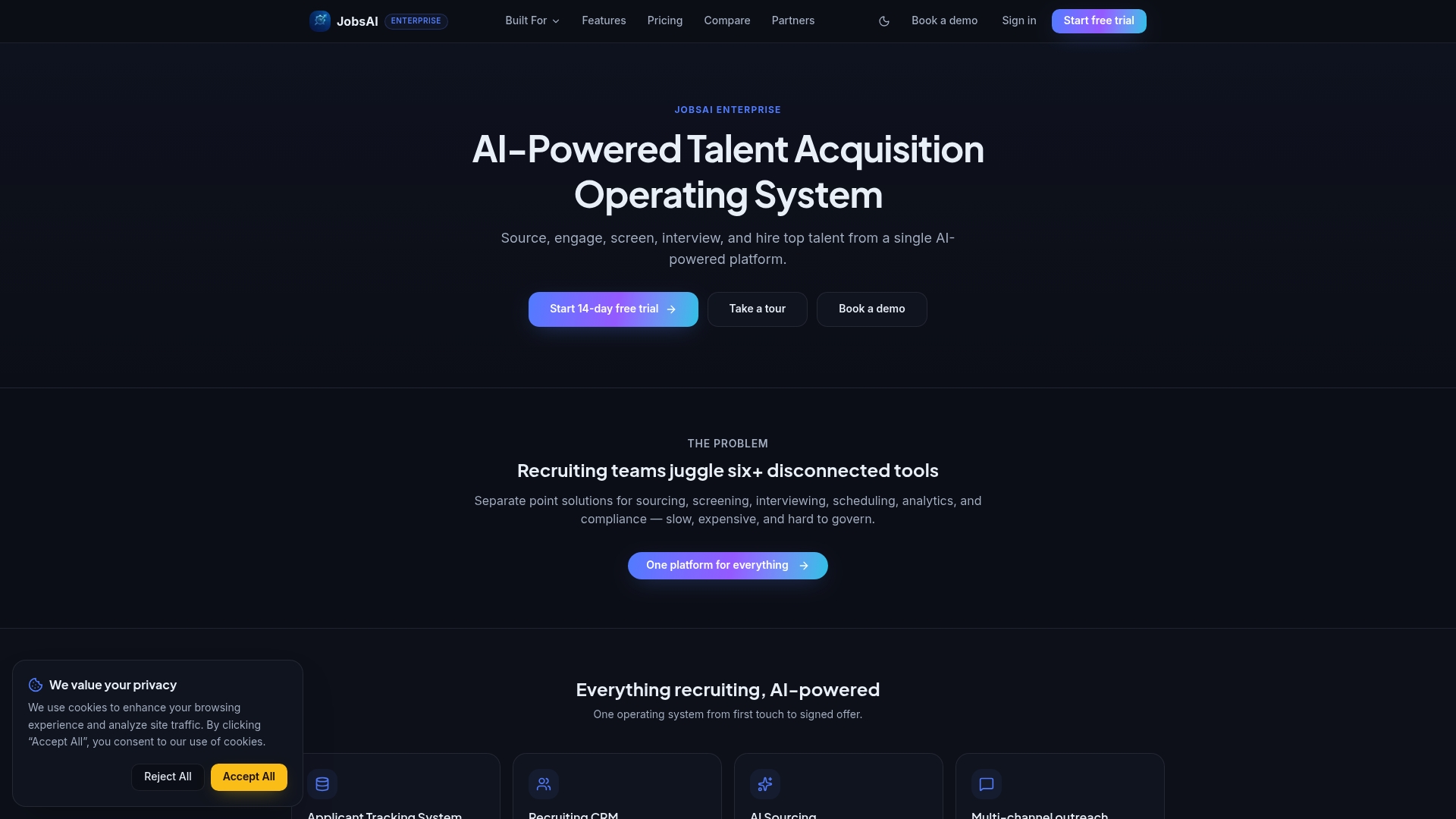
That combination matters most in a few specific moments: when you’re comparing a dozen consultant applications and need to separate real track records from polished pitches fast, when you’re hiring internally for a business development role instead of contracting, or when a staffing firm is placing multiple commercial candidates at once and manual review is eating the week. It’s not a replacement for the interview and reference calls outlined above. It’s what gets you to that stage faster, with a stronger pool. Take the tour of JobsAI Enterprise to see how AI screening and candidate scoring work before your next hiring cycle starts.
Sources
- What is business strategy — Harvard Business School Online
- Ram Charan — global advisor and author
- Business development consultant | Bushe
- Hiring Lab — research on labor markets
FAQ
What Is a Business Development Consultant?
A business development consultant is hired to build the pipeline, partnership, and go-to-market systems that generate new revenue, typically through project, retainer, or fractional engagements.
How Much Do Business Development Consultants Charge?
Rates vary by structure: hourly billing often falls in the low-to-mid triple digits, while project and retainer fees scale with scope and expected pipeline impact rather than time spent.
Do Business Consultants Make a Lot of Money?
Earnings range widely by stage and niche; consultants with a specialized focus and documented case studies typically move from hourly billing into higher-value retainer or performance-based work over time.
Is 30 Too Old to Get Into Consulting?
No. Business development consulting rewards prior seller-side or client-side experience, and most successful consultants enter the field after several years in sales, partnerships, or growth roles.
Can Hiring Software Replace a Business Development Consultant?
No, but tools like JobsAI Enterprise can speed up the process of finding one by ranking candidates and organizing outreach, complementing rather than replacing the evaluation process outlined above.
Recommended
See it in your workflow
JobsAI Enterprise runs sourcing, AI screening, and the whole interview pipeline in one place. Book a walkthrough tailored to your team.
Book a demo